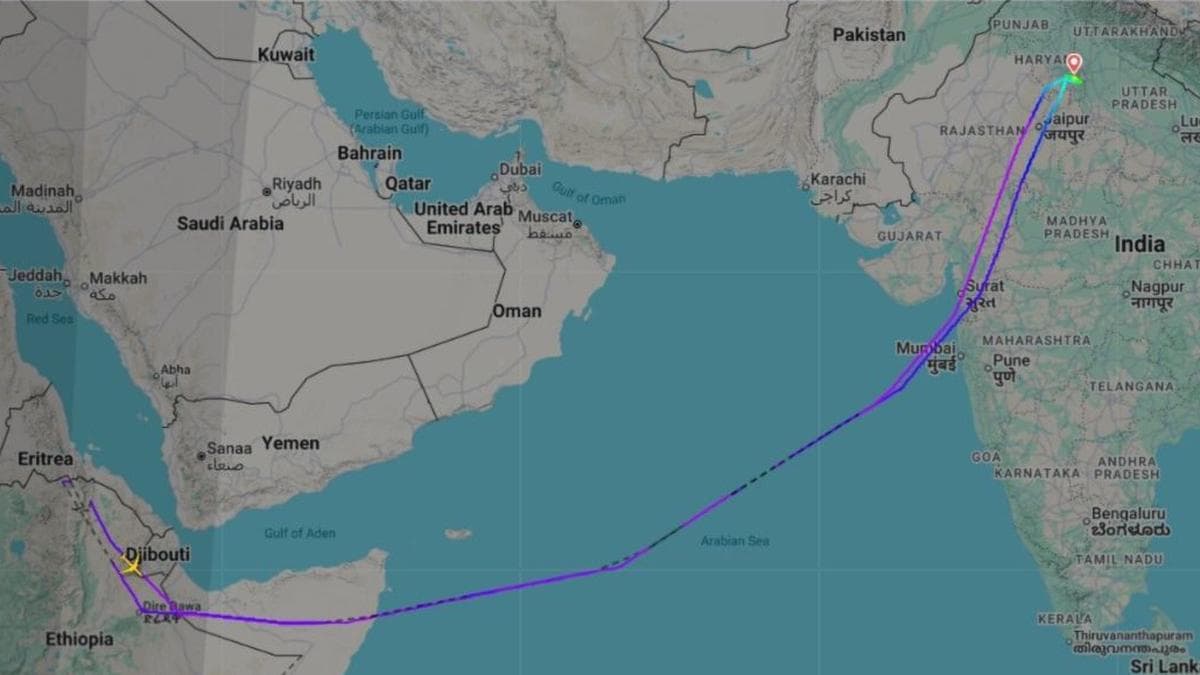
A Delhi-bound IndiGo flight returned to its origin after a complex airspace dispute over Eritrea, marking a significant disruption in long-haul operations.
In an unprecedented display of operational complexity within the aviation industry, an IndiGo flight originally scheduled to travel from Delhi to Manchester was forced to return to its point of origin after a lengthy journey through African airspace. The incident transformed what should have been a standard international route into a 14-hour odyssey that ultimately ended back in Delhi. This disruption occurred despite the aircraft successfully navigating around conflict-affected zones, highlighting the intricate challenges airlines face when geopolitical tensions intersect with regulatory compliance. The flight, which had been airborne for nearly eight hours before turning back, serves as a stark example of how administrative errors and airspace restrictions can derail even well-planned travel itineraries during periods of global instability.
The timeline of the disruption began early in the morning on Monday, March 9, 2026. At 12:30 a.m., the Boeing 787 aircraft departed from Delhi International Airport. Flight tracking data obtained from Flightradar24 indicates that the flight path was carefully calculated to ensure safety and compliance with current airspace advisories. The aircraft successfully skirted the conflict-affected Persian Gulf region, which had been a major concern for airlines operating in West Asia. Instead of traversing the traditional Middle Eastern corridors, the plane entered African airspace through Ethiopia.
The journey proceeded smoothly across the continent until the aircraft reached Eritrea. It was while flying over this specific region that the situation changed dramatically. Despite having avoided the primary conflict zones, the aircraft performed a U-turn and began its return journey to Delhi. By 2:30 p.m. on the same day, the plane landed back in Delhi, completing a round trip that lasted approximately 14 hours. This diversion was not due to mechanical failure or weather conditions but rather stemmed from administrative complications regarding flight permits.
The root cause of the diversion lay in the complex leasing arrangement involving the aircraft used for European routes. The Boeing 787-8 aircraft involved in this specific flight was not owned by IndiGo but was leased from a Norwegian carrier known as Norse Atlantic Airways. This distinction is crucial because the aircraft falls under the jurisdiction of the European Union Aviation Safety Agency (EASA). On February 28, EASA issued an advisory barring carriers from flying over 11 countries in West Asia following airstrikes between U.S.-Israel and Iran. Consequently, all of IndiGo’s European services had been grounded until this partial resumption marked the first day of operations since a gap of more than a week.

The confusion at the air traffic control in Eritrea arose from the involvement of two different airlines linked to the same physical aircraft. While overflight permits are typically obtained by the marketing carrier, which in this instance was IndiGo, they must also state the carrier under whose name the aircraft is registered, which is Norse. Although the permit document itself reflected this specific arrangement correctly, air traffic authorities in Eritrea were reportedly confused by the dual airline association. This administrative ambiguity triggered the decision to divert the flight back to Delhi rather than proceeding further into the airspace or landing elsewhere.
The incident underscores the broader risks associated with operating long-haul flights while conflict disrupts one of aviation’s most critical corridors between Europe and Asia. The airspace restrictions are part of a rapidly shifting landscape caused by the ongoing Israel-Iran war. Airlines are forced to alter routes in response to evolving advisories, which complicates scheduling and increases the likelihood of operational errors. Until now, IndiGo had grounded all its European services because the leased Boeing 787-8 aircraft fell under EASA jurisdiction, which restricted flights over the affected West Asian countries.
This specific flight represented a partial resumption of services to Europe following a gap of more than a week. It was also the first service to Manchester since February 26. The airline had adopted a longer route over Africa specifically to avoid the affected airspace in the Persian Gulf. However, this alternative routing introduced new variables, including interactions with air traffic control authorities in African nations who may not be as familiar with the specific nuances of Western aviation leasing agreements and EASA directives.
The disruption was not an isolated incident for IndiGo on that day. The Mumbai to London Heathrow Airport flight on Sunday was also diverted to Cairo for the same reason involving permit confusion. However, two other services to Amsterdam and London remained uneventful, suggesting that while the issue was significant, it did not halt all operations entirely. For passengers, the disruption translates into tangible inconveniences beyond just the time spent in the air. The episode highlights the high degree of uncertainty around departures and arrivals as airlines navigate these challenges.
Travelers face flight cancellations, diversions, or significantly longer travel times when such operational hurdles arise. Extended waiting at airports is a common consequence of these delays, as airlines are forced to re-coordinate logistics in response to evolving airspace advisories. The complexity of the situation means that passengers may experience extended periods of uncertainty regarding their final destinations. This creates a challenging environment for airline operators who must balance regulatory compliance with the need to maintain service continuity during times of geopolitical unrest.
The IndiGo flight incident illustrates the fragile nature of international air travel during periods of geopolitical tension. The combination of leased aircraft arrangements, regulatory advisories from bodies like EASA, and local air traffic control confusion created a scenario where a journey intended for Manchester resulted in a complete return to Delhi. As airlines continue to navigate rapidly shifting airspace restrictions, passengers must remain aware that disruptions such as cancellations, diversions, and extended waiting times are potential risks when conflict affects critical aviation corridors between Europe and Asia. The situation emphasizes the need for streamlined communication between marketing carriers, lessors, and local authorities to prevent similar operational delays in the future.
Jun 9, 2026 02:39 UTC
US Warplane Strikes Tanker MT Marivex; Crew Evacuated in Gulf of Oman
Join 50,000+ readers getting the global briefing every morning.
No spam. Unsubscribe anytime.
Jun 9, 2026 00:00 UTC
INDIA Bloc Leaders Gather in Delhi to Forge Strategic Unity
Jun 8, 2026 22:55 UTC
Netanyahu Vows Forceful Response to Future Iran Attacks
Jun 8, 2026 20:56 UTC
Netanyahu Halts Iran Fighting, Vows Future Force
Jun 8, 2026 20:54 UTC
Justice Department Moves to Strip Citizenship from 17 Individuals