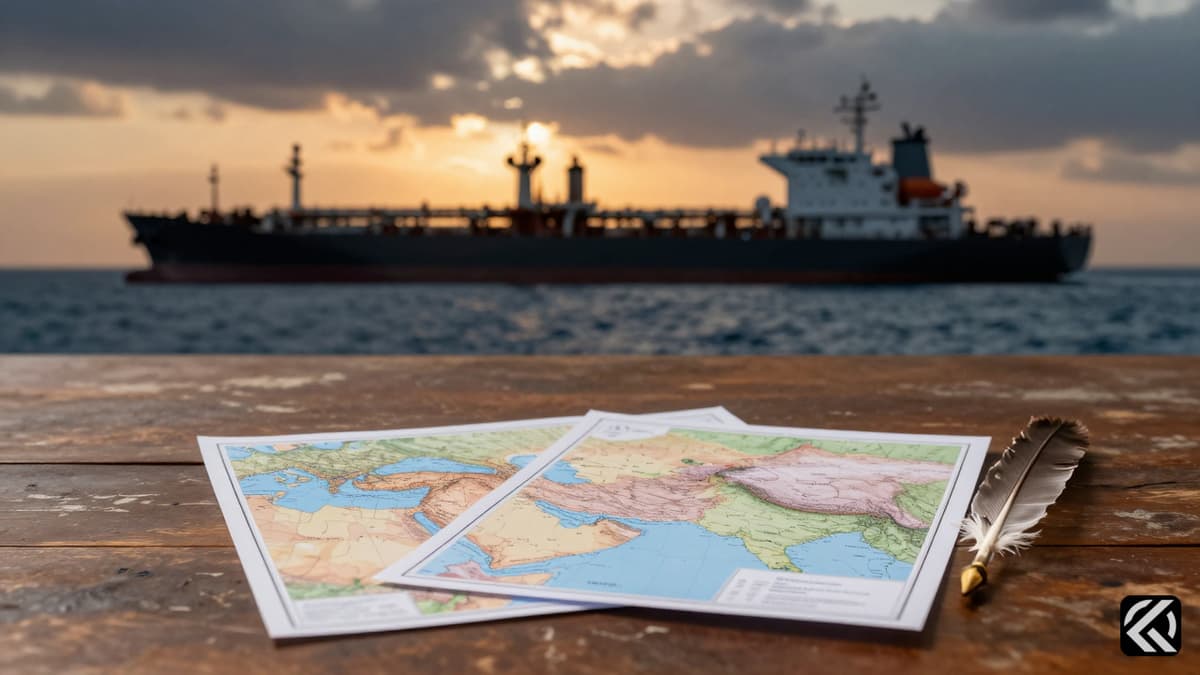
As global oil markets react to renewed military threats in West Asia, diplomatic breakthroughs in Lebanon offer a fragile pause in the broader regional conflict.
The geopolitical landscape in West Asia shifted dramatically this week as U.S. President Donald Trump announced a diplomatic breakthrough while simultaneously escalating military postures in critical maritime zones. On Thursday, April 23, 2026, the President revealed that Israel and Lebanon have agreed to extend their ceasefire with Hezbollah by three weeks, offering a temporary reprieve in a region teetering on the brink of wider conflict. This announcement came hours after Trump issued a stark military directive regarding the Strait of Hormuz, ordering U.S. forces to neutralize Iranian boats deploying mines in the vital shipping lane. The dual developments underscore the complex interplay of diplomacy and coercion defining current U.S. foreign policy in the Middle East.
Simultaneously, global financial markets reacted swiftly to the escalating tensions. Oil prices surged on Friday morning, April 24, 2026, driven by fears that the diplomatic pause in Lebanon would not prevent broader military escalation. Brent crude futures rose $1.23, or 1.17%, to reach $106.3 a barrel by 1:07 GMT, while West Texas Intermediate futures climbed $1.07, or 1.12%, to $96.92. This increase followed a significant jump on Thursday, where both benchmark contracts settled more than 3% higher, adding $5 per barrel following reports that Iranian air defenses were engaging targets over Tehran and news of a power struggle between Iranian hardliners and moderates.
On the diplomatic front, President Trump highlighted the success of negotiations held at the White House earlier that day. He described the meeting between the Israeli and Lebanese ambassadors to the United States as going "very well," marking the second high-level negotiation between the two nations in just one week. The initial 10-day ceasefire, which had taken effect the previous Friday, was originally scheduled to expire on Monday. The three-week extension prevents an immediate collapse of the armistice, giving both sides more time to stabilize the situation along the border.
"I am hereby ordering that activity to continue, but at a tripled-up level!" Trump declared regarding the efforts of U.S. minesweepers clearing the strait, emphasizing the intensified American presence in the region. The President also announced that he looks forward to meeting Israeli Prime Minister Benjamin Netanyahu and Lebanese President Joseph Aoun in person "in the near future," signaling continued U.S. engagement in shaping the region's political trajectory.
While diplomacy advanced in Washington, the situation on the ground and in the waters around Iran remained volatile. U.S. military operations in the Strait of Hormuz intensified after the seizure of another tanker linked to Iranian oil smuggling. This action, coupled with the release of footage showing Iranian commandos boarding a cargo ship in the strait, demonstrated Tehran's willingness to disrupt traffic through the channel, through which 20% of all global crude oil and natural gas trade passes during peacetime.
In response to these threats, President Trump took direct command action. "I have ordered the United States Navy to shoot and kill any boat, small boats though they may be ... putting mines in the waters of the Strait of Hormuz," he posted on social media. This directive coincides with a day of intense cross-border activity between Israel and Hezbollah. Israel’s military reported striking a missile launcher in Lebanon that had fired rockets into Israel, an attack that Israeli air defenses successfully intercepted. Hezbollah claimed responsibility for the rocket fire, describing it as retaliation for an Israeli strike on the Lebanese village of Yater earlier that day.
The violence in Lebanon resulted in casualties. According to Lebanon’s public Health Ministry, two people, including a child, were wounded by Israeli artillery shelling in Yater. These localized conflicts highlight the fragility of the broader ceasefire, even as high-level talks in Washington sought to solidify the pause in hostilities. The timing of these events suggests a coordinated effort by regional actors to test boundaries while negotiations are underway, creating a tense atmosphere where military actions and diplomatic gestures occur in parallel.
The internal dynamics within Iran add another layer of complexity to the crisis. Reports emerging alongside the military engagements indicate a power struggle between Iran’s hardliners and moderates. This internal division appears to be influencing the country's external posture, as Tehran displays its military capabilities while simultaneously engaging in what appears to be a complex internal political maneuvering. The engagement of "hostile targets" by Iranian air defenses over Tehran further suggests that the regime is preparing for or responding to perceived immediate threats, possibly from Israeli or U.S. forces.
The impact on global energy markets cannot be overstated. The rise in Brent crude prices reflects widespread investor anxiety over the security of energy supply chains. With the Strait of Hormuz serving as a critical chokepoint, any successful disruption by Iranian commandos or the presence of naval mines poses a direct threat to global energy stability. The U.S. decision to triple the level of minesweeping activity is a direct countermeasure to these threats, aiming to ensure the free flow of commerce despite Iranian efforts to hinder it.
As the ceasefire extension holds, the region remains on edge. The three-week pause provides a window for de-escalation, but the simultaneous military actions in both Lebanon and the Strait of Hormuz indicate that the underlying tensions have not been resolved. The U.S. strategy appears to be one of maximum pressure combined with diplomatic engagement, seeking to curb Iranian aggression through naval dominance while facilitating a political solution in Lebanon.
The extension of the Israel-Hezbollah ceasefire and the intense naval focus on the Strait of Hormuz suggest a dual-track U.S. strategy designed to contain regional conflict while securing economic interests. The successful talks between the Israeli and Lebanese ambassadors indicate that back-channel diplomacy is effective when supported by strong military posturing. However, the ongoing violence in Yater and the naval skirmishes in the strait highlight that the ceasefire is fragile. If the internal power struggle in Tehran intensifies, the hardliners may seek to provoke further conflict to consolidate control, potentially testing the resolve of the U.S. Navy. Conversely, if the moderates gain influence, a broader de-escalation involving nuclear and maritime issues might become possible. The coming weeks will be critical in determining whether the diplomatic window leads to a lasting peace or merely a pause before the next major escalation in West Asia.
Jun 8, 2026 06:24 UTC
Magnitude 7.8 Earthquake Shocks Philippines, Killing Four in General Santos
Join 50,000+ readers getting the global briefing every morning.
No spam. Unsubscribe anytime.
Jun 8, 2026 08:07 UTC
Five Injured in Penn Station Stabbing Before Trump NBA Finals Visit
Jun 8, 2026 06:24 UTC
Magnitude 7.8 Earthquake Shocks Philippines, Killing Four in General Santos
Jun 8, 2026 06:22 UTC
Xi Jinping Lands in Pyongyang for Rare Kim Jong Un Meeting
Jun 8, 2026 04:15 UTC
Trump Urges Netanyahu to Halt Iran Strike for Peace


