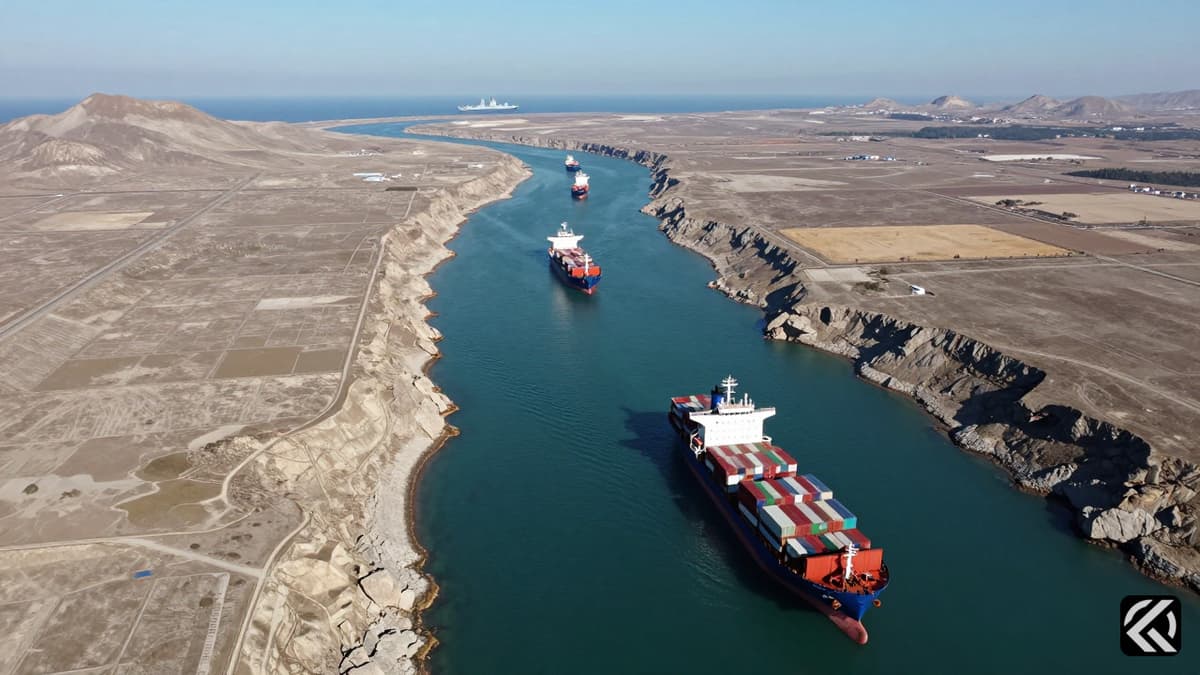
Tensions surge as Iran intercepts vessels in the Strait of Hormuz, challenging US control while global oil markets brace for potential supply disruptions.
The Strait of Hormuz has become the latest flashpoint for escalating hostilities between the United States and Iran, as Tehran captured two foreign container ships seeking to exit the passage on Wednesday. This incident marks a significant escalation in Iran-US tensions, occurring just days after the US military intercepted Iranian-flagged tankers and established a naval blockade off the Iranian coast.
On Monday, the US military fired upon and captured the Iranian-flagged container ship Touska near the northern Arabian Sea. In retaliation, Iran accused the US of “piracy.” The following day, the US military intercepted at least three Iranian-flagged tankers in Asian waters, redirecting them away from positions near India, Malaysia, and Sri Lanka. Despite a ceasefire being in place between the two nations, these aggressive naval maneuvers indicate an ongoing, undeclared war in the critical shipping corridor.
The Strait of Hormuz, which separates Oman and Iran, serves as a vital artery for global energy supplies, transporting about 20 percent of the world's oil and liquefied natural gas during peacetime. Following the launch of the US and Israel war on Iran on February 28, Tehran closed the passage to all vessels. By March 4, the Islamic Revolutionary Guard Corps (IRGC) declared full control, stating that ships must obtain clearance to pass.
Iran argues that its territorial waters, which extend into the strait, grant it the legal right to regulate traffic, particularly at the narrowest point which is only 21 nautical miles wide. For nearly eight weeks, Iran determined which vessels could exit the strait, while the US naval blockade imposed on April 13 allowed Washington to control which ships could enter the Gulf from the Arabian Sea. This dual control has left maritime traffic in a precarious position, requiring approval from both militaries to transit safely.
Initially, Iran’s Foreign Minister Abbas Araghchi stated on March 26 that the strait was not completely closed, but only to enemies of the US and Iran. Ships from countries such as Malaysia, China, Egypt, South Korea, India, and Pakistan were allowed to pass after negotiating with the IRGC. The IRGC implemented a “toll booth” system, requiring vessel operators to undergo vetting and pay fees in Chinese yuan.
While blocking traffic, Iran continued its own oil exports, which account for 80 percent of its total exports. Trade intelligence firm Kpler reported that Iran exported 1.84 million barrels per day of crude oil in March, with exports remaining at 1.71 million barrels per day in April. This surge in volume, combined with oil prices averaging above $90 per barrel, resulted in Iran earning approximately $4.97 billion in one month. This figure represents a 40 percent increase in revenue compared to the monthly average of $3.45 billion before the war began.
Since the US blockade began, Iran has tightened its grip on the strait. First Vice President Mohammad Reza Aref justified the restriction of foreign ships by stating that “security of the Strait of Hormuz is not free,” arguing that one cannot restrict Iran’s oil exports while expecting free security for others.
On Tuesday, Iran reportedly fired at two Indian-flagged merchant vessels for operating without authorization. On Wednesday, the IRGC captured the Panama-flagged MSC Francesca and the Greek-owned, Liberia-flagged Epaminondas. The MSC Francesca was hit by gunfire approximately eight nautical miles west of Iran but remained undamaged, and its crew was safe. The Epaminondas, en route to Gujarat, India, was fired upon about 20 nautical miles northwest of Oman; its operator confirmed all crew members were safe. Another Liberia-flagged ship, the Euphoria, was fired upon in the same area but resumed sailing and reached Fujairah, UAE.
Ali Vaez, director of the Iran project at the International Crisis Group, described these captures not as isolated acts but as a deliberate “tit-for-tat between Iran and the United States.” This marks the first time Iran has attacked and captured ships not linked to the US and Israel since the conflict began.
The capture of foreign vessels and the imposition of a strict naval blockade highlight a dangerous escalation in the Strait of Hormuz. With rival militaries controlling entry and exit points, the risk of accidental conflict or further interruptions to shipping routes is high. Given that the strait is crucial for global oil and LNG supplies, any prolonged disruption could lead to significant volatility in global fuel prices. The current dynamic suggests that unless a diplomatic resolution is reached to lift the blockade and restore free transit, the region remains at risk of further military confrontations and economic instability.
Jun 8, 2026 00:51 UTC
Trump Claims Iran Nuclear Deal Imminent Despite Diplomatic Fractures
Jun 8, 2026 00:47 UTC
Iran Fires Missiles at Israel After Beirut Strike
Jun 7, 2026 22:00 UTC
US, Iran Peace Hops Fade 100 Days Into War
Jun 7, 2026 20:57 UTC
Iran Strikes Israel: IRGC Promises Week of Continuous Offensive
Jun 8, 2026 02:28 UTC
Trump Walks Out of Meet the Press After Rejecting Evidence Demands


