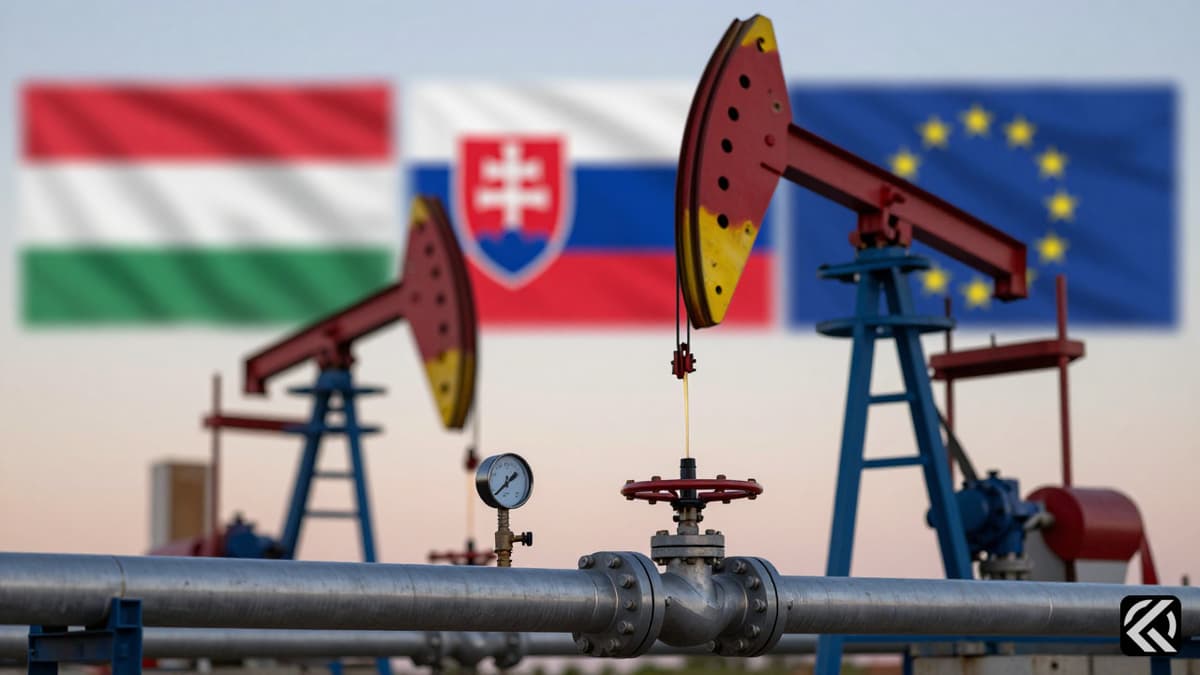
A major geopolitical shift occurs as Hungary withdraws its opposition to the 90-billion-euro EU loan, allowing critical financial support for Ukraine to proceed alongside resumed oil exports.
The European Union is poised to approve a massive 90-billion-euro loan for Kyiv, a development triggered by the resumption of Russian oil deliveries through the Druzhba pipeline. This diplomatic breakthrough follows a months-long stalemate where Hungary and Slovakia blocked funds due to stalled pipeline repairs.
EU diplomats in Brussels granted preliminary approval on Wednesday, coinciding with confirmed oil flows to Hungary and Slovakia. Hungarian energy group MOL stated that Kyiv confirmed the pipeline was operational, with shipments expected by Thursday. Slovak Economy Minister Denisa Sakova corroborated these early morning delivery timelines.
The resolution of this deadlock was signaled earlier by Ukrainian President Volodymyr Zelenskyy, who noted the pipeline had been damaged by Russian attacks in late January. This clarification allowed Hungary to finally lift its longstanding Hungarian veto, removing the primary obstacle to the bloc’s 27 member states formally signing off on the agreement by Thursday.
The loan was originally agreed upon last year to maintain Ukraine’s liquidity through 2026 and 2027. However, outgoing Hungarian Prime Minister Viktor Orban, known for cordial relations with Moscow, along with the Slovak government, had consistently blocked the funds. The political landscape in Budapest shifted significantly after Orban lost the parliamentary election on April 12.
Peter Magyar, leader of the winning party, declared he would no longer block EU funds for Kyiv, although he is not expected to formally take power until next month. This change in leadership in Budapest has been crucial in unblocking the financial lifeline for Ukraine, which faces increasing isolation as Washington withdraws support and eases pressure on the Kremlin.
Resolving this impasse enables Brussels to begin payouts soon, providing essential economic stability to Ukraine more than four years into the conflict. The situation is particularly urgent as international support dynamics shift, making the EU loan for Kyiv a vital component of Ukraine’s continued resistance against Moscow’s full-scale invasion.
Slovak Prime Minister Robert Fico, who has had repeated clashes with both Kyiv and Brussels, expressed skepticism about the durability of the new arrangement. He stated he would not be surprised if the loan were unblocked only for oil supplies to be cut off again, reflecting the tense and volatile nature of the energy-diplomacy link.
Alongside the financial aid, EU countries are preparing to approve a new round of sanctions against Russia. These measures, stalled by Hungary and Slovakia over the pipeline dispute, constitute the 20th round of penalties since the war began in 2022. The sanctions target Russia’s energy, banking, and trade sectors, aiming to further isolate Moscow economically.
The Druzhba pipeline, which translates to "friendship" in Russian, has a capacity of 1.2 to 1.4 million barrels of oil per day, with the potential to increase to 2 million barrels daily. The resumption of flow through this infrastructure is not merely an economic indicator but a geopolitical signal of shifting alliances and pragmatic compromises in the region.
The lifting of the veto marks a significant turning point in EU-Hungarian relations and the broader support framework for Ukraine. It demonstrates how energy infrastructure and financial aid are inextricably linked in the ongoing conflict. As the EU moves to formalize the loan and impose new sanctions, the region watches closely to see if the renewed oil flow will remain stable or subject to the same geopolitical whims that caused the initial shutdown.
The unblocking of the 90-billion-euro loan provides Ukraine with a crucial financial buffer as it navigates a complex geopolitical landscape. With US support waning, the EU’s commitment becomes even more significant for Ukraine’s survival. However, the fragile nature of the agreement, highlighted by Fico’s warnings, suggests that future disruptions to the Druzhba pipeline could threaten the continuity of both energy supplies and financial aid. The region must remain vigilant as new sanctions take effect and leadership changes in Hungary come into full force.
Jun 8, 2026 02:17 UTC
Magnitude 7.8 Quake Shakes Philippines, Urging Immediate Evacuations
Jun 8, 2026 00:51 UTC
Trump Claims Iran Nuclear Deal Imminent Despite Diplomatic Fractures
Jun 8, 2026 00:47 UTC
Iran Fires Missiles at Israel After Beirut Strike
Jun 7, 2026 22:00 UTC
US, Iran Peace Hops Fade 100 Days Into War
Jun 8, 2026 04:15 UTC
Trump Urges Netanyahu to Halt Iran Strike for Peace


