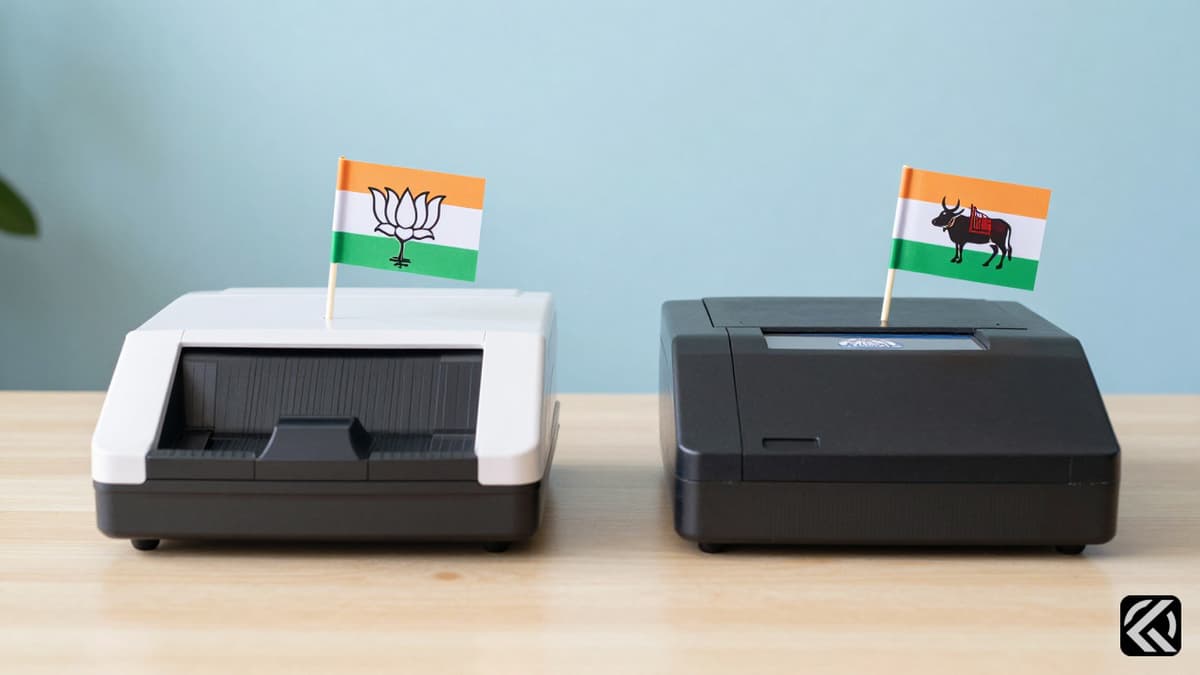
As voters in Tamil Nadu and West Bengal cast ballots, the political stakes are higher than ever. Discover the critical battlegrounds defining the 2026 assembly elections.
NEW DELHI: The stage is fully set for a high-stakes electoral battle as West Bengal and Tamil Nadu head to the assembly elections on Thursday, April 23. While Tamil Nadu is voting in a single phase across all 234 seats, West Bengal will vote for 152 seats in this first phase, with the second phase scheduled for April 29. Both states, governed by regional heavyweights, have witnessed an intense, high-decibel campaign as national parties attempt to challenge the existing regimes.
The Bhartiya Janata Party (BJP), led by Prime Minister Narendra Modi and Home Minister Amit Shah, has pushed hard to undermine the influence of Mamata Banerjee and MK Stalin. Rahul Gandhi and other national leaders have added to this campaign blitz. Amit Shah adopted an aggressive tone, asserting, “In Tamil Nadu and Puducherry, Congress will not even cross double digits.” As political rhetoric peaked, the Election Commission tightened its vigil, seizing cash, liquor, drugs, and other inducements worth over Rs 1,000 crore across both states. Total recoveries have touched Rs 1,072.13 crore since February 26.
On the ground, Tamil Nadu saw large-scale movement of Electronic Voting Machines (EVMs) and polling materials under heavy security cover. West Bengal witnessed significant deployment of central forces, a move questioned by Mamata Banerjee, who asked, “are they trying to intimidate?” She also flagged the use of CRPF armoured vehicles during polling, alleging that the BJP-led Centre was deploying state machinery to sway the electoral outcome.
The key seats in the first phase of the West Bengal Assembly Elections 2026 include Suvendu Adhikari’s Nandigram, where he had earlier defeated sitting chief minister Mamata Banerjee. Mamata Banerjee has since shifted to Bhabanipur, while Suvendu Adhikari continues to politically challenge her, as he has filed his nomination papers from Bhabanipur as well. Other important constituencies in this phase include Darjeeling, Siliguri, and Jalpaiguri. Campaigning for the phase concluded on April 21.
North Bengal remains the central focus of Phase 1, with 54 assembly seats voting in this round. In Nandigram, Suvendu Adhikari is contesting against Trinamool Congress candidate Pabitra Kar, along with other contenders, making it one of the most closely watched contests.
The battle for West Bengal remains intense as chief minister Mamata Banerjee seeks to retain power and consolidate voter support, while the BJP looks to build on its strong surge in 2021. Prime Minister Modi and Amit Shah have pushed the slogan “sonar bangla” targeting Mamata Banerjee’s “Bohiragata” narrative. The BJP has also sharpened its attack on issues such as law and order and infiltration, citing incidents like RG Kar, Murshidabad, and Sandeshkhali.
The Congress factor, despite a long electoral decline, could still play a role in shaping outcomes in Kolkata and beyond. The Left Front, once dominant under Jyoti Basu, continues to struggle to regain relevance in the state. Meanwhile, the Trinamool Congress has also faced fire from its INDIA bloc allies, the Congress and the Left, even as it tries to maintain its stronghold in West Bengal’s political landscape.
Over 5.73 crore voters are set to decide the fate of 4,023 candidates in the high-stakes Tamil Nadu Assembly Elections 2026 on April 23, with tight security in place and a sweeping crackdown on inducements by the Election Commission of India.
The contest is primarily between the DMK-led alliance and the AIADMK-led front, with chief minister MK Stalin seeking a second term, while Edappadi K Palaniswami aims to return to power after five years. Tamil Nadu’s political landscape has long been dominated by Dravidian parties, and this election largely continues that bipolar trend. However, the DMK has appeared electorally stronger in recent years, while the AIADMK has struggled to regain its footing after the death of former chief minister J Jayalalithaa. The last assembly election that AIADMK managed to win was in 2016, under Amma’s shadow, just months before her death. The five-year chief ministerial tenure was then divided between Jayalalithaa, O Panneerselvam, and later EPS, who now holds the party command.
The national parties, BJP and Congress, remain in the backseat of their Dravidian partners. The BJP is in an electoral alliance with its old and traditional ally AIADMK, while Congress is aligned with the ruling DMK.
This election, however, comes with a fresh variable. Tamil superstar Vijay has entered the political arena with his party, Tamilaga Vettri Kazhagam (TVK), drawing massive crowds at rallies and roadshows. His popularity has translated into strong on-ground mobilisation, though one such gathering in Karur tragically led to a stampede.
While Vijay’s entry has added a new dimension to the contest, his party is contesting independently, outside the DMK and AIADMK alliances. Unlike national parties such as the BJP and Congress, TVK is not seen as an "outsider" in Tamil Nadu’s political fabric. The key question, however, remains whether this visible public support can convert into votes, a challenge that has historically tested celebrity-led political ventures in the state.
The assembly polls results for West Bengal, Tamil Nadu, Assam, Kerala and Puducherry will be announced on May 4. As the dust settles on these critical elections, the interplay between regional stronghold holders like Mamata Banerjee and MK Stalin and the aggressive national ambitions of the BJP will define the next political chapter. The presence of new variables, such as Vijay’s political debut in Tamil Nadu and the fierce contest in North Bengal, suggests a volatile and closely watched outcome. Voters in both states are now tasked with deciding whether the existing regional leadership can hold its ground against coordinated national opposition strategies or if the political tectonic plates will shift significantly.
Jun 8, 2026 00:51 UTC
Trump Claims Iran Nuclear Deal Imminent Despite Diplomatic Fractures
Jun 8, 2026 00:47 UTC
Iran Fires Missiles at Israel After Beirut Strike
Jun 7, 2026 22:00 UTC
US, Iran Peace Hops Fade 100 Days Into War
Jun 7, 2026 20:57 UTC
Iran Strikes Israel: IRGC Promises Week of Continuous Offensive
Jun 8, 2026 02:28 UTC
Trump Walks Out of Meet the Press After Rejecting Evidence Demands