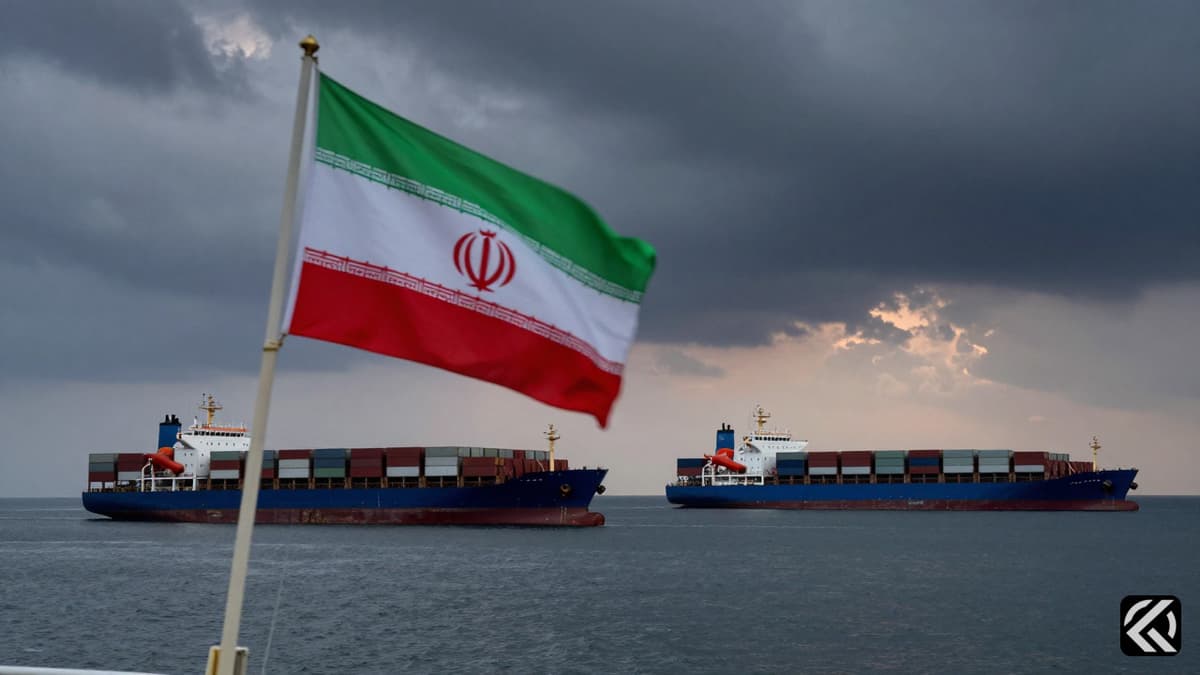
Iran’s Islamic Revolutionary Guard Corps has seized two major commercial vessels near the Strait of Hormuz, marking a severe escalation in regional tensions and disrupting global shipping routes to India.
NEW DELHI: Iran on Wednesday seized two vessels, one of them bound for Gujarat, against the backdrop of mounting tensions in the Strait of Hormuz, where the Trump-Tehran confrontation continues to intensify. The development comes close on the heels of a tense episode in which Iranian forces opened fire on an India-bound ship attempting to pass through the chokepoint, forcing it into an abrupt return. Iranian state television later reported that the ships were in the custody of the Islamic Revolutionary Guard Corps (IRGC) and were being taken to Iran.
The seizures mark a sharp escalation by Iran’s leadership, which appears to be hardening its stance following earlier rounds of talks with the Trump administration that devolved into open conflict. Despite a ceasefire facilitated by Pakistan earlier on Wednesday, tensions around the vital oil chokepoint remain high, strained by continued US blockade measures and restrictions imposed by the IRGC navy.
The vessels were identified as MSC Francesca and Epaminondas, though their owners could not be immediately reached for comment, as AP reported. The seizure of these specific vessels highlights the volatility of the region, as Iran seizes two vessels in a move that signals a significant shift from diplomatic engagement to direct maritime confrontation. This action has immediate implications for global supply chains, particularly those linking the Middle East to South Asia.
According to marine traffic data, Epaminondas, a Liberian-flagged container ship, was en route to Mundra port in Gujarat’s Kachch district. Its navigational status was listed as “stopped.” The seizure of the Epaminondas is particularly significant for Indian logistics, as it was a chartered 6,690 TEU vessel deployed on the INDUSA service connecting India and the US East Coast, with intermediate calls at Khalifa Port and Jebel Ali. The vessel had been stuck in the Persian Gulf since the start of the conflict, making its capture a direct blow to India-Middle East trade routes.
Marine Traffic said: While initial reports suggested the two ships seized by IRGC were part of a six-vessel MSC convoy, track analysis conducted by it indicates it is unlikely they were transiting together with the other four vessels, which exited the area successfully. Instead, the two vessels appear to have followed a different route and were trailing behind the rest. This deviation in route may have made them vulnerable targets or indicates a targeted interception strategy by Iranian forces rather than a broad indiscriminate seizure.
MSC Francesca (11,336 TEU), operating on the Himalaya Express service linking India, the Persian Gulf, and the Mediterranean, had both been stuck in the Persian Gulf since the start of the conflict. The grounding of these massive container ships has disrupted the Himalaya Express service, a critical link for Mediterranean trade, further complicating the logistics landscape for European and Asian exporters alike.
BREAKING: IRGC Navy CAPTURES ‘ZIONIST’ Ship In Hormuz; Iran Confirms Two Vessels Seized. This confirmation from Iranian state media underscores the ideological framing of the conflict, aligning maritime aggression with broader geopolitical posturing against Western influence in the region. The term used, while inflammatory, reflects the narrative being pushed by Tehran’s leadership during this period of heightened hostility.
The timing of the seizure is critical. It occurs during a period of intense diplomatic friction between the United States and Iran, with the Trump administration’s policies creating a hostile environment for commercial shipping. The continued US blockade measures and restrictions imposed by the IRGC navy create a double bind for commercial vessels, which must navigate both military risks and political sanctions.
Also read | ‘Ignored repeated warnings’: Iran fires on container ship in Strait of Hormuz. This previous incident, where Iranian forces fired on a container ship, serves as a precursor to the current seizure. It demonstrates a pattern of escalating aggression, moving from warning shots to outright capture. The failure of the previous ship to proceed and its forced return indicates that the strategic calculus of Iran has shifted toward direct interference with commercial traffic.
The seizure of these vessels by the IRGC captures ship assets, as reported by Iranian state television, indicates that the Islamic Revolutionary Guard Corps is taking direct operational control over the Strait of Hormuz. This militarization of the chokepoint raises the stakes for global energy security, as any further escalation could lead to a broader disruption of oil and gas shipments that pass through this narrow waterway.
The reaction from the international community remains to be seen, but the seizure of the Epaminondas, a vessel destined for a major Indian port, suggests that Iran is willing to strike at economies closely tied to the West or those perceived as hostile to its interests. The disruption to the INDUSA service affects not just India but also US exporters who rely on the Khalifa Port and Jebel Ali transshipment hubs.
The current situation in the Strait of Hormuz represents a critical juncture in the ongoing Trump-Tehran confrontation. The seizure of the MSC Francesca and Epaminondas is not an isolated incident but part of a broader strategy to exert pressure through economic disruption. The fact that these vessels were stuck in the Persian Gulf since the start of the conflict suggests that Iran has been waiting for a strategic opportunity to make a high-impact demonstration of force.
The involvement of the IRGC in the direct seizure of commercial ships marks a significant escalation. Previously, threats were often issued by political leaders, but now the military wing is directly engaging in maritime piracy-like activities. This blurs the line between state action and non-state actor behavior, complicating legal and diplomatic responses from the international community.
The disruption to the Himalaya Express service and the INDUSA service highlights the interconnected nature of global trade. A conflict in the Strait of Hormuz does not remain localized; it ripples through supply chains affecting prices and availability of goods across India, the US, and Europe. The seizure of these vessels serves as a warning to other commercial entities that the Strait of Hormuz is no longer a safe passage for those perceived as aligned with Western interests.
The seizure of the two vessels signals a dangerous new phase in the region's instability, where diplomatic channels have broken down entirely. Based on the trends evident in the source material, the continued US blockade and IRGC restrictions suggest that future incidents of harassment or capture are likely to increase. The international community must anticipate further disruptions to global shipping routes, with potential long-term impacts including higher insurance premiums for maritime transit, rerouting of trade lanes away from the Middle East, and increased pressure on diplomatic resolutions to prevent a broader regional war. The hardening stance of Iran’s leadership indicates that the status quo of partial engagement is over, replaced by active economic warfare through maritime interdiction.
Jun 8, 2026 02:17 UTC
Magnitude 7.8 Quake Shakes Philippines, Urging Immediate Evacuations
Join 50,000+ readers getting the global briefing every morning.
No spam. Unsubscribe anytime.
Jun 8, 2026 02:17 UTC
Magnitude 7.8 Quake Shakes Philippines, Urging Immediate Evacuations
Jun 8, 2026 00:51 UTC
Trump Claims Iran Nuclear Deal Imminent Despite Diplomatic Fractures
Jun 8, 2026 00:47 UTC
Iran Fires Missiles at Israel After Beirut Strike
Jun 7, 2026 22:38 UTC
Congress Party Claims Unity for INDIA Bloc Delhi Meeting


