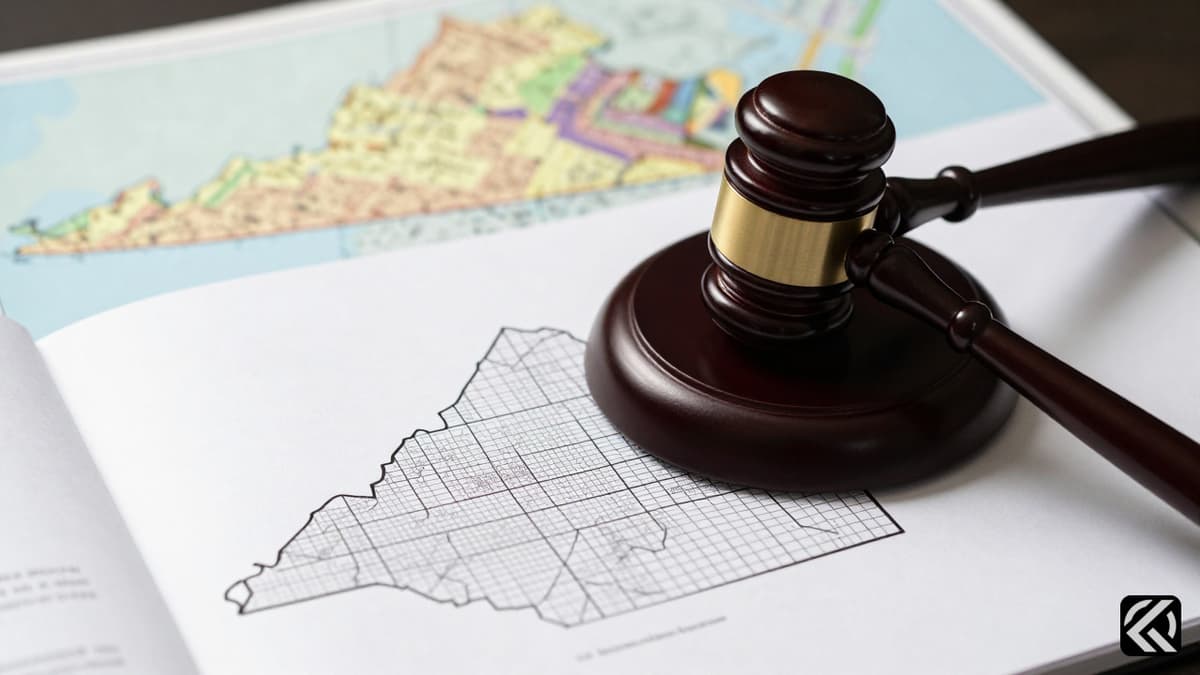
Virginia is at the center of a fierce national redistricting battle as Democrats unveil a new map aiming to reclaim Republican-held House seats.
The latest skirmish in the nationwide redistricting fight is playing out in Virginia, where Democrats have proposed a new map with the hopes of flipping four Republican-held House seats. This development marks a significant escalation in the ongoing battle for political control in the Commonwealth.
The proposed map would slice up heavily Democratic districts in the Washington, DC, suburbs and around Richmond, fundamentally altering the geographic distribution of electoral power. By redrawing these boundaries, the strategy aims to isolate Republican voters and consolidate Democratic support in specific areas. The primary goal of this maneuver is to target the Democrats House seats currently held by Republican representatives, a move that could significantly shift the balance of power in the US House of Representatives.
In addition to targeting existing GOP strongholds, the map would draw a new district that connects Democratic-leaning towns through the center of the state. This geographic linkage is designed to create a viable pathway for Democratic candidates in areas that might otherwise be dispersed and less influential. The creation of this Democratic map represents a strategic pivot in Virginia’s political landscape, leveraging demographic trends to maximize electoral efficiency. The implications of this redrawing extend beyond state lines, serving as a case study for Democrats nationwide who are looking for opportunities to gain ground in redistricting disputes.
The complexity of this proposal lies in its ability to simultaneously weaken Republican strongholds in the northern and southern regions while strengthening Democratic presence in the middle. Critics and supporters alike are watching closely as the details of the map are scrutinized. The slicing of heavy Democratic districts in the DC suburbs may raise questions about fair representation and the clustering of voters, a common tactic in gerrymandering debates. However, proponents argue that this is a necessary corrective measure to ensure that electoral outcomes reflect the actual political will of the electorate in Virginia.

The reference to the "nationwide redistricting fight" highlights the broader context in which this Virginia-specific event is occurring. Every state map redrawn has ripple effects on the national political climate. If successful, the Virginia plan could inspire similar strategies in other swing states, further intensifying the partisan divide over how district lines are drawn. The stakes are high, not just for the four seats in question, but for the precedent set regarding the power of the minority party to shape electoral geography.
As the referendum proceeds, the focus remains on the technical details of the district boundaries and their potential to influence voter behavior. The connection of Democratic-leaning towns through the center of the state suggests a long-term strategy for securing these areas for future elections, not just the current one. This consolidation of support could make these districts more resilient to demographic shifts, providing a stable base for Democratic representatives. The slicing of the DC suburbs, conversely, aims to disrupt the current Republican advantage in those affluent and politically significant regions.
The outcome of this referendum will determine whether Virginia’s electoral map is reshaped to favor Democratic gains or maintains the status quo. The public debate surrounding the proposal is likely to center on issues of fairness, representation, and the integrity of the electoral process. As the fight continues, the actions taken in Virginia will be closely analyzed by political strategists and historians alike, serving as a pivotal moment in the ongoing narrative of American electoral politics. The proposed changes are bold and contentious, reflecting the deep partisan divisions that characterize the current political era.
The proposal to flip four Republican-held seats through a new Democratic map signals a aggressive approach by Democrats in Virginia. By connecting towns in the state's center and slicing suburbs, the map aims to maximize Democratic efficiency. If passed, this redistricting could lead to a lasting shift in Virginia's congressional delegation, potentially influencing national policy and balancing power in the House of Representatives for years to come.
Jun 8, 2026 02:17 UTC
Magnitude 7.8 Quake Shakes Philippines, Urging Immediate Evacuations
Join 50,000+ readers getting the global briefing every morning.
No spam. Unsubscribe anytime.
Jun 8, 2026 02:17 UTC
Magnitude 7.8 Quake Shakes Philippines, Urging Immediate Evacuations
Jun 8, 2026 00:51 UTC
Trump Claims Iran Nuclear Deal Imminent Despite Diplomatic Fractures
Jun 8, 2026 00:47 UTC
Iran Fires Missiles at Israel After Beirut Strike
Jun 7, 2026 22:38 UTC
Congress Party Claims Unity for INDIA Bloc Delhi Meeting