Amid an escalating US-Iran conflict, Secretary of War Hegseth dismisses John Phelan, reshaping naval leadership and strategy during a fragile ceasefire period.
The dismissal of John Phelan as US Navy Secretary marks a significant shakeup within the American military leadership during the eighth week of the war on Iran. The Pentagon confirmed that Phelan would leave office immediately, citing no official reason for the dismissal while reports point to internal tensions with Defense Secretary Pete Hegseth. This removal is part of a broader pattern of restructuring under the Trump administration, occurring as US naval forces enforce a blockade on Iranian ports and maintain a heavy presence in the Strait of Hormuz, a critical waterway for global oil and gas supply.
“On behalf of the Secretary of War and Deputy Secretary of War, we are grateful to Secretary Phelan for his service to the Department and the United States Navy,” said chief Pentagon spokesperson Sean Parnell, adding, “We wish him well in his future endeavours.” The decision comes at a critical juncture, with US naval forces actively restricting Iranian oil exports to apply economic pressure on Tehran. Although negotiations between Washington and Tehran have stalled, the US continues to move additional naval assets into the region, signaling a continued commitment to its strategic objectives despite the fragile nature of the current ceasefire.
Phelan’s tenure as the US Navy’s top civilian official was marked by both his unique background and subsequent controversies. Appointed in 2024 as a political ally of President Donald Trump, Phelan lacked prior military or defence leadership experience. Instead, he was a businessman, investment executive, and major Republican donor. This profile mirrors other Trump appointees, such as diplomat Steve Witkoff and son-in-law Jared Kushner, who also lacked traditional diplomatic backgrounds. Phelan’s responsibilities included overseeing recruiting, mobilization, and the construction and repair of ships and military equipment. However, according to Reuters, his tenure quickly became controversial due to slow progress on shipbuilding reforms and strained relationships with key Pentagon figures, including Hegseth and Deputy Secretary Steve Feinberg.
Compounding the tensions, Phelan was reportedly under an ethics investigation, which may have further weakened his position within the administration. The power vacuum created by his removal has been filled by Navy Undersecretary Hung Cao, who is now serving as acting secretary. Cao, a 54-year-old 25-year Navy veteran, brings significant military experience to the role, contrasting with Phelan’s civilian background. Cao previously ran as a Republican candidate for the US Senate and House of Representatives in 2022 and 2024, respectively, though both campaigns were unsuccessful. His ascent to acting secretary signals a shift toward military-led management during this volatile period of the US-Iran War.
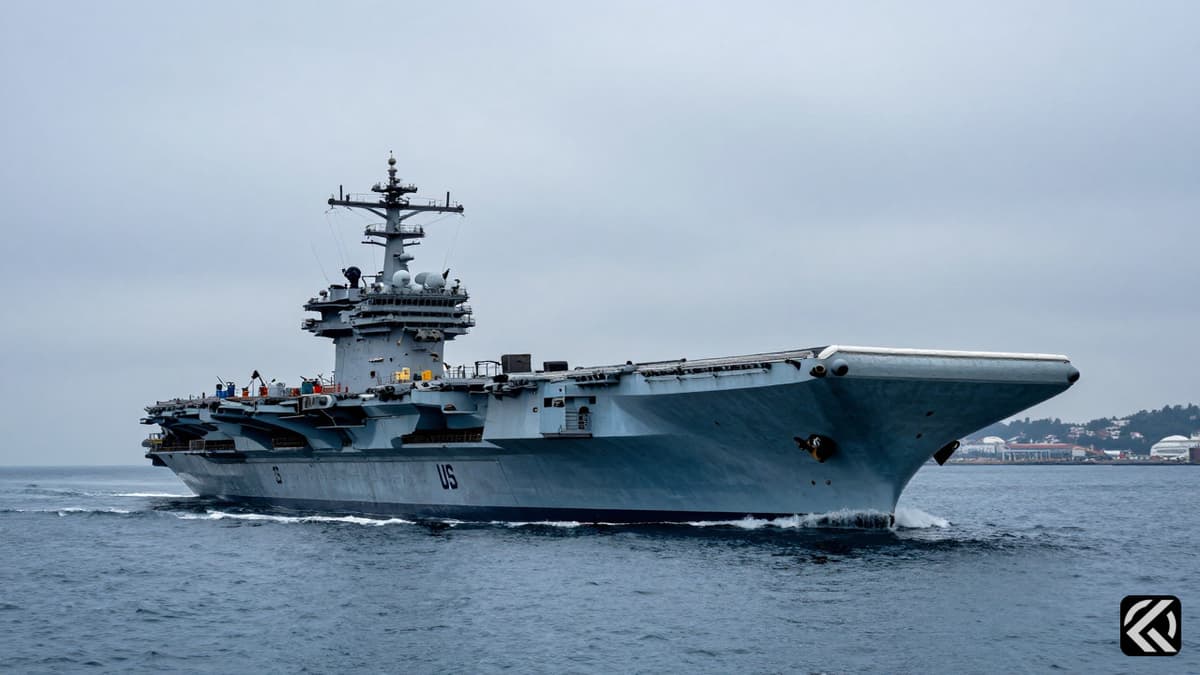
The context of Phelan’s firing is deeply embedded in the ongoing military operations. The US Navy is central to enforcing the blockade of Iranian ports, a strategy designed to restrict Iran’s oil exports and force economic concessions. This blockade is particularly significant because the Strait of Hormuz carries 20 percent of the world’s oil and gas during peacetime. The US has not indicated any willingness to end the blockade or other naval operations in the strait, even as tensions escalate. Recent days have seen heightened hostilities, including the US seizure of an Iranian container ship, which Washington claimed was attempting to sail through the Strait of Hormuz to the port of Bandar Abbas.
Iranian officials have responded aggressively to these actions, describing the seizure as an act of “piracy.” In retaliation, Iran has captured two cargo ships and fired at another, further complicating the diplomatic landscape. The military friction is mirrored by political turmoil within the US Department of Defense. Phelan’s dismissal is part of a wider series of senior military leader firings. Most notably, Army Chief of Staff General Randy A. George was dismissed in the first week of April, despite being appointed in 2023 under former President Joe Biden. Reports also suggest that Hegseth fired the head of the Army’s Transformation and Training Command and the Army’s chief of chaplains, although the Pentagon has not confirmed the latter dismissals.
Critics of the administration have seized on Phelan’s removal as evidence of systemic issues. Senator Jack Reed, the top Democrat on the Senate Armed Services Committee, expressed concern over the instability within the defense establishment. “I am concerned it is yet another example of the instability and dysfunction that have come to define the Department of Defense under President Trump and Secretary Hegseth,” Reed stated. Democrats have broadly criticized the move, calling it “troubling” and indicative of a department in disarray.
The firing of Phelan also raises questions about the future direction of US military strategy. With the US Navy enforcing a strict blockade and negotiations with Iran at a standstill, the administration appears focused on maintaining pressure rather than seeking immediate diplomatic resolution. The reliance on political allies with no military experience in key civilian roles, followed by their swift dismissal amidst operational crises, suggests a highly volatile leadership structure. As the US continues to deploy naval assets to the region, the gap between policy objectives and operational execution may widen, particularly if internal discord continues to affect senior leadership cohesion.
The dismissal of Secretary Phelan and the appointment of Acting Secretary Hung Cao highlight a pivotal shift in how the US manages its naval strategy during the US-Iran War. With negotiations stalled and Iran responding to seizures with aggressive countermeasures, the US military remains deeply entrenched in the region. The continuity of naval operations in the Strait of Hormuz suggests that Washington prioritizes economic pressure over de-escalation, regardless of internal administrative turbulence. As the administration navigates this complex geopolitical landscape, the stability of its leadership will be crucial in determining whether the blockade holds or if further escalation becomes inevitable.
Jun 8, 2026 02:17 UTC
Magnitude 7.8 Quake Shakes Philippines, Urging Immediate Evacuations
Join 50,000+ readers getting the global briefing every morning.
No spam. Unsubscribe anytime.
Jun 8, 2026 02:17 UTC
Magnitude 7.8 Quake Shakes Philippines, Urging Immediate Evacuations
Jun 8, 2026 00:51 UTC
Trump Claims Iran Nuclear Deal Imminent Despite Diplomatic Fractures
Jun 8, 2026 00:47 UTC
Iran Fires Missiles at Israel After Beirut Strike
Jun 7, 2026 22:38 UTC
Congress Party Claims Unity for INDIA Bloc Delhi Meeting


