Tensions soar as the US enforces a blockade near Iran, Israel threatens military escalation, and a Kuwaiti journalist is acquitted after weeks of detention.
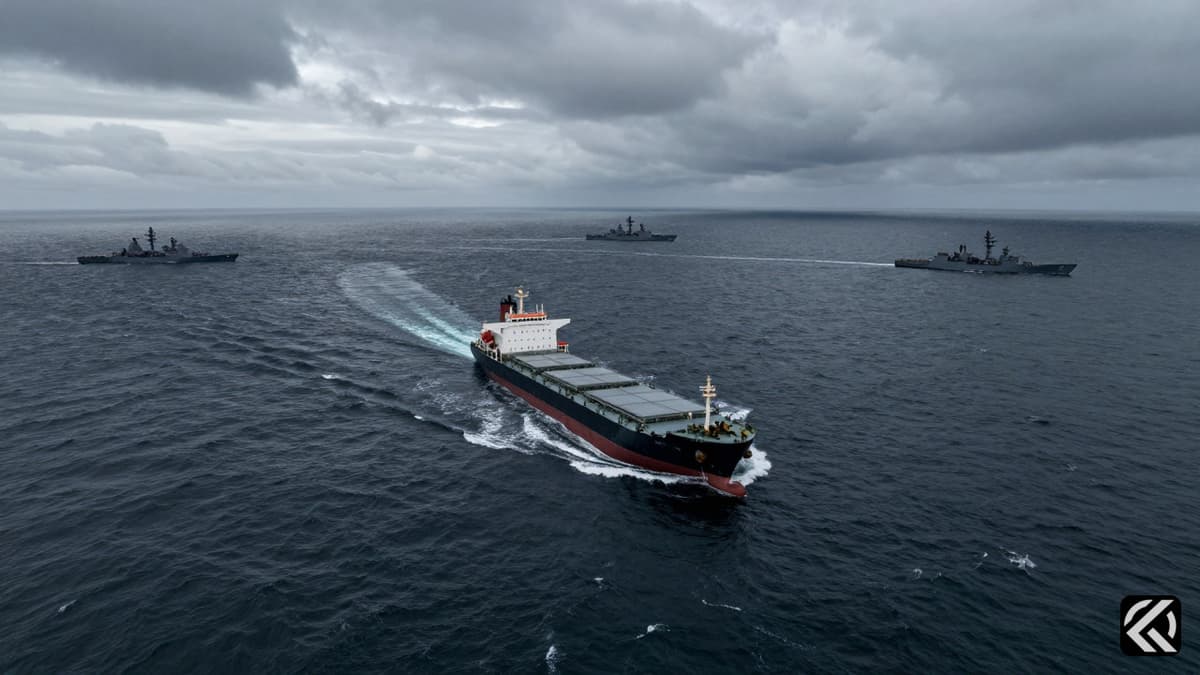
The geopolitical landscape in the Middle East has deteriorated significantly as the United States intensifies its military presence in the region. On Thursday, the US Navy confirmed it has deployed 19 ships to the Middle East, including two aircraft carriers, while seven additional vessels operate in the Indian Ocean. This buildup is part of an enforcement action that began on April 13, where US forces initiated a blockade of Iranian ports and have since redirected at least 33 ships to the area. The heightened military activity has contributed to escalating US-Iran tensions, with Washington boarding at least three vessels, including a sanctioned stateless ship carrying Iranian oil in the Indian Ocean.
Simultaneously, diplomatic and humanitarian developments are unfolding with equal intensity. Ahmed Shihab-Eldin, a Kuwaiti American journalist detained last month for sharing videos of Iranian missile strikes, was acquitted of all charges on Thursday. His case highlighted the strict measures Gulf nations are taking against digital content related to the conflict. In a separate theater of war, Israel’s Defense Minister Israel Katz stated that the Israeli military is ready to restart the war against Iran, having marked targets and awaiting a “green light” from the United States to eliminate the Khamenei dynasty.
As military posturing increases, efforts to stabilize the conflict in Lebanon continue. Ambassador-level talks between Israel and Lebanon are scheduled to take place, mediated by the United States, with the goal of extending the current truce. The 10-day ceasefire, aimed at pausing fighting between Israel and Hezbollah, has been in place since the previous Friday. However, the truce remains fragile. On Wednesday, an Israeli strike in southern Lebanon killed journalist Amal Khalil and injured another reporter. The Committee to Protect Journalists reported that Khalil stayed under rubble for seven hours before being killed, while rescue efforts were allegedly blocked during that time.
The Strait of Hormuz, a critical maritime chokepoint, has seen traffic reduced to a trickle due to security concerns and Iranian-imposed tolls. Despite the blockade, two dry bulk carriers, Tema Express and LB Energy, crossed the strait on Thursday. Tema Express, operated by the German carrier Hapag-Lloyd, reappeared off the coast of Oman after being dark for nearly three weeks. These limited transits indicate that while the blockade is restrictive, it has not completely stopped all maritime traffic, though the risk remains high for commercial vessels.
The conflict is already producing severe humanitarian and economic consequences. The United Nations has warned that more than 30 million people globally could be pushed back into poverty, even if the Iran war conflict were to end immediately. Alexander De Croo, head of the UN Development Program, noted that the loss of 0.5 percent to 0.8 percent of global GDP disproportionately affects vulnerable countries. He highlighted the disappearance of remittances, particularly in the Asia-Pacific region, where $100 billion a year previously flowed directly between families.
In Kuwait, the detention of Ahmed Shihab-Eldin drew international attention and criticism of local laws restricting the sharing of sensitive imagery. His attorney, Caoilfhionn Gallagher, expressed relief at the acquittal after 52 days in custody. While Shihab-Eldin was released, local reports indicated that other individuals were convicted of national security charges. Press freedom advocates, including Ashish Prashar, emphasized the need for collective organizing to protect journalists in dangerous regions.
The intersection of these crises is critical. Israel is preparing for potential expanded conflict while engaging in diplomatic channels regarding Lebanon. The upcoming talks involving US Secretary of State Marco Rubio, US Ambassador to Israel Mike Huckabee, and their Lebanese counterparts will be pivotal. If the ceasefire cannot be extended, the region faces a significant risk of renewed large-scale hostilities.
The long-term impacts of the current Israel-H Lebanon ceasefire instability and the broader US-Iran tensions suggest a volatile future for global supply chains and regional security. The UN’s warning regarding poverty underscores that the economic damage is already widespread, driven by disrupted remittance flows and GDP losses. If the US-Iran conflict expands, particularly with Israeli involvement as Katz has indicated, the economic shockwaves will likely intensify, further straining vulnerable economies. Furthermore, the precedent set by the detention of journalists in Kuwait and the casualties in Lebanon may lead to stricter digital surveillance and increased militarization of conflict zones. The upcoming ceasefire negotiations will determine whether the region can de-escalate or if the current trajectory of military buildup and economic decline will continue to deepen.
Jun 8, 2026 02:17 UTC
Magnitude 7.8 Quake Shakes Philippines, Urging Immediate Evacuations
Join 50,000+ readers getting the global briefing every morning.
No spam. Unsubscribe anytime.
Jun 8, 2026 02:17 UTC
Magnitude 7.8 Quake Shakes Philippines, Urging Immediate Evacuations
Jun 8, 2026 00:51 UTC
Trump Claims Iran Nuclear Deal Imminent Despite Diplomatic Fractures
Jun 8, 2026 00:47 UTC
Iran Fires Missiles at Israel After Beirut Strike
Jun 7, 2026 22:38 UTC
Congress Party Claims Unity for INDIA Bloc Delhi Meeting


