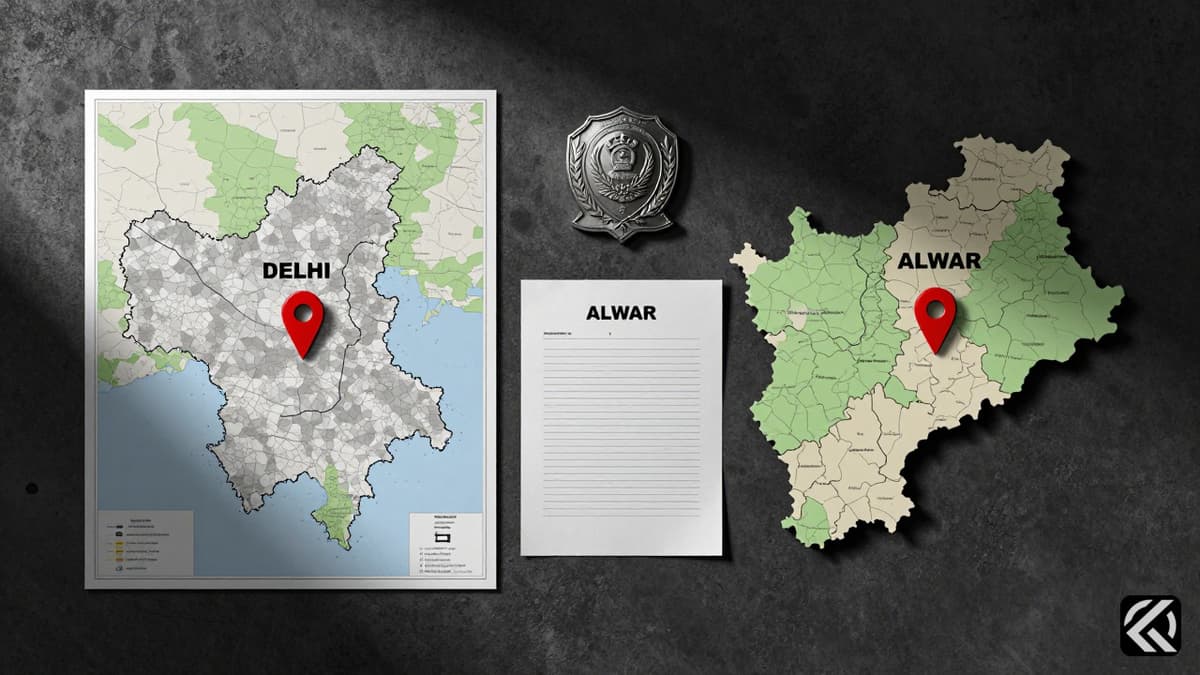
Authorities uncover shocking links between a Delhi atrocity and a Rajasthan assault, as Rahul Meena faces intense scrutiny for a pattern of brutal violence across state lines.
The 19-year-old suspect arrested for the horrific Delhi rape murder in Delhi’s Kailash Hills area has been identified as a serial offender who committed another rape in Rajasthan’s Alwar district just hours prior to the capital crime. Police confirmed this timeline on Thursday, April 23, 2026, revealing that Rahul Meena had already struck in Alwar before traveling to Delhi to commit the subsequent atrocity. This revelation marks a critical development in the ongoing investigation, establishing a disturbing pattern of rapid, cross-state violence that has shaken public confidence in inter-state law enforcement coordination.
Rajasthan Police have formed a special team to probe the Rajasthan serial rape charge against Rahul Meena in Alwar, following his arrest from Delhi’s Dwarka sector. The establishment of this specialized unit underscores the severity of the charges and the need for a focused, aggressive approach to gathering evidence across state boundaries. Investigators are working to connect the two incidents, confirming that the same individual was responsible for both heinous acts within a span of less than 24 hours. The speed with which Meena moved from Alwar to Delhi and committed another violent crime highlights the urgent need for swift judicial and police action to prevent further victims.
The initial arrest took place in Delhi’s Dwarka locality, where Meena was apprehended by local police forces who were investigating the murder of the 21-year-old woman in the Kailash Hills area. Upon further interrogation and cross-referencing with Rajasthan authorities, it was discovered that Meena had been in Alwar earlier on the same day. He had raped a woman there before fleeing to the national capital. This discovery has prompted Rajasthan authorities to take an active role in the investigation, moving beyond passive cooperation to form a dedicated task force. The special team is tasked with collecting forensic evidence, interviewing witnesses in Alwar, and building a comprehensive case file that can be used in conjunction with the Delhi investigation.
The implications of this case are profound, particularly regarding the movement of violent offenders across state lines. The ability of an individual to commit a rape in one state, flee to another, and commit another violent crime within hours suggests gaps in real-time criminal tracking and inter-state data sharing. Law enforcement agencies are now scrutinizing their protocols for sharing critical information regarding suspects in transit. The case has sparked urgent discussions about the necessity of a unified national database for serious violent offenders, allowing for immediate alerts when a suspect is identified in one region. The Rajasthan serial rape charge against Meena is not just a separate incident but a pivotal piece of evidence that defines the scope of his criminal history and intent.
Legal experts are pointing out that the dual charges will significantly increase the severity of the prosecution's case. By linking the Alwar incident to the Delhi murder, the prosecution can demonstrate a pattern of behavior that suggests premeditation and a dangerous escalation in violence. This pattern is crucial for seeking stringent punishments and ensuring that Meena is denied bail or any possibility of early release. The special team in Rajasthan is likely to focus on establishing the timeline of events with precision, using CCTV footage, mobile tower triangulation, and witness testimonies to prove that Meena was in both locations within the alleged timeframe.
The victim’s family in Delhi and the survivor in Alwar are now at the center of a high-profile legal battle that will test the resilience of the judicial system. Public outrage has been intense, with citizens demanding strict accountability and swift justice. The media coverage has been extensive, keeping the pressure on law enforcement to resolve the case quickly and transparently. The arrest of Meena provides a sense of temporary relief, but the complexity of the case means the road to justice will be long. The special team in Rajasthan will also need to ensure that the survivor in Alwar receives adequate medical and psychological support, acknowledging the trauma of the assault.
The intersection of the Delhi and Rajasthan cases has created a complex legal scenario that will likely result in a landmark judgment regarding cross-state violent crimes. The identification of Rahul Meena as a serial offender forces courts to consider the broader implications of such rapid re-offending. It is predicted that this case will lead to stricter regulations on the interstate transfer of suspects and the sharing of biometric data among police forces. The judicial system may impose harsher penalties to deter others from exploiting geographical boundaries to escape immediate justice. Furthermore, the success of the special team in Rajasthan will set a precedent for future collaborative investigations, potentially leading to the creation of permanent joint task forces for serial crimes. The long-term impact will be a reevaluation of how quickly law enforcement agencies must respond to cross-border criminal activities to protect citizens across the nation.
Jun 8, 2026 22:55 UTC
Netanyahu Vows Forceful Response to Future Iran Attacks
Join 50,000+ readers getting the global briefing every morning.
No spam. Unsubscribe anytime.
Jun 8, 2026 20:56 UTC
Netanyahu Halts Iran Fighting, Vows Future Force
Jun 8, 2026 20:54 UTC
Justice Department Moves to Strip Citizenship from 17 Individuals
Jun 8, 2026 18:37 UTC
Trump Denied War Pledge Despite Clear Campaign Records
Jun 8, 2026 18:27 UTC
INDIA Bloc Unanimously Demands Education Minister’s Resignation