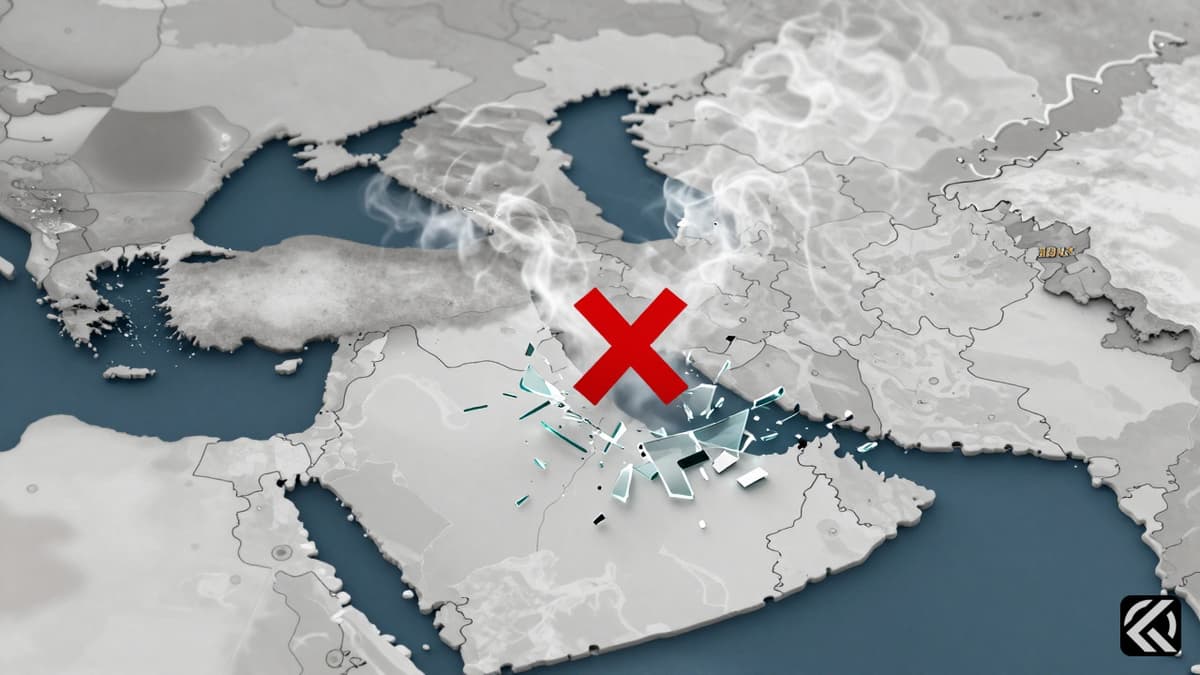
As tensions simmer in West Asia, Prime Minister Benjamin Netanyahu confirms a temporary pause in hostilities with Iran while issuing a stark warning of future military retaliation.
Israeli Prime Minister Benjamin Netanyahu has formally acknowledged the cessation of active fighting with Iran, marking a significant, albeit fragile, pause in hostilities in West Asia. However, this confirmation comes with a severe conditional warning: he vowed that Israel will respond “with force” should any future attacks occur. In a videotaped statement released on Monday, June 8, 2026, Netanyahu declared that the immediate cessation of combat was a direct result of Israel successfully “hit[ting] the terror regime in Tehran.” This strategic strike appears to have temporarily halted the immediate exchange of fire, bringing a brief respite to a region that has been on the brink of broader conflict. Despite the current halt, the Prime Minister’s message to Tehran was unambiguous. He stated clearly that if Iran “makes the mistake and returns to attacking us, we will respond with force.” This declaration serves as a stern deterrent, signaling that the window for Iranian aggression has closed, and any attempt to reopen it will be met with immediate and decisive military action.
The situation remains highly volatile as multiple fronts of conflict continue to simmer. Israeli authorities reported that three waves of Iranian missiles had targeted the country earlier in the day. The intensity of the assault was evident, with explosions audible in central Israel as Israeli air defense systems worked diligently to intercept the incoming Iranian fire. While the current fighting has halted, the underlying tensions remain palpable. It is important to note that Israel is not solely focused on Iran. Prime Minister Netanyahu confirmed that Israel is continuing to operate against Iran’s ally, the Lebanese militant group Hezbollah. This ongoing campaign against Hezbollah underscores Israel’s multi-front strategic posture. Netanyahu emphasized that Israel “has full right to self-defence,” a principle that the government intends to uphold “to the full extent necessary.” This assertion reinforces the idea that the current pause in fighting with Iran is tactical rather than diplomatic, with military readiness remaining at a peak.
The context of this latest development is critical to understanding the gravity of the current moment. Israel and Iran fired at each other on Monday, June 8, 2026, indicating that the ceasefire was tested almost immediately after its inception. This exchange of fire represents the most serious escalation since a ceasefire began two months ago. The rapid return to hostility threatens to plunge West Asia back into a wider war, reversing previous diplomatic efforts. Compounding the regional instability, Yemen’s Houthi rebels also launched a missile at Israel during this timeframe. In addition to the direct attack, the Houthi rebels issued threats to disrupt Red Sea shipping, adding an economic and logistical layer of crisis to the already complex security environment. This multi-directional pressure highlights the interconnected nature of the conflicts in West Asia, where actions in one theater quickly ripple across others.
Reports indicate that the United States and Iran have agreed to extend a ceasefire for 60 days, but this extension is contingent upon approval from former President Trump. This diplomatic layer adds another dimension to the unfolding events, suggesting that while military actions continue, high-level political maneuvers are also at play. The divergence between diplomatic agreements and on-the-ground military realities creates a precarious balance. The fact that fighting resumed on Monday, despite discussions of extensions, suggests that trust between the parties is extremely low. The immediate halt in fighting acknowledged by Netanyahu may be a tactical pause rather than a genuine step toward peace. The mention of “terror regime” in Netanyahu’s statement reflects the deep ideological divide and the lack of diplomatic engagement between the two nations.
The continued operation against Hezbollah further complicates the prospect of a lasting peace. By maintaining pressure on Lebanon, Israel ensures that its northern border remains secure, even as it addresses the direct threat from Tehran. This strategy of simultaneous engagement allows Israel to manage multiple threats without overextending its resources, but it also increases the risk of miscalculation. If Iran were to perceive the current halt as a weakness or a temporary lull, it might attempt to regain momentum, potentially triggering the very response Netanyahu has warned against. The region is currently holding its breath, watching to see if the 60-day ceasefire extension will hold or if the conflict will expand further.
The current halt in fighting between Israel and Iran, while acknowledged by Prime Minister Israel authorities, remains precarious. The rapid escalation and immediate resumption of fire indicate that the underlying tensions are far from resolved. The involvement of Houthi rebels in Yemen and the continued operations against Hezbollah suggest that the conflict is regional, not bilateral. If the 60-day ceasefire extension approved in diplomatic channels fails to materialize on the ground, the region risks a full-scale war. The strong rhetoric from Netanyahu regarding future force implies that any future Iranian aggression will likely result in a more severe and prolonged military campaign. The stability of West Asia depends heavily on whether this pause is used for de-escalation or merely as a breather for rearming. The coming weeks will be critical in determining whether the ceasefire holds or if the region descends into a broader, more devastating conflict.
Jun 8, 2026 20:56 UTC
Netanyahu Halts Iran Fighting, Vows Future Force
Join 50,000+ readers getting the global briefing every morning.
No spam. Unsubscribe anytime.
Jun 8, 2026 18:37 UTC
Trump Denied War Pledge Despite Clear Campaign Records
Jun 8, 2026 18:27 UTC
INDIA Bloc Unanimously Demands Education Minister’s Resignation
Jun 8, 2026 16:44 UTC
Trinamool Congress Rebellion: Rebel MPs Form Bloc to Back NDA
Jun 8, 2026 14:58 UTC
INDIA Bloc Unanimously Demands Pradhan's Resignation


