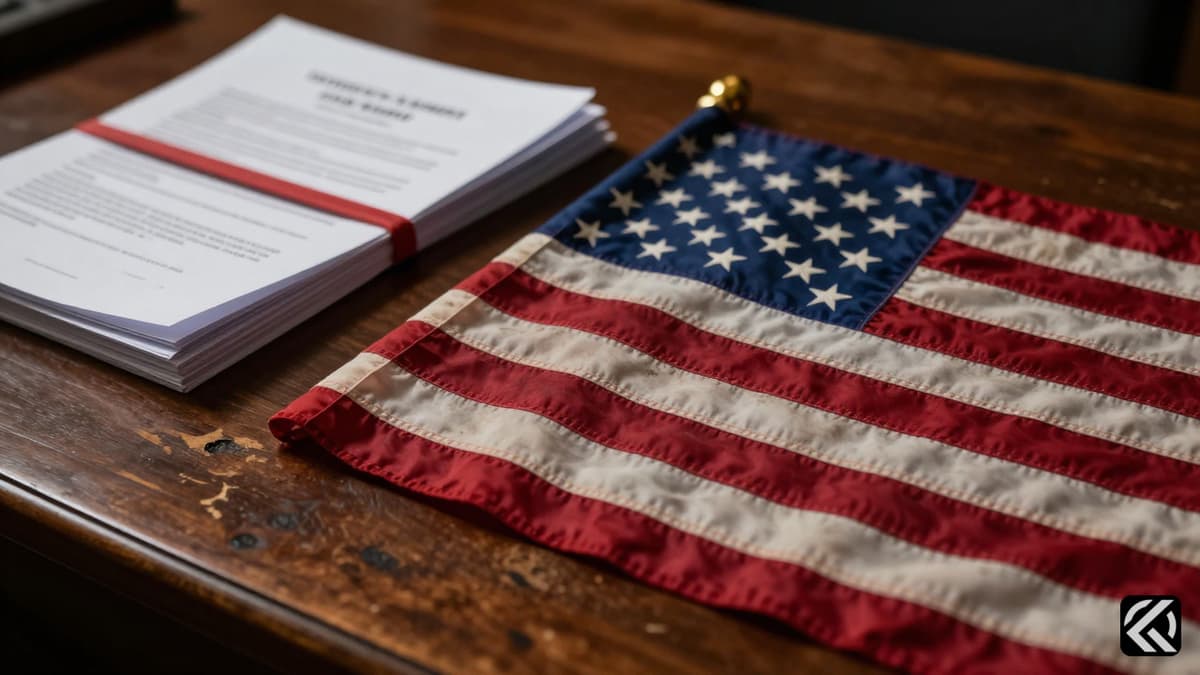
In a significant legal move, officials are targeting 17 naturalized citizens for fraud allegations, escalating the administration's aggressive campaign to strip U.S. citizenship.
The Justice Department announced Monday that it will move to revoke citizenship from 17 people nationwide, marking the latest and most aggressive move in the Trump administration’s unprecedented push to target naturalized citizens. Since President Donald Trump returned to office, his administration has doubled down on its denaturalization campaign, specifically targeting foreign-born American citizens whom it accuses of fraudulently obtaining US citizenship through deception or material misrepresentation.
Officials stated that the individuals targeted in this latest effort are accused of serious infractions, including committing fraud and the sexual abuse of a minor. These accusations highlight the severity with which the current legal strategy is being applied, moving beyond simple administrative errors to alleged criminal behavior that undermines the integrity of the naturalization process. This escalation signals a clear shift in enforcement priorities, focusing heavily on the moral and legal fitness of those seeking or holding American citizenship.
Denaturalization - the process of revoking citizenship from a naturalized US citizen - is historically rare and can only occur in federal court. Historically, the US revoked citizenship for a range of reasons, from lying about a person’s date of arrival, age or marital status to political reasons. During World War II, for example, the US reviewed naturalization cases of German Americans who were pro-Nazi. These historical precedents provide context for the current legal maneuvers, illustrating that while the mechanism is available, its use is typically reserved for extreme circumstances involving threats to national security or foundational fraud.
The scale of this current initiative is stark when compared to previous administrations. Under the Biden administration, the Justice Department filed 24 denaturalization cases, according to a DOJ official. The Trump administration has already outpaced that within the last year, indicating a dramatic increase in the frequency and intensity of these legal actions. In May, the administration also moved to denaturalize a dozen individuals, demonstrating a sustained and rapid pace of litigation that has not been seen in recent decades. This accelerated timeline suggests a coordinated effort to clear backlogs and aggressively pursue cases that might have been deprioritized in the past.
Speaking on the rationale behind these actions, Acting Attorney General Todd Blanche emphasized the administration’s strict stance on integrity in the legal system. “Gaining U.S. citizenship is a privilege and under the steadfast leadership of President Trump, this Department of Justice maintains a zero-tolerance policy for the abuse of this process,” Blanche said in a statement. This rhetoric frames the legal proceedings not just as administrative corrections, but as moral imperatives to protect the sanctity of American citizenship. The language used by high-ranking officials reinforces the political narrative that the naturalization process must be rigorously guarded against those deemed unworthy.
Homeland Security Secretary Markwayne Mullin echoed these sentiments, stating that the administration “will continue to use every lawful avenue to denaturalize and remove aliens.” This commitment suggests that the legal battles initiated this week are just the beginning of a broader strategy. The use of the term "aliens" to describe these individuals, even those who have already obtained citizenship, underscores a political framing that views these legal challenges as essential to national security and border integrity. It implies that citizenship obtained through fraud is inherently unstable and subject to revocation at any time.
The legal implications of these filings are significant for the 17 individuals involved and for the broader community of naturalized citizens. Each case will require rigorous scrutiny in federal court, where plaintiffs must prove that citizenship was obtained unlawfully. The burden of proof is high, but the government’s willingness to pursue these cases aggressively indicates a robust investigative apparatus ready to contest the validity of naturalization certificates. For the accused, the stakes are absolute, involving the loss of their legal status, potential deportation, and the severing of ties with their country of citizenship.
Furthermore, this push has ripple effects on the legal profession and immigration advocacy groups. Lawyers specializing in immigration law will face an increased volume of complex cases requiring meticulous review of decades-old records and testimonies. Advocacy groups may find themselves in frequent litigation against the government, potentially setting new precedents for what constitutes "fraud" or "material misrepresentation" in the modern era. The expansion of these powers could lead to a chilling effect among immigrant communities, who may fear that past minor discrepancies in their applications could be weaponized against them years later.
The historical context of denaturalization adds another layer of complexity to these proceedings. While the current administration cites fraud and abuse of minors, critics may point to the historical precedent of political denaturalizations during the World War II era. The comparison highlights the sensitive nature of stripping citizenship, a power that has historically been used not just for legal infractions but for ideological conformity. As the legal process unfolds, the distinction between prosecuting criminal fraud and policing political or ideological alignment will likely be a central theme in the courts.
The recent surge in case filings also raises questions about resource allocation within the Justice Department. Diverting significant legal and investigative resources toward denaturalization cases could impact other areas of the department’s mandate. However, the administration’s explicit prioritization of this issue suggests that it is viewed as a top-tier national security concern. The speed at which cases have been filed-outpacing the entire previous year’s total in less than twelve months-indicates a centralized and highly focused effort that overrides traditional bureaucratic pacing.
As these cases move through the federal court system, they will serve as a test of the current administration's legal strategies and its ability to sustain this high-volume approach. The outcomes will likely influence future policy decisions, potentially leading to stricter vetting processes for new applicants or more rigorous audits of existing naturalized citizens. The Trump administration’s approach demonstrates a willingness to use existing legal frameworks in novel and aggressive ways to achieve its political and security objectives.
The legal proceedings initiated this week mark a decisive turn in federal immigration enforcement, establishing a new baseline for the scrutiny of naturalized citizens. The Trump administration’s rapid acceleration of denaturalization cases suggests a long-term structural shift in how citizenship integrity is policed. If sustained, this aggressive posture could fundamentally alter the security of naturalized Americans, creating a precedent where citizenship is viewed as a conditional privilege rather than a permanent right. The coming months will reveal whether the courts will uphold these expansive interpretations of fraud, thereby empowering future administrations to wield this rare power with even greater frequency and ease.
Jun 8, 2026 20:56 UTC
Netanyahu Halts Iran Fighting, Vows Future Force
Join 50,000+ readers getting the global briefing every morning.
No spam. Unsubscribe anytime.
Jun 8, 2026 18:37 UTC
Trump Denied War Pledge Despite Clear Campaign Records
Jun 8, 2026 18:27 UTC
INDIA Bloc Unanimously Demands Education Minister’s Resignation
Jun 8, 2026 16:44 UTC
Trinamool Congress Rebellion: Rebel MPs Form Bloc to Back NDA
Jun 8, 2026 14:58 UTC
INDIA Bloc Unanimously Demands Pradhan's Resignation


