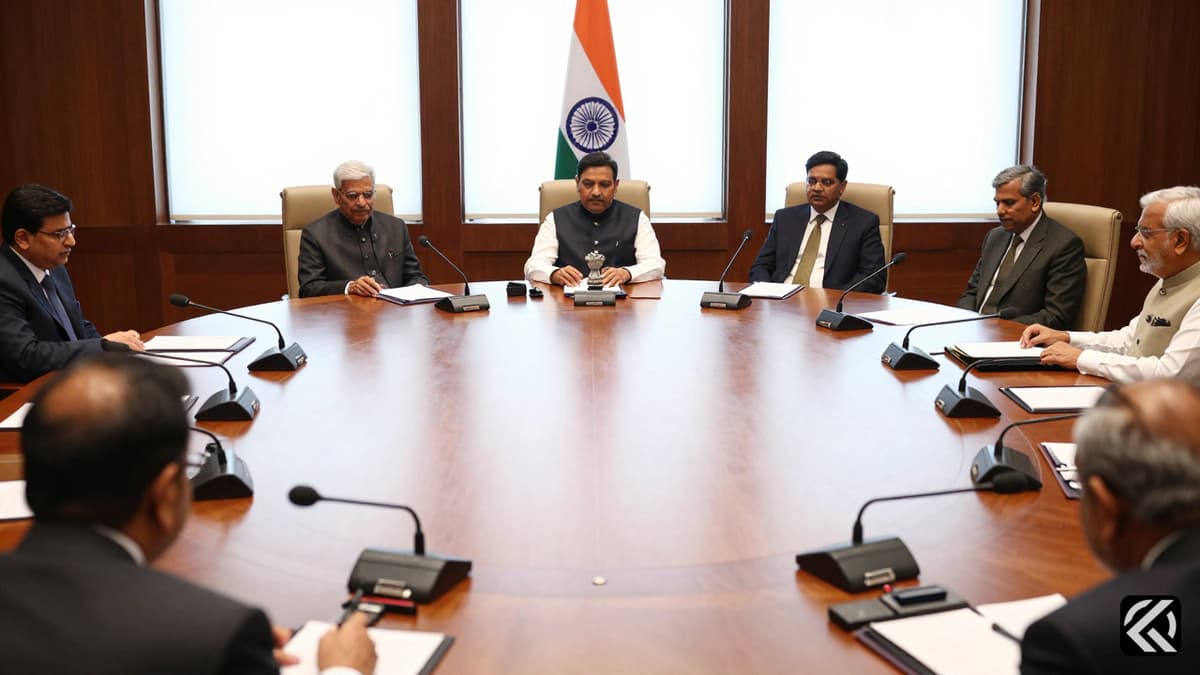
A historic split has fractured the Aam Aadmi Party as Raghav Chadha leads a significant rebellion, joining the BJP and leaving AAP with a drastically weakened parliamentary presence.
In a seismic shift for Indian politics, Raghav Chadha leads a significant AAP Rajya Sabha exodus that has deeply fractured the Aam Aadmi Party. The former rising star and deputy leader formally crossed over to the Bharatiya Janata Party (BJP) on Friday, taking six other MPs with him. This mass defection reduces the AAP’s presence in the Upper House to just four members, a stunning collapse from its previous strength. The move marks one of the gravest crises the party has faced since its inception in 2012, signaling a potential end to its era of rapid expansion.
The rebellion was triggered by Chadha’s removal as the party’s deputy leader in the Rajya Sabha, a post handed to Ashok Mittal. Rather than remaining loyal, Chadha orchestrated the departure, accusing AAP of abandoning its founding principles of "honest politics." The cracks in the party’s unity, previously hidden, have now burst open. This internal revolt comes at a vulnerable time for AAP, following its recent Delhi election defeat, which had already dented its national standing. With leadership under scrutiny and major losses in key battlegrounds, the party’s foundational narrative is being challenged from within.
Chadha’s decision to leave is accompanied by a stinging critique of the party’s current trajectory. Speaking at a press conference at the Constitution Club alongside Ashok Mittal and Sandeep Pathak, Chadha stated, "The AAP, which I nurtured with my blood and sweat... has deviated from its principles, values and core morals." He further alleged that the party no longer serves the nation’s interest but focuses on "personal benefits." This sentiment resonated with a significant portion of the parliamentary wing. Chadha announced that two-thirds of the AAP’s Rajya Sabha MPs had decided to merge with the BJP, exercising their constitutional rights to defection.

The scale of the Raghav Chadha joins BJP movement includes high-profile faces beyond the leadership. Swati Maliwal, who had previously distanced herself from the party, is part of the breakaway group. Also joining are cricketer-turned-MP Harbhajan Singh, Rajinder Gupta, and Vikramjit Singh Sahney. This coalition of voices adds substantial visibility to the rebellion. Meanwhile, party leader in the Rajya Sabha Sanjay Singh led the charge against the defectors, alleging a coordinated "Operation Lotus" by the BJP to destabilize the AAP government in Punjab. He referred to the defectors as "traitors" who would not be forgiven by the public.
Arvind Kejriwal reacted immediately to the split, suggesting the move was orchestrated by the BJP. He claimed, "The BJP has betrayed Punjabis again," framing the defection as a political conspiracy rather than an ideological shift. However, the numerical reality is stark. With seven MPs leaving, the AAP is left with a severely diminished voice in Parliament. The party’s narrative of being a formidable disruptor is now being tested by its inability to retain its own lawmakers.
The irony of the situation is palpable. AAP rose to power on an anti-corruption wave, promising to upend traditional politics. In its early days, it achieved historic mandates, forming three consecutive governments in Delhi and sweeping Punjab in 2022. This momentum was built on a clean image, contrasting with the established political order. However, recent years have seen this image erode. Top leaders, including Kejriwal, Manish Sisodia, and Sanjay Singh, have faced scrutiny from the ED and CBI. Jail terms and investigations, even if some cases weaken in court, have damaged the party’s anti-corruption branding.
Chadha had largely stayed away from these controversies, maintaining a distance even during Kejriwal’s jail time. This separation fueled speculation of a widening rift. Now, that rift has become a chasm. The party’s recent struggles include the 2025 Delhi debacle, where the BJP stormed back into power, reducing AAP’s tally to 22 seats. In the 2024 Lok Sabha elections, AAP secured only three seats in Punjab. The loss of Rajya Sabha strength compounds these electoral defeats, leaving the party in a precarious position.
The political dynamics in Punjab are now undergoing a critical transformation following the defection of key figures. Raghav Chadha played a pivotal role in AAP’s 2022 landslide victory in the state, helping it secure 92 out of 117 seats. His departure, along with other Punjab-linked MPs, weakens the party’s grassroots narrative in the region. Chief Minister Bhagwant Mann has strongly condemned the defections, labeling the leaders as traitors and accusing the BJP of attempting to expand its footprint through such maneuvers.
As the BJP bolsters its numbers with these new members, the contest in Punjab is expected to intensify. The Congress party remains the principal opposition, but the entry of former AAP MPs into the BJP alters the traditional balance of power. The irony of the BJP toppling AAP in Delhi and now weakening it in Punjab mirrors AAP’s own rise against Congress. The long-term impact suggests a period of instability for AAP, forcing it to reassess its strategy and core values to survive. The question of whether Punjab is next for the BJP looms large, as the party capitalizes on AAP’s internal vulnerabilities.

Jun 9, 2026 02:39 UTC
US Warplane Strikes Tanker MT Marivex; Crew Evacuated in Gulf of Oman
Join 50,000+ readers getting the global briefing every morning.
No spam. Unsubscribe anytime.
Jun 9, 2026 00:00 UTC
INDIA Bloc Leaders Gather in Delhi to Forge Strategic Unity
Jun 8, 2026 22:55 UTC
Netanyahu Vows Forceful Response to Future Iran Attacks
Jun 8, 2026 20:56 UTC
Netanyahu Halts Iran Fighting, Vows Future Force
Jun 8, 2026 20:54 UTC
Justice Department Moves to Strip Citizenship from 17 Individuals