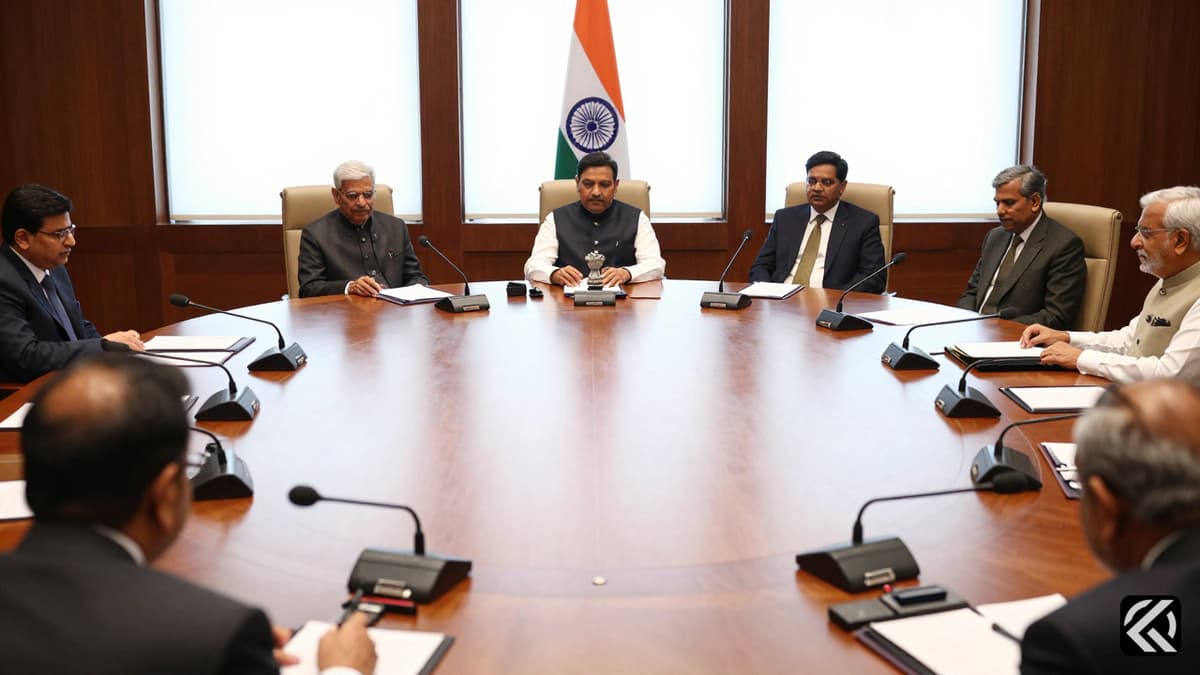
Raghav Chadha leads a mass exit of seven AAP Rajya Sabha members to the BJP, deepening the party's political crisis following recent electoral losses and internal dissent.
In a seismic shift for Indian politics, Raghav Chadha, formerly a rising star within the Aam Aadmi Party (AAP), has led a significant group of lawmakers to the Bharatiya Janatiya Party (BJP). This move marks one of the gravest internal crises the party has faced since its inception in 2012, signaling a dramatic collapse of its strength in the Rajya Sabha and raising urgent questions about its future trajectory.
The exodus was triggered by internal friction that had been simmering beneath the surface, particularly after Chadha was removed as the deputy leader in the Upper House, a position subsequently given to Ashok Mittal. What began as murmurs of dissent quickly escalated into a full-blown rebellion, with Chadha accusing the party leadership of drifting away from its core principles. The breakaway group includes not only Chadha but also six other MPs, reducing AAP’s total presence in the Rajya Sabha from ten to just three members. This near-decimation of their parliamentary strength comes at a precarious time, immediately following the party’s heavy defeat in the Delhi elections, which had already significantly dented its national standing.
Chadha formally crossed over to the BJP at its New Delhi headquarters, delivering a stinging parting shot in which he described himself as the "right man in the wrong party." He stated that two-thirds of AAP’s Rajya Sabha MPs had decided to merge with the BJP, citing a deviation from the party's founding ideals. "The AAP, which I nurtured with my blood and sweat, and gave 15 years of my youth to, has deviated from its principles, values and core morals," Chadha declared during a press conference at the Constitution Club alongside fellow rebels Sandeep Pathak and Ashok Mittal. He further accused the current leadership of prioritizing personal benefits over national interest, marking a stark contrast to the party’s original promise of "honest politics."

The fallout of this defection involves several high-profile figures who add significant visibility to the revolt. Alongside Chadha, former Delhi minister Swati Maliwal, who had already distanced herself from the party following allegations of assault at the chief minister’s residence, is aligned with the dissent. The group also includes cricketer-turned-MP Harbhajan Singh, along with Sandeep Pathak, Rajinder Gupta, and Vikramjit Singh Sahney. The collective weight of these names underscores the depth of the internal rift, as these leaders openly question what they term "Kejriwal’s brand of politics."
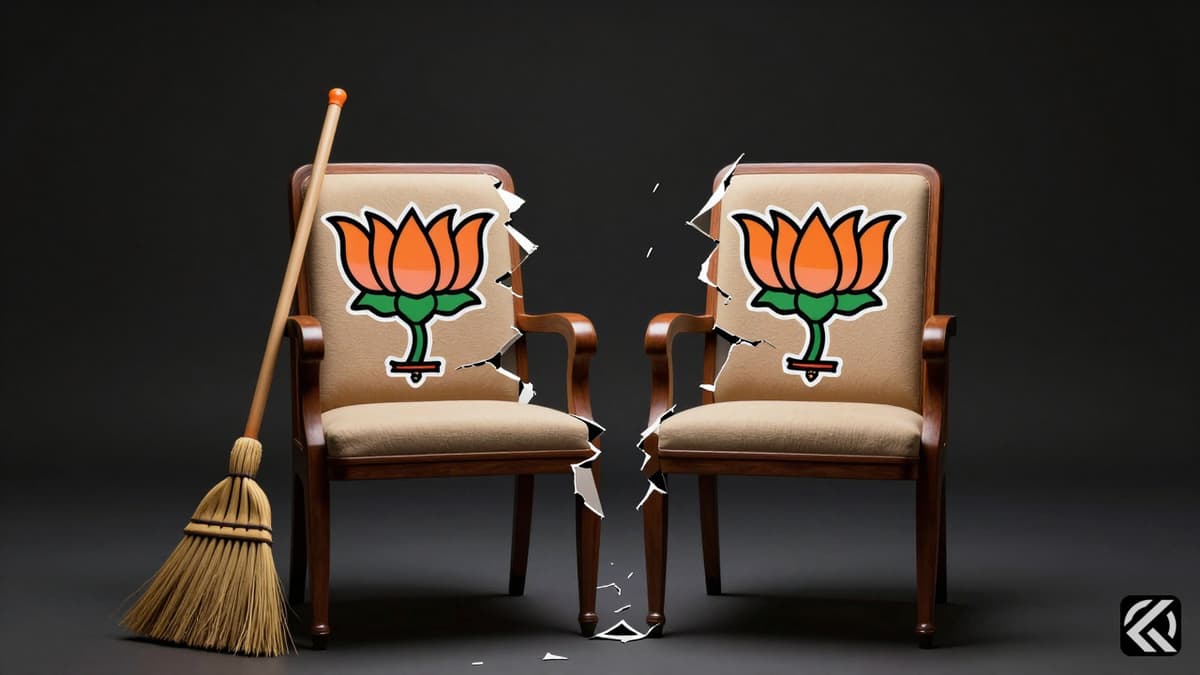
The numerical impact of this rebellion is profound. With seven out of ten AAP Rajya Sabha MPs joining the BJP, the party’s voice in the Upper House is severely weakened. The remaining members, led by Rajya Sabha party leader Sanjay Singh, have responded with fierce condemnation. Singh alleged that the exodus was part of a coordinated effort by the BJP, Prime Minister Narendra Modi, and Home Minister Amit Shah to destabilize the AAP government in Punjab. He described the departing members as "traitors" who would never be forgiven by the people of Punjab, accusing the BJP of launching an "Operation Lotus" to undermine Bhagwant Mann’s government.
This internal turmoil is the latest chapter in a series of challenges for AAP. The party, which emerged from Anna Hazare’s anti-corruption movement, once positioned itself as a disruptor of traditional politics. Its early success was meteoric, unseating Sheila Dikshit in Delhi and winning 67 out of 70 seats in 2015. However, the tide began to turn in 2025 when the BJP stormed back into Delhi, ending AAP’s consecutive governments in the capital and reducing their tally to 22 seats. The recent Lok Sabha elections further highlighted this decline, with AAP securing only three seats in Punjab. The current Rajya Sabha exodus compounds these electoral setbacks, leaving the party with a significantly reduced platform to voice its concerns in Parliament.
Historical irony permeates the current crisis. Just as AAP once rose by dislodging the Congress from Delhi in 2013 and Punjab in 2022, the BJP has now effectively toppled AAP in its stronghold of Delhi. The question now looms large over the political landscape: is Punjab next for the BJP? The departure of leaders with strong roots in Punjab, including those who played key roles in the 2022 landslide victory, introduces new volatility into the state’s political equations. While Chief Minister Bhagwant Mann has dismissed the defectors’ prospects and accused the BJP of expanding its footprint through defections, the shifting alliances suggest a more competitive future in the state.
The departure of Raghav Chadha and the seven other MPs represents more than just a numerical loss; it strikes at the heart of AAP’s identity. The party’s anti-corruption image, once its primary brand, has been further eroded by investigations and jail terms faced by top leaders like Arvind Kejriwal, Manish Sisodia, Sanjay Singh, and Satyendra Jain. Although some cases have weakened in court, the scrutiny has dented public trust. Chadha’s alignment with the BJP’s narrative, which emphasizes "national interest" over what he perceives as the party's internal self-interest, amplifies these existing charges.
As AAP grapples with this rebellion, the party must address the fundamental question of whether it should adapt to modern political realities or stick to its original principles. The crisis exposes deep fissures within an organization that once prided itself on unity and moral superiority. With its Rajya Sabha presence decimated and its Delhi government removed, the window for AAP to regroup is narrowing. The coming months will test whether the remaining leadership can stem the tide of dissent or if the party will face further fragmentation. The political world watches closely to see if the BJP’s consolidation of former AAP members will translate into lasting influence in Punjab and beyond, or if AAP can reinvent itself to survive this pivotal moment in its short but tumultuous history.
The mass exodus to the BJP fundamentally alters the balance of power in Punjab, where the party previously enjoyed a dominant position. With key figures leaving, the BJP is bolstered by former allies who possess significant local knowledge and political capital. While Chief Minister Bhagwant Mann remains defiant, the internal cracks suggest that the party’s hold on the state is more fragile than previously thought. The shifting alliances indicate that the BJP is aggressively targeting AAP’s heartland, mirroring its strategy in Delhi. This trend suggests a prolonged period of instability for AAP, requiring urgent strategic recalibration to prevent further erosion of its base and to regain trust among its traditional supporters who feel betrayed by the leadership's alleged deviation from core values.

Jun 9, 2026 02:39 UTC
US Warplane Strikes Tanker MT Marivex; Crew Evacuated in Gulf of Oman
Join 50,000+ readers getting the global briefing every morning.
No spam. Unsubscribe anytime.
Jun 9, 2026 00:00 UTC
INDIA Bloc Leaders Gather in Delhi to Forge Strategic Unity
Jun 8, 2026 22:55 UTC
Netanyahu Vows Forceful Response to Future Iran Attacks
Jun 8, 2026 20:56 UTC
Netanyahu Halts Iran Fighting, Vows Future Force
Jun 8, 2026 20:54 UTC
Justice Department Moves to Strip Citizenship from 17 Individuals