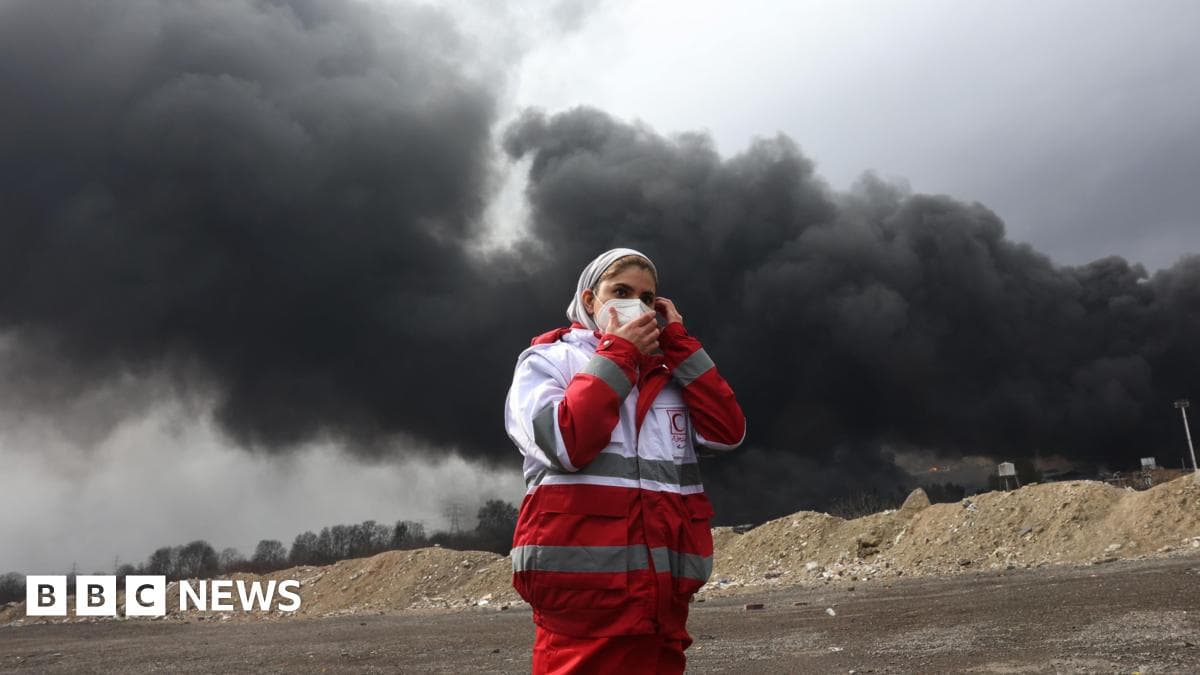
Escalating conflict in the Middle East has triggered a surge in global energy prices and a significant political transition within Iran, drawing international concern.
The geopolitical landscape has shifted dramatically in early March 2026, marked by escalating violence in the Middle East and immediate repercussions for global markets. Reports indicate heavy explosions were heard in Tehran, while energy prices across the UK and globally have surged to levels not seen since 2022. Simultaneously, Iran has undergone a critical political transition with the appointment of its new Supreme Leader, Mojtaba Khamenei. These developments have triggered emergency discussions among global powers regarding oil reserves and regional stability, creating a volatile environment for consumers and governments alike.
The conflict has sent shockwaves through energy markets, causing benchmark oil prices to pass the $100 mark per barrel for the first time since 2022. Although prices dipped slightly shortly after hitting that threshold, the volatility remains high. Faisal Islam, the economics editor, notes that while markets were previously relaxed about potential bottlenecks in the Gulf, recent escalations and scenes of destruction have caused rapid fright among traders.
In the United Kingdom, the impact on consumers is already visible. Mitch Labiak, a business reporter, highlights that gas prices are rising due to production and transport slowdowns or stoppages across the region. The benchmark UK gas price jumped to 158p per therm in the morning, up from 137p the previous Friday. To provide context on the severity of this spike, prices were below 80p before the war began less than two weeks ago. However, it is crucial to note that current levels remain well below the historic spike following Russia’s invasion of Ukraine in 2022, where UK gas prices surged to over 600p per therm.
Despite not reaching 2022 levels, British citizens are still feeling the strain. Energy suppliers have recently removed a raft of fixed-price tariffs from the market citing price uncertainty. While the energy price cap protects variable tariff users until July and fixed-rate customers until their terms end, analysts warn that sustained high gas prices could translate to a higher price cap for the summer.
The physical supply chain is also under stress. The existing rise in oil prices is likely to increase costs for petrol and vital derivative products such as jet fuel and fertilizers. Analysts suggest that if the shutdown in the Strait of Hormuz continues until the end of March, record oil prices exceeding $150 a barrel could occur. Furthermore, Asian consumers are bidding up prices for US gas, with some tankers originally destined for Europe turning around in the mid-Atlantic to secure supplies from the Gulf.
Amidst the military conflict, Iran has seen a significant change in its highest office. Mojtaba Khamenei has been named the new Supreme Leader. Parham Ghobadi, a BBC Persian senior reporter, describes this as taking the most dangerous job in the world, particularly because the US and Israel have vowed to target his father’s successor.
Mojtaba Khamenei had long remained in the shadows of Iranian politics. He was believed to have very close ties to the Revolutionary Guards and was considered the man behind the scenes running the show. There had been rumours for decades regarding his succession, but now it appears there was substance to those claims. He has suddenly assumed power as Iran’s new leader at a precarious time when his father has not yet even been buried because of the ongoing war.
The transition comes with immense pressure. Officials in Iran have warned that they could broaden attacks on regional infrastructure if Israeli and US strikes on their own facilities continue. This rhetoric underscores the high stakes involved in the leadership change, as the new leader faces both internal expectations and external threats from adversaries who have vowed to target him.
The military situation remains volatile with fresh waves of strikes launched by Iran on Israel and Arab Gulf states. Bahrain is reporting the highest number of casualties in a single strike on the Gulf states since the war began. The Health Ministry there stated that a drone attack injured 32 civilians, including four children, with the youngest being only two months old.
Across the Gulf region, at least 10 people have been killed so far, most of them security personnel or foreign workers. Qatar, Kuwait, the United Arab Emirates, and Saudi Arabia also reported new attacks overnight. In Riyadh, officials intercepted and destroyed two waves of drones heading towards a major oilfield. However, an earlier drone strike successfully hit the US embassy in the city. Consequently, the State Department has now ordered non-essential government employees to leave the country.
Heavy explosions heard in Tehran were reported by the AFP news agency, though it was not immediately clear what was targeted. The blasts were heard across several parts of the city, indicating widespread disruption within the capital itself. This escalation has further complicated the diplomatic efforts underway to stabilize the region.
In response to the surge in prices and instability, the G7 finance ministers are set to hold an emergency meeting on Monday. Reports indicate they will discuss a possible joint release of oil reserves to tackle the surge in prices. The oil reserves are coordinated by the International Energy Agency (IEA), with 32 members holding strategic reserves as part of a collective emergency system designed for oil price crises. According to people familiar with the talks, three G7 countries, including the US, have so far expressed their support for a possible joint release.
Diplomatic efforts are also intensifying on the ground. China’s Middle East envoy, Zhai Jun, has visited Saudi Arabia as part of his mediation of the conflict involving the US, Israel, and Iran. Beijing is willing to work with Riyadh to make unremitting efforts to maintain peace and stability in the Gulf region. Zhai described China as a good friend and partner of Saudi Arabia during talks with Saudi Foreign Minister Faisal bin Farhan Al Saud and GCC Secretary General Jasem al-Budaiwi.
During meetings with Prince Faisal, Zhai expressed deep concern over the current tensions in the region. He emphasized that the sovereignty, security, and territorial integrity of Gulf states should not be violated and called for any attack on innocent civilians and non-military targets to be condemned. Zhai reiterated Beijing’s call for an immediate stop to military operations.
Meanwhile, UK cabinet minister Steve Reed addressed the situation on BBC Breakfast. The secretary for housing, communities, and local infrastructure stated there is no "cause for undue alarm yet" over rising energy prices linked to the war. He acknowledged the situation in the Middle East is very concerning but noted that the UK has supplies of oil and gas. His advice was that the sensible response is to monitor the situation and ensure preparedness rather than panic.
The ongoing conflict in the Middle East has triggered a complex crisis involving political transitions, economic instability, and heightened military tensions. As Iran appoints its new leader amidst heavy explosions in Tehran, global energy markets are reacting sharply with oil and gas prices climbing rapidly. While UK officials urge caution against panic, consumers face higher costs as suppliers adjust tariffs. International efforts are underway through the G7 to release emergency reserves and via Chinese mediation to de-escalate violence, yet the situation remains fragile with attacks continuing across the Gulf region. The coming weeks will be critical in determining whether diplomatic channels can stabilize the region or if further economic disruption is inevitable.
Jun 9, 2026 02:39 UTC
US Warplane Strikes Tanker MT Marivex; Crew Evacuated in Gulf of Oman
Join 50,000+ readers getting the global briefing every morning.
No spam. Unsubscribe anytime.
Jun 9, 2026 00:00 UTC
INDIA Bloc Leaders Gather in Delhi to Forge Strategic Unity
Jun 8, 2026 22:55 UTC
Netanyahu Vows Forceful Response to Future Iran Attacks
Jun 8, 2026 20:56 UTC
Netanyahu Halts Iran Fighting, Vows Future Force
Jun 8, 2026 20:54 UTC
Justice Department Moves to Strip Citizenship from 17 Individuals