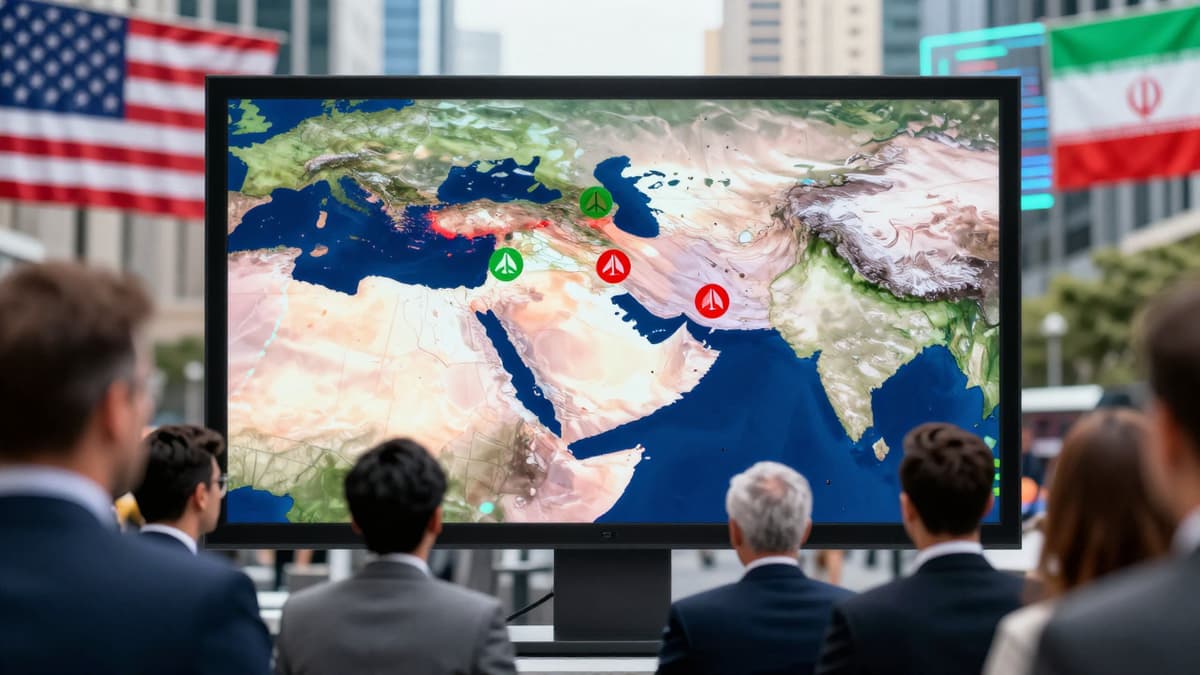
Amidst heavy casualties and market disruption, the US has proposed a 15-point roadmap to end hostilities, outlining specific demands regarding nuclear sites and regional proxies.
The United States has formally presented a comprehensive 15-point strategy aimed at ending the ongoing war with Iran, even as Tehran continues to deny that any formal talks are currently taking place. This diplomatic effort arrives as the conflict, which erupted on February 28 involving joint US and Israeli actions, has resulted in significant loss of life and caused severe disruptions to global markets.
While the White House is reportedly outlining specific offers and conditions for a settlement, there remains no official confirmation from the US, Iran, or Israel regarding the details of the proposal. As pressure mounts on all parties to find a resolution, the reported plan details what Washington is prepared to offer versus what it demands in return.
The US proposal reportedly centers on a temporary pause in hostilities to facilitate negotiations for a broader, long-term settlement. The core of the US 15-point plan outlines a 30-day ceasefire followed by stringent demands regarding Iran's military and nuclear capabilities. Washington expects a permanent commitment from Tehran to cease all nuclear weapons development and the dismantling of key Iran nuclear facilities located in Natanz, Isfahan, and Fordow.
Furthermore, the plan mandates the handover of enriched uranium stockpiles to the International Atomic Energy Agency (IAEA) and establishes full IAEA monitoring of Iran's nuclear infrastructure, including a ban on domestic uranium enrichment. On the military front, the proposal seeks to limit the range and quantity of Iran's missiles, end Tehran's support for regional proxies, and halt Iranian strikes on regional energy infrastructure. Additionally, the plan includes provisions for the reopening of the Strait of Hormuz and the removal of US sanctions on Iran, effectively ending the UN snapback mechanism. In a gesture of potential cooperation, the US has also offered support for electricity generation at Iran's Bushehr nuclear plant.
Despite the discussion of this diplomatic framework, the United States is simultaneously preparing for potential escalation. Reports indicate that troops are being deployed to the region as Washington braces for possible further developments in the conflict.
Tehran has responded firmly to the American proposals, dismissing them as excessive. On Wednesday, Iranian officials stated that the United States cannot dictate the timing of the war's end. The country maintains a stance that no negotiations are occurring, especially given the military leadership's refusal to engage after repeated attacks during earlier phases. Iranian military spokesperson Ebrahim Zolfaqari issued a stark warning, asking if the US had reached the point of negotiating with itself, asserting that the two sides can never get along and would never make a deal.
While the Islamic Revolutionary Guard Corps (IRGC) has ruled out talks with the US, the country has outlined specific conditions for peace. President Masoud Pezeshkian stated that ending the war requires recognizing Iran's legitimate rights, payment of reparations, and firm international guarantees against future aggression. Iran is reportedly seeking the lifting of sanctions, the closure of US military bases in the region, and the establishment of a new mechanism to control transit through the Strait of Hormuz. As the US pushes for a US Iran war ceasefire to stabilize the global economy, Iran insists on its own terms for a resolution that acknowledges its sovereignty and security concerns.
The clash between the US 15-point roadmap and Tehran's intransigence suggests a prolonged diplomatic stalemate. While Washington offers sanction relief and a ceasefire, Iran's insistence on reparations and base closures indicates that a rapid resolution is unlikely. The continued US troop deployment signals that the region may face further volatility before any agreement is reached, as both sides remain entrenched in their respective demands regarding nuclear capabilities and regional influence.
May 9, 2026 19:32 UTC
Hardliners Sabotage Iran-US Negotiations Amidst Fractured Regime
May 9, 2026 17:43 UTC
Moscow's Stripped-Down Victory Day: A Shift in Military Display
May 8, 2026 19:28 UTC
Iran Transforms Destroyed B1 Bridge Into Symbol of Resistance
May 8, 2026 15:53 UTC
China Confirms Technical Aid for J-10CE Fighter Jets in Regional Conflict
May 10, 2026 05:52 UTC
Celebrate Mother's Day 2026 With These Essential Wishes


