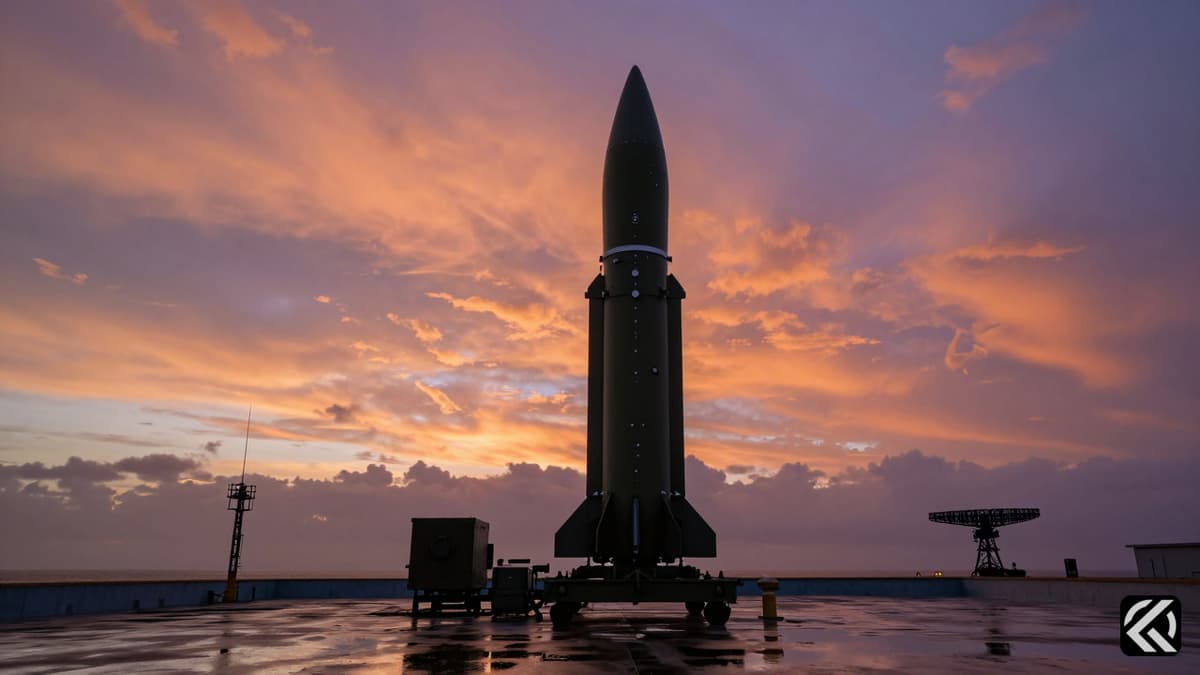
India demonstrates advanced missile defense capabilities with a successful flight trial of the Agni-5 missile, featuring multiple independently targeted re-entry vehicle technology.
NEW DELHI: In a significant move to bolster its strategic defense posture, the Indian defence ministry confirmed on Saturday that India had successfully conducted a flight trial of an advanced ballistic missile equipped with multiple independently targeted re-entry vehicle (MIRV) technology. The test, which took place on Friday, marks a pivotal moment in the nation’s missile defense capabilities, showcasing indigenous technological prowess and strategic maturity.
The trial was executed from the strategic launch complex located on Dr. APJ Abdul Kalam Island, formerly known as Wheeler Island, off the coast of Odisha. This facility has historically served as the primary testing ground for India’s most critical long-range missile systems. The defence ministry stated that the missile was flight-tested with multiple payloads, which were targeted to different objectives spatially distributed over a large geographical area within the Indian Ocean Region. This capability allows for a more complex and robust deterrence strategy, as a single missile can now engage multiple targets simultaneously, thereby increasing firepower and complicating potential interception attempts by adversaries.
The specific missile tested in this operation was the Agni-5 with MIRV technology. Earlier reports by TOI had also indicated a test-launch of an Agni variant on Friday, which has now been officially confirmed by government authorities. The successful deployment of MIRV technology on the Agni-5 platform represents a substantial upgrade to India’s nuclear triad. This technology allows a single ballistic missile to deliver multiple nuclear warheads to separate, distinct targets. Key features of this system include exoatmospheric deployment, specialized maneuvering "buses," and the ability to combine warheads with decoys. These decoys are designed to overwhelm interceptor systems, ensuring that the warheads can reach their intended targets despite defensive countermeasures.
The trial’s success was verified through comprehensive telemetry and tracking efforts. Multiple ground-based and ship-based tracking stations were deployed to monitor the missile’s trajectory. These systems tracked the entire flight path from lift-off until the impact of all payloads. According to the official statement, flight data confirmed that all mission objectives were met during the trial, validating the technical integrity of the missile’s guidance and control systems. The test was witnessed by senior scientists from the Defence Research and Development Organisation (DRDO) and personnel from the Indian Army, underscoring the collaborative nature of the project.
Defence Minister Rajnath Singh extended his congratulations to the teams responsible for the successful test. He commended the DRDO, the Indian Army, and the industrial partners for their collective efforts. Singh emphasized the strategic importance of this development, stating, “This will add an incredible capability to the country's defence preparedness against the growing threat perceptions.” His remarks highlight the government’s view that the evolving geopolitical landscape necessitates advanced defensive technologies to maintain national security and deter potential aggression.
The missile system is the result of extensive research and development by DRDO laboratories, supported by industries across the country. This collaboration between public sector research institutes and private or public industrial partners is a cornerstone of India’s defense indigenization policy. The successful trial not only validates the technical feasibility of the MIRV system but also demonstrates the operational readiness of the platform. With this trial, India has once again demonstrated its ability to target multiple strategic objectives using a single missile system, a capability that few nations possess. This achievement strengthens India’s position in the global defense arena and serves as a deterrent against regional threats.
The introduction of MIRV technology on the Agni-5 missile also addresses the limitations of previous missile systems, which could typically carry only a single warhead. By multiplying the warhead capacity of a single launch, the MIRV-equipped Agni-5 offers a more efficient and potent response capability. This efficiency is crucial in scenarios where rapid and decisive action is required. The ability to strike multiple targets from a single launch reduces the number of missiles needed for a specific campaign, thereby optimizing resource allocation and launch logistics.
Furthermore, the inclusion of decoys in the MIRV system adds a layer of sophistication to the missile’s survivability. Traditional missile defense systems often rely on tracking and intercepting incoming warheads. However, the presence of decoys makes it difficult for these systems to distinguish between real warheads and false targets. This "saturation" effect can overwhelm existing defense architectures, ensuring that at least some warheads reach their intended destinations. The specialized maneuvering buses within the MIRV system allow for precise targeting, enhancing the accuracy of the strikes.
The successful completion of this trial also sends a strong diplomatic and strategic message to regional neighbors. It underscores India’s commitment to maintaining a credible minimum deterrence and its ability to respond to any form of aggression with overwhelming force. The test aligns with India’s broader defense strategy, which emphasizes self-reliance in defense manufacturing and the development of advanced technological capabilities.
The Indian Army’s involvement in witnessing the trial highlights the operational integration of these systems into the military’s strategic arsenal. The army’s feedback and participation in the testing phase are critical for ensuring that the missile meets the practical requirements of military operations. The collaboration between the DRDO and the armed forces continues to be a model of efficiency, translating research into tangible defense assets.
As India continues to advance its missile technology, the focus remains on enhancing the reliability, accuracy, and survivability of these systems. The successful MIRV trial is a testament to the progress made in this direction. It represents not just a technical achievement but a strategic milestone that reinforces India’s role as a key player in global security dynamics. The nation’s ability to develop and deploy such sophisticated technology independently is a source of national pride and a critical component of its sovereign defense strategy.
The successful flight trial of the Agni-5 with MIRV technology significantly enhances India’s strategic defense posture. By enabling the delivery of multiple warheads to separate targets, the missile increases firepower and evasion capabilities. Future developments will likely focus on further refining this technology to ensure sustained deterrence against evolving regional threats, reinforcing India’s position as a dominant military power in the Indian Ocean Region.
May 9, 2026 21:40 UTC
Russia Cuts Heavy Armor From Victory Day Parade Amid War
Join 50,000+ readers getting the global briefing every morning.
No spam. Unsubscribe anytime.
May 9, 2026 21:28 UTC
Delhi Terror Threat: Security Intensified at BJP HQ on Deen Dayal Upadhyaya Marg
May 9, 2026 19:32 UTC
Hardliners Sabotage Iran-US Negotiations Amidst Fractured Regime
May 9, 2026 19:30 UTC
India Successfully Deploys MIRV Agni-5 Missile System
May 9, 2026 17:54 UTC
C. Joseph Vijay Ends Decades of Dravidian Rule in Tamil Nadu


