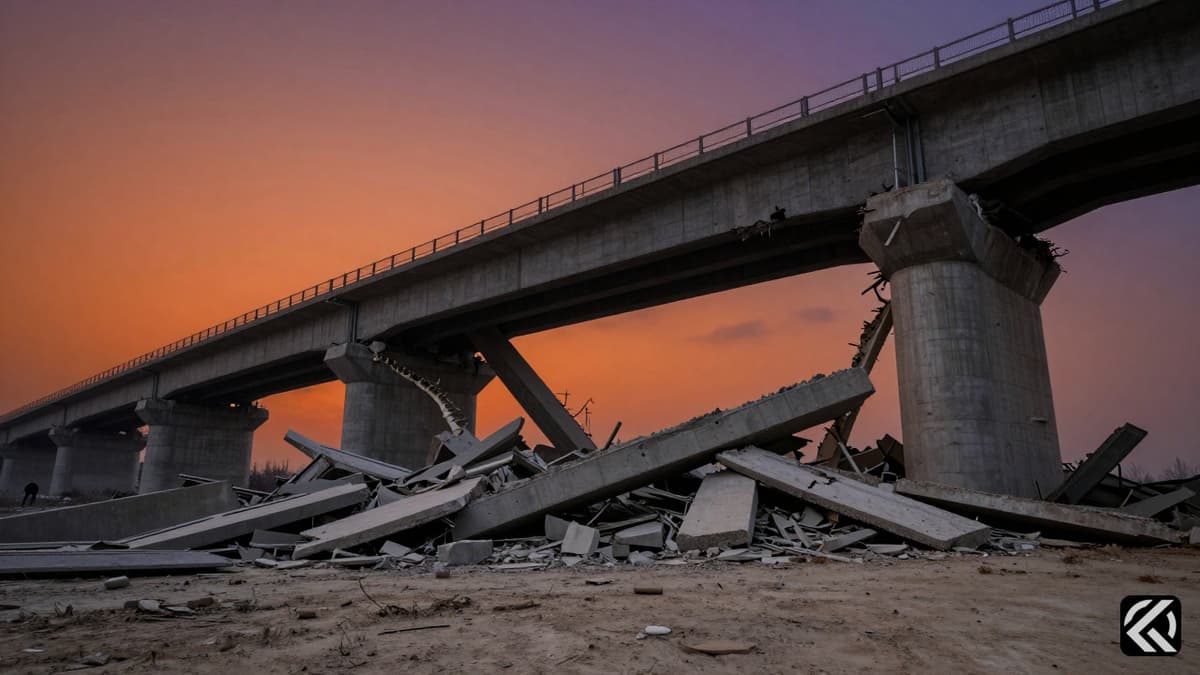
Amidst the rubble of the tallest Gulf bridge, Iran transforms a site of destruction into a defiant monument, challenging foreign military power with narratives of endurance.
The aftermath of the devastation at the Karaj River bed tells a story far more complex than mere structural failure. What remains are twisted steel beams, shattered concrete slabs, and an oppressive silence that speaks volumes about the intent behind the attack. Iranian authorities and witnesses do not view this destruction as an accidental byproduct of conflict, but rather as a deliberate, calculated strike. The objective, according to official narratives, was not just to dismantle physical infrastructure, but to dismantle the social and industrial backbone of the nation. This transformation of a site of ruin into a monument of defiance marks a significant shift in how the region is responding to external military pressure.
On the night of April 2, 2026, the region witnessed a pivotal moment when the B1 Bridge in Karaj was struck. Identified as the tallest bridge in the Gulf region, the structure was a source of national pride and engineering prowess. Its destruction during the course of American and Israeli military strikes represented a significant loss. The attack targeted a key section of the bridge, reducing what was once a symbol of Iranian capability to a field of rubble. The timing and nature of the strike have been scrutinized, with local officials emphasizing the precision and intent behind the targeting of such a prominent landmark.
The decision to frame this destruction as an act of resistance is central to the current narrative. Officials are actively working to reshape the public perception of the site. Instead of viewing the rubble as a sign of vulnerability, the government is positioning it as a testament to resilience. This strategic reframing serves to galvanize domestic support and present a united front against perceived external aggression. The narrative suggests that while physical structures can be demolished, the spirit and industrial capacity of the nation remain intact. This perspective is crucial for maintaining morale in the face of ongoing geopolitical tensions.
The physical reality of the site contrasts sharply with the political response. The dry bed of the river serves as a stark reminder of the scale of the damage. The twisted steel and shattered concrete are not just debris; they are evidence of a conflict that has escalated beyond traditional boundaries. Witnesses describe the scene as eerie and haunting, emphasizing the suddenness and severity of the destruction. These accounts are being woven into a broader narrative that condemns the actions of the foreign powers involved. The goal is to ensure that the international community understands the human and social cost of these military operations.
The role of media and official statements is critical in this phase. Iranian authorities are using every available platform to highlight the injustice of the strikes. By labeling the attack as a deliberate attempt to break the industrial backbone, they are framing it as an economic war, not just a military one. This distinction is important for understanding the broader implications of the event. It suggests that the targets were selected not only for their strategic value but for their symbolic importance to national identity. The destruction of a landmark like the B1 Bridge is intended to send a message of dominance, but the response has been one of defiance.
The historical context of the Karaj River area adds depth to the current crisis. For years, the region has been a hub of activity and engineering achievement. The bridge was a testament to this progress. Its fall represents a regression, or so it might appear to outside observers. However, the local response challenges this view. The narrative of resistance suggests that the destruction has only strengthened the resolve of the people. This is a common tactic in conflicts where asymmetric warfare is employed, but the scale and sophistication of the strike complicate the dynamic. The international community is now watching closely to see how this will influence regional stability.
The involvement of both American and Israeli forces in the strikes highlights the complex geopolitical alliances at play. The joint nature of the attack underscores the severity of the tensions in the Middle East. For Iran, this represents a significant threat, but it also provides an opportunity to rally nationalistic sentiment. The government is leveraging the tragedy to strengthen its political position domestically. By portraying itself as the defender of the nation against foreign aggression, the authorities are consolidating support. This strategy relies heavily on the public’s emotional response to the visual of the destroyed bridge.
The long-term implications of this event are difficult to predict, but the immediate impact is clear. The site of the American and Israeli military strikes has become a focal point for national discourse. It is no longer just a piece of broken infrastructure; it is a symbol. The government’s ability to control this narrative will determine how the event is remembered. If they succeed in framing it as a story of survival and strength, the political consequences could be significant. If the narrative fails to resonate, it could lead to further unrest. The coming weeks will be critical in shaping the future of Iran’s response to this crisis.
The destruction of the B1 Bridge represents a tangible loss, but the political response suggests a strategic pivot. Iranian authorities are leveraging this tragedy to reinforce national unity and condemn foreign intervention. The deliberate framing of the event as an attack on the industrial backbone indicates a long-term strategy of resilience. Future impacts may include increased domestic cohesion and a harder stance in diplomatic negotiations. The region will likely see heightened tensions as this symbolic resistance evolves into broader geopolitical maneuvers, with the physical rubble serving as a permanent reminder of the cost of conflict.
May 8, 2026 19:28 UTC
Iran Transforms Destroyed B1 Bridge Into Symbol of Resistance
Join 50,000+ readers getting the global briefing every morning.
No spam. Unsubscribe anytime.
May 9, 2026 01:12 UTC
Suvendu Adhikari to Assume Office as Bengal's 9th Chief Minister
May 8, 2026 21:27 UTC
Trump Orders Pentagon to Release First UFO Files
May 8, 2026 21:20 UTC
Trump Issues Veiled Nuclear Threat Amid US-Iran Tensions
May 8, 2026 17:14 UTC
Suvendu Adhikari Takes Office As West Bengal’s First BJP Chief Minister


