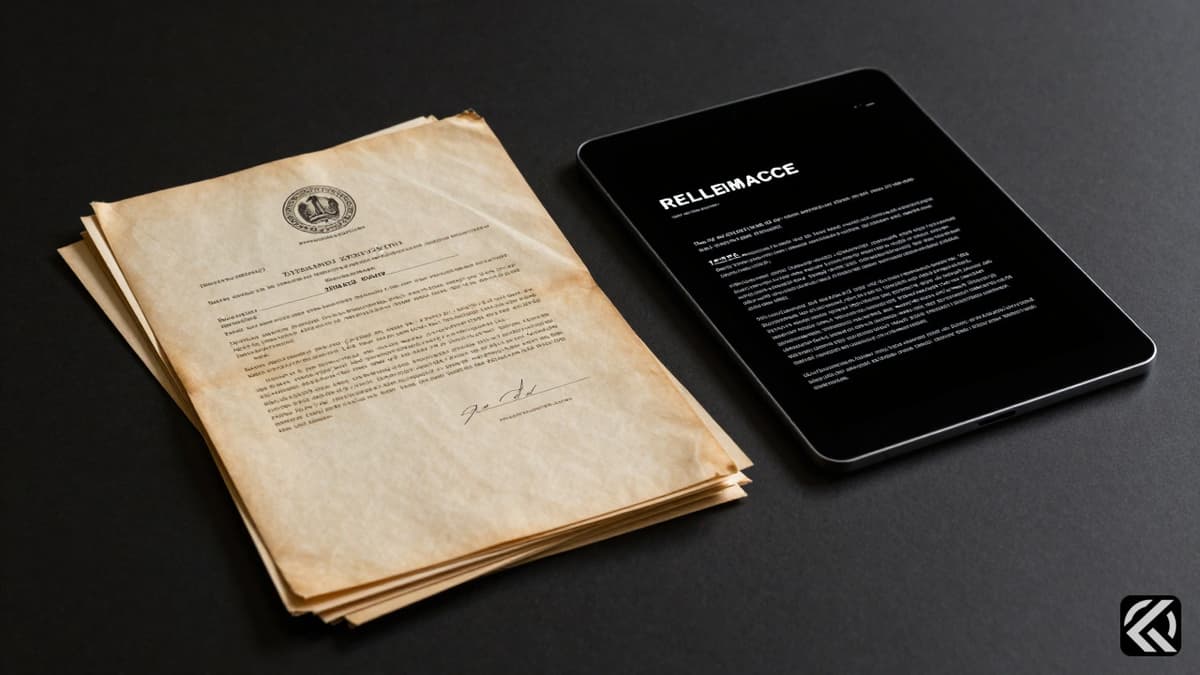
The Pentagon released 162 previously classified UFO files following President Trump’s order. While offering no concrete proof of alien life, the move aims for maximum public transparency.
The United States Department of Defense has officially released its first tranche of previously classified files on unidentified flying objects, fulfilling an order issued by President Donald Trump earlier this year. This significant move, executed on Friday, marks a shift in how the US government handles sensitive aerial data, moving from secrecy to a declared policy of openness.
The release includes a substantial collection of 162 files spanning several decades of archival history. These documents originate from multiple high-level government entities, including the FBI, the Department of State, NASA, the Department of Energy, and the Office of the Director of National Intelligence. Alongside the data drop, the Pentagon launched a new, heavily stylized website designed to host these records. The platform utilizes a stark aesthetic, employing a white typewriter-style font against a black background to present the information to the public.
In an official statement, the Pentagon emphasized that the release of these files does not constitute a final determination on their contents. Agency officials clarified that many of the documents had been screened solely for security purposes and had not yet undergone detailed analysis for the resolution of any anomalies. This cautious stance underscores the preliminary nature of this disclosure.
“While past administrations sought to discredit or dissuade the American people, President Trump is focused on providing maximum transparency to the public, who can ultimately make up their own minds about the information contained in these files,” the Pentagon statement read. This approach aligns with Trump’s broader strategy of transparency, which he has previously applied to records concerning the assassinations of President John F. Kennedy, Senator Robert F. Kennedy, and civil rights leader Martin Luther King Jr. In those instances, the released records offered few new details beyond what was already publicly known.
Trump framed the current initiative as a pivotal moment for truth-seeking. In a post on Truth Social on Friday, he wrote, “In an effort for Complete and Maximum Transparency, it was my Honor to direct my Administration to identify and provide Government files related to Alien and Extraterrestrial Life, Unidentified Aerial Phenomena, and Unidentified Flying Objects.” He added a casual sign-off, telling the public to “Have Fun and Enjoy!” The timing of this February order coincided with heightened public interest in the subject, sparked by former President Barack Obama’s comments during a podcast interview where he stated that aliens were “real,” though he clarified he had seen none and none were held in government facilities.
However, the release has drawn sharp criticism from political opponents. Critics have accused Trump of utilizing high-interest subjects to divert attention from his own political controversies, particularly the Department of Justice’s handling of investigative files related to financier Jeffrey Epstein. In January, the Justice Department announced the completion of its legally mandated release of Epstein files, noting that previous disclosures did not appear complete to lawmakers.
Representative Thomas Massie, a leading Republican critic of Trump, decried the UFO release in February as the “ultimate weapon of mass distraction.” This sentiment reflects broader skepticism regarding the utility of such disclosures when they do not provide immediate, verifiable answers.
The immediate impact of the new documents remains to be seen, as they contain no clear, immediate revelations regarding extraterrestrial contact. The files offer glimpses into specific sightings but stop short of confirming their origin. For instance, one document details an FBI interview with a drone pilot who, in September 2023, reported observing a “linear object” with a bright light. The pilot noted seeing “bands within the light” before the object vanished after five to ten seconds.
Another notable file is a NASA photograph from the Apollo 17 mission in 1972, which shows three dots in a triangular formation. The Pentagon’s accompanying caption noted that while there is no consensus on the anomaly’s nature, preliminary analysis suggests it could be a “physical object.” These specific examples illustrate the type of raw data now available to the public, highlighting the complexity of unexplained aerial phenomena.
Interest in UFOs and UAP has persisted for decades, spanning multiple presidential administrations. In 2022, Congress established a dedicated Pentagon office to investigate and declassify related material. That same year, a House panel held the first public hearing on the subject in over 50 years. The office’s first report, released in 2024, revealed hundreds of new UAP incidents. However, it notably found no evidence that the US government had ever confirmed a sighting of alien technology or confirmed evidence of alien life, further rebutting claims of recovered extraterrestrial artifacts.
The release of these 162 files represents a procedural milestone rather than a scientific breakthrough. It shifts the burden of interpretation to the public and independent researchers. The Pentagon’s refusal to draw immediate determinations allows for a broader, more decentralized analysis of the data. As historians and enthusiasts examine the files, the focus remains on the process of declassification itself. The administration’s goal appears to be establishing a precedent where secrecy is the exception, not the rule, in the realm of aerial phenomena.
This release sets a precedent for future data sharing, potentially encouraging other agencies to follow suit. While current files offer no definitive proof of alien life, the structured approach to declassification may lead to more frequent updates. As public scrutiny increases, the government may face pressure to provide more detailed analysis rather than just raw documents. This shift could slowly erode long-standing secrecy around aerial anomalies, forcing a more open dialogue on national security and unidentified objects in US airspace.
May 8, 2026 19:28 UTC
Iran Transforms Destroyed B1 Bridge Into Symbol of Resistance
Join 50,000+ readers getting the global briefing every morning.
No spam. Unsubscribe anytime.
May 9, 2026 01:12 UTC
Suvendu Adhikari to Assume Office as Bengal's 9th Chief Minister
May 8, 2026 21:20 UTC
Trump Issues Veiled Nuclear Threat Amid US-Iran Tensions
May 8, 2026 19:28 UTC
Iran Transforms Destroyed B1 Bridge Into Symbol of Resistance
May 8, 2026 17:14 UTC
Suvendu Adhikari Takes Office As West Bengal’s First BJP Chief Minister


