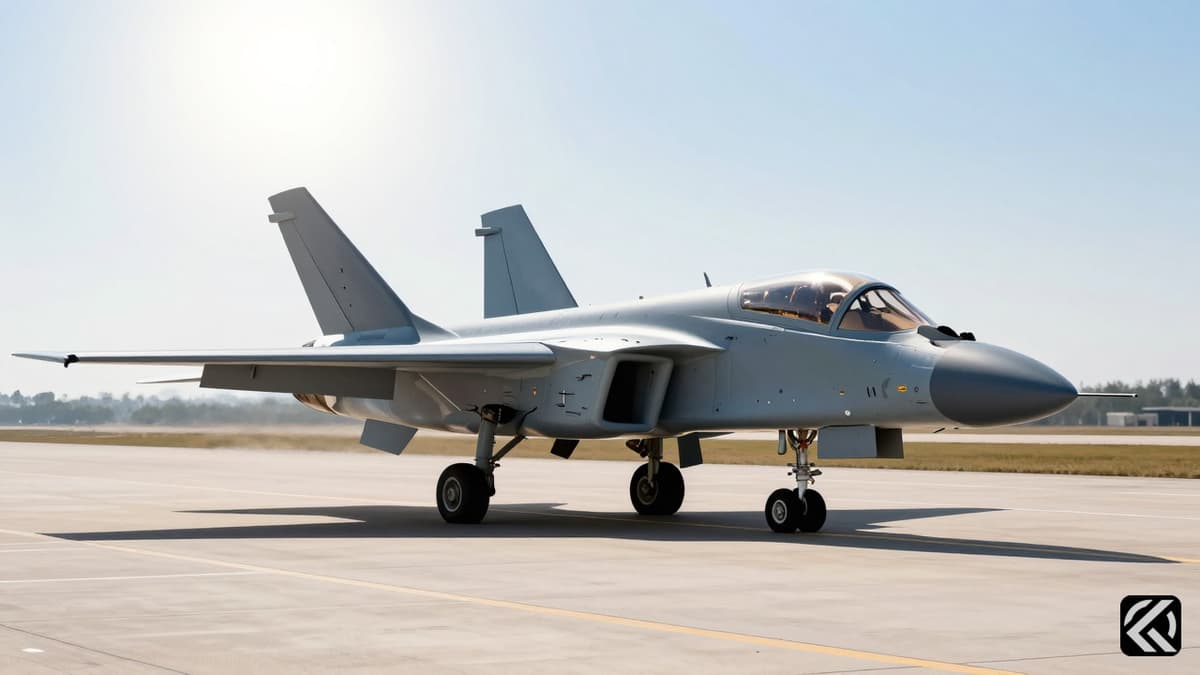
For the first time, Beijing has confirmed direct technical support for Pakistan's air force during last year's conflict, marking a significant escalation in regional military dynamics.
China has officially confirmed for the first time that it provided on-site technical support to Pakistan during its recent conflict with India, shattering diplomatic silence surrounding the hostilities. This revelation marks a significant moment in the China-Pakistan war narrative, as it validates long-standing suspicions held by New Delhi regarding Beijing’s direct involvement in the region’s military dynamics. The confirmation emerged on Thursday, May 7, 2026, when China’s South China Morning Post reported that state broadcaster CCTV had aired a revealing interview with Zhang Heng, an engineer from the Aviation Industry Corporation of China’s (AVIC) Chengdu Aircraft Design and Research Institute.
The interview provided unprecedented insight into the conditions faced by Chinese personnel during the four-day war that erupted last May. Mr. Zhang, identified as a key developer of China’s advanced fighter aircraft and unmanned aerial vehicle designs, detailed the physical and mental toll of his mission. He described a support base where the roar of fighter jets taking off was a constant backdrop, accompanied by the wail of air-raid sirens. The environmental conditions were severe, with temperatures approaching 50 degrees Celsius in late May, creating a harsh operational environment for the engineering team.
The South China Morning Post confirmed that Mr. Zhang’s presence was directly related to the maintenance and optimization of Pakistan’s Air Force fleet, which operates a significant number of Chinese-made J-10CE fighter jets. These jets are produced by a subsidiary of AVIC, making the technical support critical to the aircraft's combat readiness. Mr. Zhang told CCTV that his team was driven by a strong desire to ensure their equipment could perform at its full combat potential. He described the experience not merely as a technical assignment but as a testament to the deep bond formed through working side by side with Pakistani counterparts day in and day out.
This admission is particularly notable because it is the first official confirmation that Chinese personnel played a direct role in the clash between the two nuclear-armed neighbors. Since the conclusion of the hostilities, Indian military officials have openly accused Beijing of aiding Islamabad. In July 2025, Lieutenant General Rahul R. Singh, Deputy Chief of Army Staff, stated that India had to deal with three adversaries during Operation Sindoor. He described Pakistan as the “front face” of the conflict, while China and Türkiye provided vital support to India’s western neighbor. General Singh further revealed that China’s involvement extended beyond mere intelligence-sharing, noting that Pakistan was heavily dependent on Chinese military hardware during the conflict.
The engineer's comments, therefore, serve as direct corroboration of India’s strategic assessments. The reliance on J-10CE fighter jets by the Pakistan Air Force underscores the depth of the military-industrial complex link between Islamabad and Beijing. The technical support provided by engineers like Mr. Zhang would have been crucial in maintaining air superiority and ensuring that the advanced avionics and weapons systems of the Chengdu-sourced aircraft functioned optimally under the stress of active combat.
The confirmation also highlights the strategic implications of the AVIC Chengdu design bureau's work. As a key developer of China’s advanced military aviation, the institute’s direct involvement in field operations suggests a level of commitment to Pakistan’s defense capabilities that goes beyond standard arms sales. The engineer’s description of the “real ordeal” faced by his team illustrates the lengths to which Beijing is willing to go to support its ally. The harsh temperatures and the constant threat of air raids, signaled by the sirens, indicate that the support was not conducted in safe rear bases but in active, high-stress zones close to the front lines.
Furthermore, the interview sheds light on the psychological aspect of the conflict. Mr. Zhang’s reflection on the “desire to do an even better job” reveals a professional ethos that translates directly into combat effectiveness. For Pakistan, having engineers on-site to troubleshoot and optimize its primary combat aircraft likely provided a significant tactical advantage. The ability to have real-time technical support from the manufacturer ensures that any technical glitches or maintenance issues can be resolved immediately, keeping the fleet airborne and operational.
The reaction from New Delhi is expected to be severe, given that this confirmation validates their claims of foreign intervention in a bilateral conflict. The admission may lead to further diplomatic tensions between India and China, potentially impacting broader geopolitical relations in Asia. India’s insistence on recognizing China as an adversary in the conflict suggests that New Delhi views this support as a violation of the spirit of bilateral relations, or at least a breach of the expected boundaries of military cooperation in the region.
The role of Türkiye, also mentioned by General Singh, adds another layer to the geopolitical puzzle. With two regional powers, China and Türkiye, providing support to Pakistan, India finds itself facing a coordinated front of military and potentially logistical aid. The confirmation of on-site technical support from Chinese engineers amplifies the severity of this multi-front challenge, moving the narrative from theoretical alliances to concrete, observable actions on the ground.
The confirmation of on-site technical support for AVIC Chengdu hardware signifies a deepening of the military alliance between Beijing and Islamabad. This level of involvement suggests that China views Pakistan’s military capabilities as a strategic priority, willing to deploy skilled personnel under hazardous conditions to ensure the effectiveness of its exports. In the future, this could lead to an even greater integration of Chinese military technology into Pakistan’s defense infrastructure, potentially altering the balance of power in South Asia. As India continues to monitor these developments, the region may see an increase in military spending and arms procurement from other global powers, as New Delhi seeks to counter the enhanced capabilities of its neighbor. The long-term impact could be a more militarized border region, with both nations accelerating their defense modernization efforts in response to the perceived threats and alliances revealed by this conflict.
May 8, 2026 19:28 UTC
Iran Transforms Destroyed B1 Bridge Into Symbol of Resistance
Join 50,000+ readers getting the global briefing every morning.
No spam. Unsubscribe anytime.
May 9, 2026 01:12 UTC
Suvendu Adhikari to Assume Office as Bengal's 9th Chief Minister
May 8, 2026 21:27 UTC
Trump Orders Pentagon to Release First UFO Files
May 8, 2026 21:20 UTC
Trump Issues Veiled Nuclear Threat Amid US-Iran Tensions
May 8, 2026 19:28 UTC
Iran Transforms Destroyed B1 Bridge Into Symbol of Resistance


