Section
Washington confirms comparative tariff advantages for India in finalizing a bilateral trade agreement, aiming for completion by the current fiscal year's end.
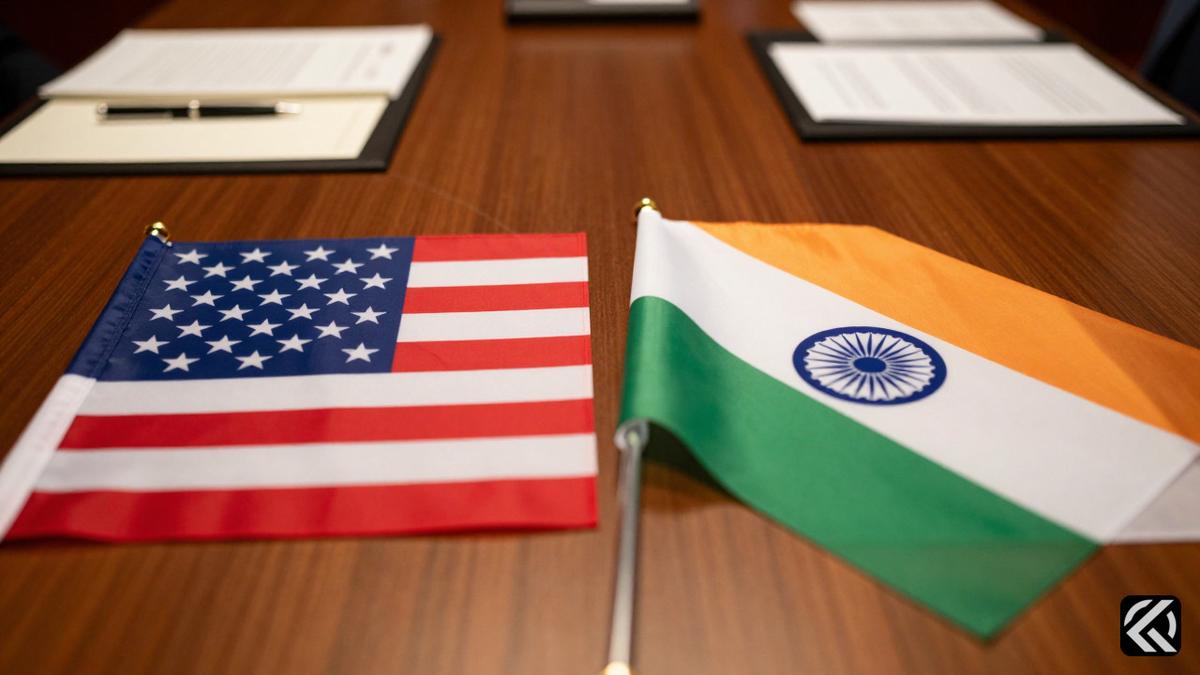
In a pivotal development for global commerce, the United States has formally assured India of a comparative advantage in its upcoming tariff framework. This assurance marks a significant milestone in the negotiations for an India-U.S. trade deal, with senior officials from the Ministry of Commerce and Industry confirming that both governments are actively working to finalize the agreement before the end of the current financial year.
The commitment to provide this preferential status is a direct response to long-standing Indian demands. Indian officials have consistently stated that New Delhi would not proceed with any substantive trade agreement unless Washington guaranteed that Indian exports would face lower tariffs than those of its primary competitors. This condition was explicitly outlined in the joint statement released in February 2026 between Prime Minister Narendra Modi and U.S. President Donald Trump, which pledged that both nations would "provide each other preferential market access in sectors of respective interest on a sustained basis."
Despite the February pledge, the path to a finalized text has encountered hurdles. The U.S. recently imposed an additional 10% tariff on India, citing allegations related to "forced labour." This levy is identical to those applied to other nations, including Indonesia, Malaysia, Pakistan, and Sri Lanka. Furthermore, the U.S. is conducting a separate investigation into excess capacity issues involving India and several other countries, which could potentially lead to further tariff increases.
However, a senior official in the Ministry of Commerce and Industry clarified that the recent U.S. assurance specifically accounts for these potential future tariffs. The assurance implies that even if the 10% levy or additional penalties from the ongoing investigation are applied, India will still maintain a tariff advantage over its global competitors. This nuanced approach is critical to overcoming the deadlock that has persisted since the initial joint statement.
"The attempt by both sides is to complete the deal by the end of this financial year," the official stated, emphasizing the urgency of the timeline. To ensure long-term stability, the parties have agreed to include a specific clause that allows either country to modify its commitments if the other alters its tariff structure.
"We have also agreed to a clause that says that if either country changes its tariffs on the other country, then the second country can also modify its commitments under the deal," the official explained. This provision, which was part of the original February joint statement, is considered highly unusual in the context of trade agreements India has historically entered into. The inclusion of such a dynamic mechanism underscores the unique nature of the current negotiations and the high stakes involved for both economies.
Separately, Commerce Secretary Rajesh Agrawal provided further details on the diplomatic efforts driving the deal forward. He confirmed that a two-man team from the United States visited India earlier in November, focusing on critical aspects of customs and trade facilitation.
"There was a small team from the U.S. that visited India for discussions on customs and trade facilitation in the first week of November," Mr. Agrawal said. He described the outcome of these meetings as highly positive, noting that "a lot of issues were closed, and there was convergence in a lot of areas."
The negotiations are not limited to physical meetings. The chief negotiators from both nations maintain regular virtual communications to address lingering linguistic nuances and minor technical fixes in the agreement text. Mr. Agrawal characterized the overall progress as being "on the right track," indicating that while significant work remains, the fundamental framework is solidifying.
The inclusion of the mutual tariff modification clause is a defining feature of this India-U.S. trade deal. Unlike traditional static agreements, this provision introduces a responsive element, allowing the deal to adapt to real-time policy shifts. For Indian exporters, this guarantees that the competitive pricing power they currently enjoy or hope to establish will not be eroded by unilateral U.S. tariff hikes.
The context of the additional 10% tariff imposed by the U.S. adds complexity to the negotiations. While the U.S. has cited "forced labour" concerns for this levy, the assurance of comparative advantage suggests that Washington is willing to decouple these punitive measures from the broader bilateral trade framework. This separation is vital for New Delhi, which has been keen to avoid a scenario where it is penalized more heavily than other Asian manufacturing hubs.
Furthermore, the ongoing investigation into excess capacity by the U.S. represents a potential future risk. The assurance of comparative advantage effectively neutralizes this risk by ensuring that even if additional tariffs are levied due to these findings, India’s overall tariff burden will remain lower than that of countries like Vietnam, Bangladesh, or the previously mentioned competitors. This level of certainty is crucial for multinational corporations deciding where to base their supply chains.
The timeline for completion remains tight. With the goal set for the end of the current financial year, negotiators are under pressure to resolve the remaining textual discrepancies. The recent convergence in customs and trade facilitation discussions provides optimism that these final hurdles can be cleared quickly.
The impending finalization of this agreement signals a strategic shift in Indo-Pacific economic dynamics. By securing a guaranteed comparative advantage, India positions itself as a more attractive alternative in global manufacturing networks, particularly amidst ongoing U.S. scrutiny of Asian supply chains. The unique tariff modification clause suggests a flexible yet robust framework that may influence future bilateral trade architectures, potentially encouraging other nations to seek similar dynamic protections in their own negotiations with Washington.
Nov 17, 2026 16:45 UTC
US Intel Warns of Iran Dirty Bomb Plot in DC
Nov 17, 2026 12:48 UTC
Quad Summit Manila: Modi, Trump Focus on Indo-Pacific Security
Nov 17, 2026 10:43 UTC
Ukraine Strike Collapses Crimean Bridge Ahead of Diplomatic Talks
Nov 16, 2026 16:25 UTC
Beijing Claims Historic Significance for Trilateral Talks in Shenzhen
Nov 17, 2026 14:43 UTC
Howard Lutnick’s Tenure Tested by Internal Discord and Scandals