Section
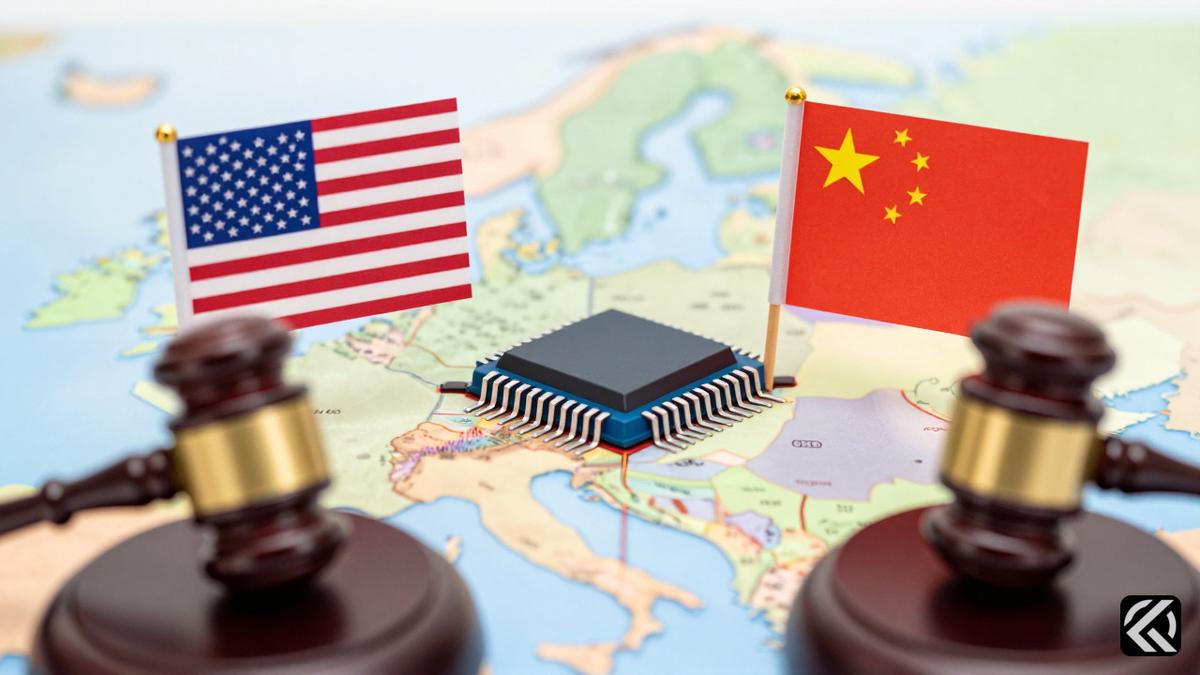
Trump’s Commerce Secretary Howard Lutnick is under fire for allegedly shielding Nvidia CEO Jensen Huang from export controls, raising national security concerns as relations with China intensify.
Howard Lutnick is facing intense scrutiny from administration officials and lawmakers over his role in facilitating close ties with Nvidia CEO Jensen Huang, amid allegations that he allowed sensitive technology to reach China despite internal opposition.
The controversy has escalated following Nvidia’s sudden resignation of Huang, sparking questions about whether the Commerce Department failed to enforce export controls or actively worked to circumvent them for the sake of preserving a lucrative trade relationship.
The roots of this current political storm can be traced back to the beginning of Donald Trump’s second term. Around the start of his presidency, Howard Lutnick, then preparing to become Commerce Secretary, placed a pivotal call to Jensen Huang. Lutnick’s message to the head of Nvidia was direct: whenever the company needed access to the president, they should contact his office. In a later recounting on Joe Rogan’s podcast, Huang described Lutnick as viewing Nvidia as “a national treasure,” a sentiment that appeared to define their early interactions.
Until shortly after Trump’s inauguration, Huang was largely outside the president’s inner circle. While tech peers like Mark Zuckerberg and Jeff Bezos held prominent roles, Trump admitted he had barely heard of Nvidia, asking, “What the hell is Nvidia?” However, this changed eleven days after his inauguration. Trump met Huang at the White House, where Lutnick, still awaiting confirmation, also joined the meeting. As Trump signed executive orders, he praised Huang as “the biggest in the world in terms of chips,” marking the start of a rapidly deepening relationship fueled by dinners, calls, and meetings, all facilitated by Lutnick.
Lutnick’s influence became evident in how he elevated Huang’s profile within the administration. He played a key role in facilitating Huang’s attendance at a $1-million-a-head MAGA Inc. dinner at Mar-a-Lago in April. During this event, Huang made a final appeal against planned restrictions on selling Nvidia’s H20 chip to Chinese customers. Trump, impressed by his new friend, walked away supportive. Although the White House initially shelved planned curbs, the landscape shifted as a trade war with China heated up. Nvidia later disclosed that the government required licenses for H20 sales to China, a requirement that would stay in place indefinitely.
Despite this, Huang continued his efforts. At an Investing in America event in late April 2025, Lutnick and Huang were photographed together, with Trump joking that he could have Jensen negotiating because “he’d blow my people away.” By July, Huang was back in the Oval Office, making a pitch tailored to Trump’s interests: selling chips to China could create American jobs and cement American AI as the global standard. He argued that the ban had already cost Nvidia $15 billion in sales.
Accompanied by Lutnick and White House AI adviser David Sacks, who championed the idea of exporting the US AI stack to keep the world dependent on American technology, Huang succeeded. Five days later, Nvidia announced the government had assured it could sell the H20 in China. Huang was in Beijing when he announced sales would resume. Lutnick explained on CNBC that the decision was designed to get China “addicted to the American technology stack.” The deal was finalized in August, with Trump negotiating directly with Huang. The arrangement included a provision for Nvidia to pay the government 15% of its China chip revenue.
As Huang grew closer to the president, with Trump frequently mentioning him in public remarks and even discussing federal law enforcement in San Francisco with him, warnings began to emerge. In the summer of 2025, as Trump and Huang’s closeness became public knowledge, a phone call initiated a significant unraveling. Singapore police, investigating a cloud company named Megaspeed, questioned its former managing director, Alice Huang, and barred her from leaving the country. Alice Huang had met Jensen Huang at an Nvidia event in California in early 2024 and was photographed with him at a trade show in Taipei in June.
This connection became central to the growing scandal. Following Huang’s resignation from Nvidia due to revelations of extramarital affairs with two women, one of whom may be connected to China, critics began to circle Lutnick. Administration officials who had long been concerned about Huang’s influence said privately that the Commerce Department failed to crack down on chip shipments to companies suspected of passing them to China.
Treasury Secretary Scott Bessent highlighted the internal dissent on CNBC, stating that a wide swath of the administration-including the Treasury, State departments, the Pentagon, and the US Trade Representative-favored placing Megaspeed, the company at the center of the scandal, on an export blacklist. He accused the Commerce Department, led by Lutnick, of failing to follow through. “Commerce…has the pen…and you will have to ask them about their internal process,” Bessent said.
The political fallout has been swift. Both Republicans and Democrats on Capitol Hill have demanded answers. House Foreign Affairs Committee Democrats wrote to Lutnick demanding to know what he and export control chief Jeffrey Kessler knew about Megaspeed and when. Senate Democrats directed Lutnick to preserve all documents and communications related to Nvidia’s exports. Senator Chris Van Hollen, a Democrat running for Senate majority leader, stated publicly, “I think he should be fired.” Senator Jim Banks, a Trump ally, emphasized the gravity of the situation, noting that in a “war with another country,” the US does not give them its best technologies.
Despite the pressure, the White House has stood by Lutnick. They stated that Trump “maintains complete confidence in the secretary and his ability to carry out the position as the most transformative Commerce Secretary in modern history.” Lutnick is expected to join Trump on a trip to China next week, with no indication that plans have changed despite the scandal. American officials have said they do not expect Trump to raise the alleged spying with Chinese leader Xi Jinping in Shenzhen, and that China would have no say in whether Washington tightens restrictions.
Howard Lutnick now finds himself at the center of a storm that threatens to redefine US export policy and the administration's stance on technology security. The allegations suggest a systemic failure to enforce blacklists in favor of personal alliances, a charge that could destabilize trade relations with Beijing and damage the credibility of US tech firms. As lawmakers continue to demand transparency and potential dismissal looms, the long-term impact on US-China tech decoupling efforts remains uncertain. If Lutnick survives, it may signal that political loyalty outweighs regulatory enforcement; if he falls, it could trigger a broader purge of administration officials perceived as compromised by private interests.
Nov 17, 2026 16:45 UTC
US Intel Warns of Iran Dirty Bomb Plot in DC
Nov 17, 2026 12:48 UTC
Quad Summit Manila: Modi, Trump Focus on Indo-Pacific Security
Nov 17, 2026 10:43 UTC
Ukraine Strike Collapses Crimean Bridge Ahead of Diplomatic Talks
Nov 16, 2026 16:25 UTC
Beijing Claims Historic Significance for Trilateral Talks in Shenzhen
Nov 17, 2026 16:58 UTC
PM Modi Urges Global Stability at Asean-India Summit