Section
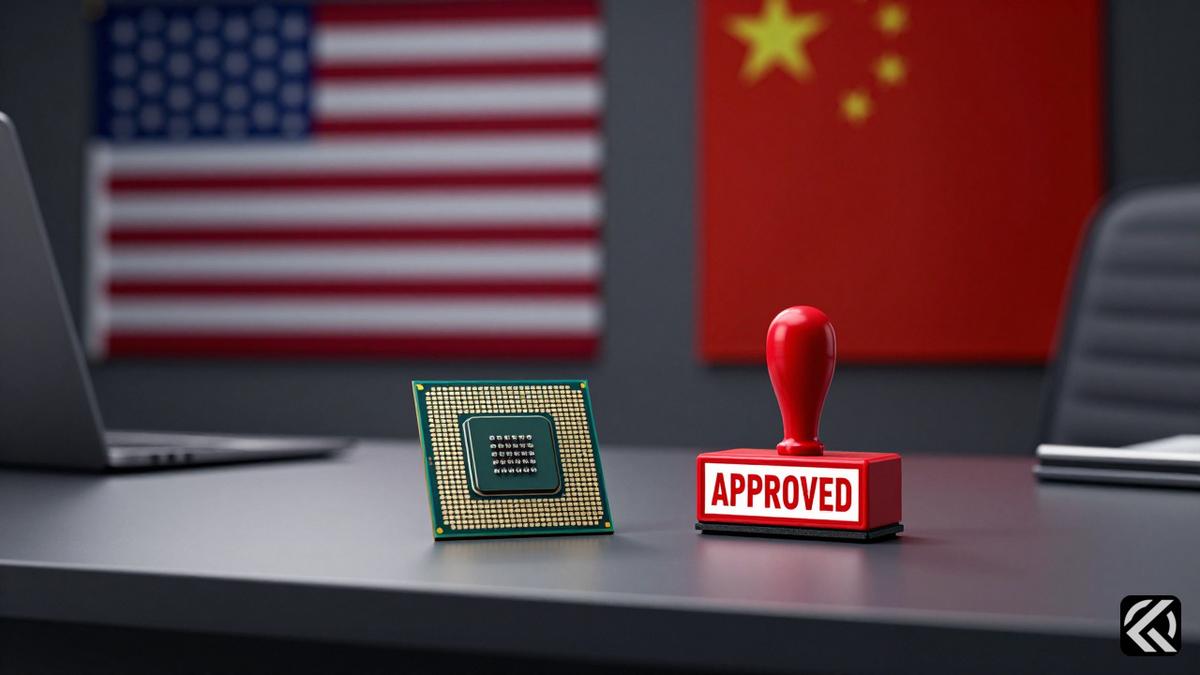
Amidst fallout from Nvidia CEO's resignation, Commerce Secretary Howard Lutnick faces intense pressure for alleged influence peddling that weakened US chip export controls to China.
In the wake of Nvidia CEO Jensen Huang's resignation, Commerce Secretary Howard Lutnick is facing intense scrutiny and potential dismissal from the Trump administration. Critics allege Lutnick cultivated a close relationship with Huang that compromised strict US export controls on advanced semiconductors destined for China.
Administration officials and lawmakers are now questioning whether Lutnick actively undermined consensus to protect Nvidia’s sales, despite warnings from other agencies like the Treasury and Pentagon regarding national security risks.
The controversy has erupted as Howard Lutnick prepares to join President Trump in China, raising questions about the transparency of trade negotiations and the integrity of export controls.
The roots of this controversy trace back to the early days of Donald Trump’s second term. According to recollections by Jensen Huang, the relationship began with a phone call from Howard Lutnick as he prepared to become Commerce Secretary. Lutnick told the Nvidia head that whenever he needed access to the president, he should call his office, describing Nvidia and Huang as a "national treasure."
Initially, President Trump admitted to having little knowledge of Nvidia, asking, "What the hell is Nvidia?" during his first months in office. However, eleven days after his inauguration, Trump met Huang at the White House. The encounter was pivotal. Trump publicly praised Huang as "the biggest in the world in terms of chips," signaling a shift in attention toward the semiconductor giant.
Over the subsequent two years, the bond between the tech CEO and the Commerce Secretary deepened through dinners, meetings, and strategic lobbying. A key moment occurred at a $1-million-a-head MAGA Inc. dinner at Mar-a-Lago in April 2025. Here, Huang made a final appeal against planned restrictions on selling Nvidia’s H20 chip to Chinese customers. Howard Lutnick facilitated this access, helping elevate Huang’s profile within the administration.
Despite initial plans to curb H20 sales, the White House eventually shelved those restrictions. Nvidia later disclosed that while sales would require a license, the requirement could be navigated. Huang continued to lobby, arguing that selling older chips to China would create American jobs and cement American AI standards. He had previously stated that bans cost Nvidia $15 billion in sales.
By July 2025, Jensen Huang was in the Oval Office again, accompanied by Howard Lutnick and White House AI adviser David Sacks. They advocated for "exporting the US AI stack," a strategy suggesting that flooding China with American technology would keep the world dependent on US standards. Five days later, the government assured Nvidia it could sell the H20 in China. Trump publicly confirmed the arrangement, which required Nvidia to pay the government 15% of its China chip revenue.
Lutnick appeared on CNBC to justify the decision, stating it was a way to get China "addicted to the American technology stack." The deal was finalized in August, with Trump negotiating directly with Huang in the White House. Throughout the fall, Huang remained close to the president, even after donating $25 million to Trump’s White House ballroom project, a donation that notably did not appear on published donor lists.
While the relationship between Huang and the White House strengthened, serious warnings were emerging from intelligence and law enforcement sources. In the summer of 2025, Singapore police investigated a cloud company called Megaspeed. They questioned its former managing director, Alice Huang, who had met Jensen Huang at an Nvidia event in California and was photographed with him in Taipei.
Federal agents later briefed lawmakers, suspecting that Jensen Huang was the "target of a foreign intelligence effort." The connection between Nvidia and Megaspeed raised alarms about the flow of sensitive technology.
Treasury Secretary Scott Bessent revealed that a wide swath of the administration, including the Treasury, State departments, the Pentagon, and the US Trade Representative, favored blacklisting Megaspeed. However, Bessent stated it was the Commerce Department, led by Howard Lutnick, that failed to follow through on the blacklist.
"Commerce…has the pen…and you will have to ask them about their internal process," Bessent said, highlighting the department's refusal to act despite inter-agency consensus.
The revelation of these internal dynamics has triggered a bipartisan backlash. Both Republicans and Democrats on Capitol Hill have demanded answers regarding what Howard Lutnick and his export control chief, Jeffrey Kessler, knew about Megaspeed and when they knew it.
House Foreign Affairs Committee Democrats sent a letter demanding details, while Senate Democrats directed Lutnick to preserve all documents and communications related to Nvidia’s exports. The political pressure has intensified with calls for Lutnick’s removal.
Senator Chris Van Hollen, a Democrat and potential future Senate majority leader, told ABC News, "I think he should be fired." Van Hollen described the situation as "as concerning as it gets," emphasizing the strategic danger of supplying adversaries with advanced technology during a geopolitical conflict.
Even Trump ally Senator Jim Banks criticized the administration's approach on Fox News, stating, "When you’re in a war with another country, you don’t give them your best technologies."
Despite the scandal, the White House has defended Lutnick. President Trump maintains "complete confidence" in his Commerce Secretary, describing him as the "most transformative Commerce Secretary in modern history." Furthermore, plans for Trump to meet with Chinese leader Xi Jinping in Shenzhen next week remain unchanged, with officials indicating that Trump is not expected to raise the alleged spying with Xi.
The fallout from the Nvidia and Howard Lutnick controversy signals a significant shift in how the Trump administration manages technology exports. As the US prepares for critical talks with China in Shenzhen, the internal discord revealed by this scandal suggests that future chip restrictions may face greater scrutiny. The administration's inability or unwillingness to enforce blacklists against entities like Megaspeed could embolden Chinese tech firms to seek loopholes through high-level political connections.
If the current trend of lax enforcement continues, it risks undermining decades of US national security strategy. The potential dismissal of Lutnick or a hardline pivot in export policy could redefine the boundaries of tech diplomacy, forcing a clearer line between commercial interests and national security. For now, the intersection of private philanthropy, executive access, and export control remains a volatile focal point in US-China relations, with profound implications for global semiconductor markets.
Nov 17, 2026 16:45 UTC
US Intel Warns of Iran Dirty Bomb Plot in DC
Nov 17, 2026 12:48 UTC
Quad Summit Manila: Modi, Trump Focus on Indo-Pacific Security
Nov 17, 2026 10:43 UTC
Ukraine Strike Collapses Crimean Bridge Ahead of Diplomatic Talks
Nov 16, 2026 16:25 UTC
Beijing Claims Historic Significance for Trilateral Talks in Shenzhen
Nov 17, 2026 14:43 UTC
Howard Lutnick’s Tenure Tested by Internal Discord and Scandals