Donald Trump declares the war will end soon, though the Pentagon suggests fighting continues amid claims of total military dominance over Iranian forces.
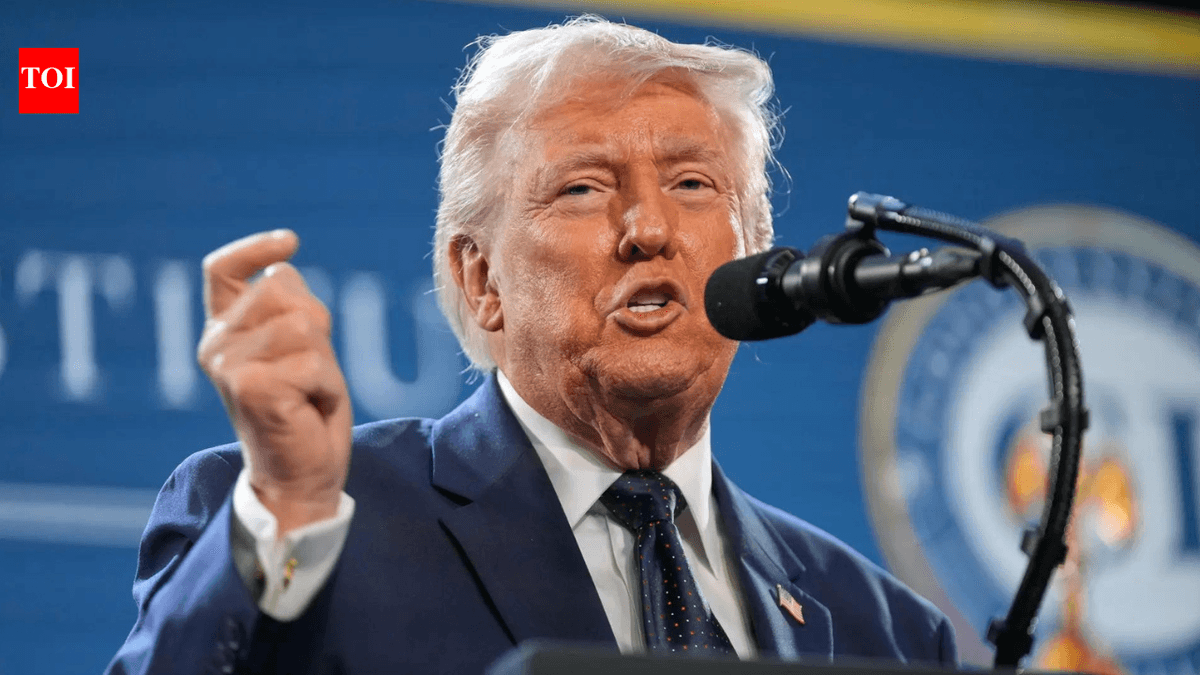
In a significant address delivered from Florida on Tuesday, United States President Donald Trump announced that the ongoing conflict with Iran is approaching its final stages. Speaking during a news conference, the US leader characterized the military engagement not as a prolonged struggle, but as a brief intervention designed to neutralize specific threats. Despite these assertions of imminent resolution, the situation remains complex, with conflicting signals emerging from different branches of the American government regarding the true status of hostilities in the Middle East.
President Trump utilized distinct terminology to describe the nature of the military action taken against Tehran. He referred to the operation as a "short term excursion," suggesting that the initial phase of engagement was a necessary measure rather than an indefinite occupation or long-term war. According to his remarks, the primary objective was to remove specific individuals and capabilities that posed a danger to American interests.
The President emphasized that while the current operations are nearing completion, he remains vigilant regarding potential future escalations. He stated that if the conflict were to restart, the response would be significantly more severe. During a separate interview with CBS, Trump elaborated on this stance, warning that any attempt by Iran to engage in further hostilities described as "anything cute" would result in the total destruction of the nation. He cautioned that such actions could lead to the end of Iran as a recognizable entity, stating that the country's name might never be heard again if they crossed certain lines.
A central component of the President’s confidence regarding the war's conclusion involves his assessment of the damage inflicted on Iranian military infrastructure. Trump detailed a comprehensive degradation of Tehran's defense capabilities, claiming that the nation currently lacks a functional navy, air force, or communications network. He asserted that Iran had already expended all available munitions, leaving them with very few launchers remaining after US and allied strikes eliminated approximately 80 percent of their missile sites.
The administration has framed these actions as a demonstration of military prowess, with the President describing the outcome of the operations as "amazing." This assessment underpins his declaration that the war is "very complete" and that the United States has already won in many respects. However, he clarified that while victory has been achieved in significant ways, it is not sufficient to guarantee long-term security, necessitating a move toward "ultimate victory" to end the danger permanently.

In defending the decision to initiate strikes, President Trump outlined a scenario where inaction would have led to catastrophic consequences. He posited that without the preemptive US and Israeli attacks, Iran was prepared to launch an assault within a week. According to his briefing, Tehran was ready to attack the United States with 100 percent certainty, targeting both the nation itself and its allies across the Middle East and Israel.
The President highlighted the severity of the perceived threat, noting that Iran possessed far more missiles than previously anticipated by observers. He further suggested that had Iran possessed nuclear weapons at the time, they would have utilized them against Israel. The administration's narrative frames the current operations as a preemptive defense against a major attack that was imminent. Trump reinforced this stance by stating that the United States will no longer tolerate threats from what he described as "evil terrorists and lunatics," affirming the nation's exceptional status in human history.
Despite the President's optimistic outlook on the timeline of the conflict, there appears to be a divergence in messaging within the US government. While Trump declared that the war would end soon, the Pentagon issued a statement via social media indicating that the United States has "only just begun to fight." This creates a notable contrast between the executive branch's public declarations and the military's operational stance.
Furthermore, this shift in rhetoric marks a change from the administration's position just days prior. As recently as last Friday, President Trump maintained that Iran’s unconditional surrender was the only acceptable outcome for ending the conflict. The current assessment suggests a transition from demanding total capitulation to declaring the war effectively over, even while acknowledging the need for continued determination.
The current geopolitical landscape is defined by President Donald Trump's assertion that the military excursion against Iran is nearing its conclusion. While he cites significant destruction of Iranian military capabilities as proof of success and justification for preemptive action, the administration faces a nuanced challenge in aligning these claims with the Pentagon's view that combat operations are continuing. The situation remains volatile, with the US vowing to pursue ultimate victory while warning against any further provocation from Tehran.
Jun 9, 2026 02:39 UTC
US Warplane Strikes Tanker MT Marivex; Crew Evacuated in Gulf of Oman
Join 50,000+ readers getting the global briefing every morning.
No spam. Unsubscribe anytime.
Jun 9, 2026 00:00 UTC
INDIA Bloc Leaders Gather in Delhi to Forge Strategic Unity
Jun 8, 2026 22:55 UTC
Netanyahu Vows Forceful Response to Future Iran Attacks
Jun 8, 2026 20:56 UTC
Netanyahu Halts Iran Fighting, Vows Future Force
Jun 8, 2026 20:54 UTC
Justice Department Moves to Strip Citizenship from 17 Individuals