Global markets rally and oil prices retreat as the US and Iran appear closer to a historic agreement, though Trump warns of intensified strikes if talks fail.
Global stock markets surged and oil prices retreated on Wednesday following reports that the United States and Iran are nearing a decisive agreement to end the ongoing war. This significant market movement occurred after Axios reported that Washington believes it is close to finalizing a one-page document that would terminate hostilities and initiate detailed nuclear talks. The news sparked a broad rally across global equities, with major European and Asian indexes closing higher, while the S&P 500 gained more than 1%.
The market volatility reflects the high stakes of the conflict, particularly regarding energy supplies. Brent crude futures, the global benchmark for oil prices, initially fell to $97 (£73) a barrel upon the reports before rebounding to over $101. The price had traded above $108 earlier in the day, illustrating the sensitivity of the market to geopolitical developments. These fluctuations are directly tied to the conflict's impact on production and transportation in the region, which has seen a significant slump since the US-Israel war with Iran began.
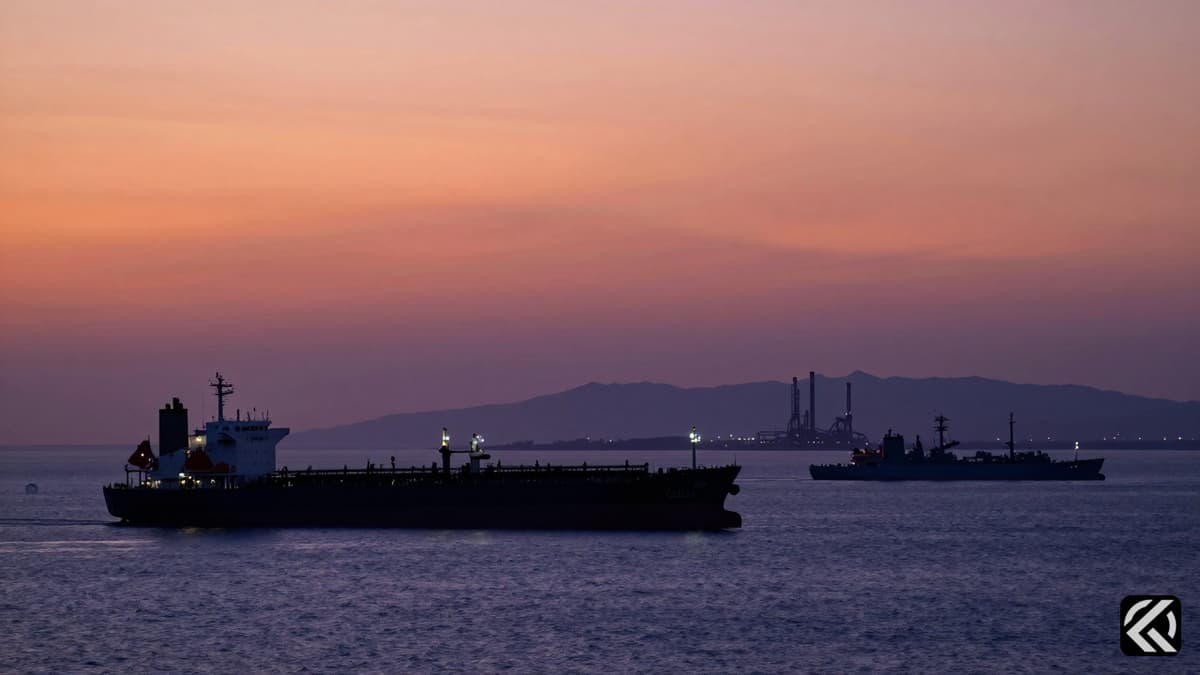
Central to the economic disruption is Iran’s threat to attack oil ships crossing the Strait of Hormuz. This narrow waterway, located south of Iran, is a critical chokepoint for global energy, with about a fifth of the world’s oil and gas shipments typically passing through it. The strait has been effectively closed for weeks due to increased hostilities, causing global gas prices to soar. The conflict, which has seen US-Israeli strikes since February 28, prompted Iran to threaten attacks on shipping lanes in retaliation.
In response to the escalating tensions, US President Trump announced the initiation of "Project Freedom," a military operation designed to guide ships through the Strait of Hormuz. This move was followed by a rise in attacks from both Iranian and US forces. However, on Tuesday, Trump stated he would pause the operation for a short period to see if an agreement could be finalized and signed. He claimed on social media that "Great Progress has been made toward a Complete and Final Agreement with Representatives of Iran," while simultaneously warning that any failure to reach a deal would result in bombardments "at a much higher level and intensity" than during Operation Epic Fury.
The potential agreement, as reported by Axios, would declare an end to the war in the region and establish a 30-day negotiation period. This timeframe would be dedicated to reopening the strait, limiting Iran’s nuclear program, and lifting US sanctions. The report, citing two US officials and two other sources, suggests this is the closest the two sides have come to an accord since the conflict began. The US is believed to be awaiting Iran’s response on several key points within the next 48 hours.
Earlier diplomatic efforts included a ceasefire agreed upon by the US and Iran on April 8, which initially caused oil prices to slump and stock markets to jump. However, the current negotiations appear more substantive, aiming for a comprehensive resolution rather than a temporary halt to fighting. US Secretary of State Marco Rubio stated on Tuesday that the initial US-Israeli offensive in Iran was over, asserting that Washington's objectives had been met.
Despite the optimism surrounding the potential deal, an Iranian foreign ministry spokesperson told the Iranian Students' News Agency that the US proposal was still being considered, casting a note of caution on the immediate timeline for peace. Furthermore, Trump later suggested on Truth Social that a deal could still be far off, labeling any Iranian agreement as "a big assumption."
The Iran ceasefire hopes have not only affected energy markets but also equities. The FTSE 100 and Germany’s Dax closed over 2% higher, while France’s Cac 40 rose 3%. Asian markets also ended the day higher, with South Korea’s Kospi up 6.45%, the Hang Seng up 1.22%, and the Nikkei up 0.38%. However, long-term trends show divergence, with the Hang Seng remaining down since the start of the war, while the Kospi and Nikkei have posted gains.
The recent surge in stock markets and the temporary dip in oil prices indicate that investors are pricing in a potential de-escalation of the US-Iran conflict. If the one-page memorandum is signed, the reopening of the Strait of Hormuz will likely lead to a sustained drop in energy costs, relieving pressure on global supply chains. Conversely, if Iran rejects the proposal or hostilities resume with the predicted "higher intensity," energy prices could spike dramatically, triggering further market instability. The coming 48 hours will be critical in determining whether the current trajectory leads to a lasting peace or a renewed period of geopolitical volatility.
May 8, 2026 19:28 UTC
Iran Transforms Destroyed B1 Bridge Into Symbol of Resistance
Join 50,000+ readers getting the global briefing every morning.
No spam. Unsubscribe anytime.
May 9, 2026 11:57 UTC
IUML Rejects TVK Support Rumors During Tamil Nadu Government Formation
May 9, 2026 11:57 UTC
Pentagon Unveils Declassified UFO Files Amidst Political Debate
May 9, 2026 09:41 UTC
Modi Touches Feet of Veteran Sarkar Amid West Bengal Victory
May 9, 2026 07:15 UTC
Suvendu Adhikari Forms New BJP Cabinet in West Bengal


