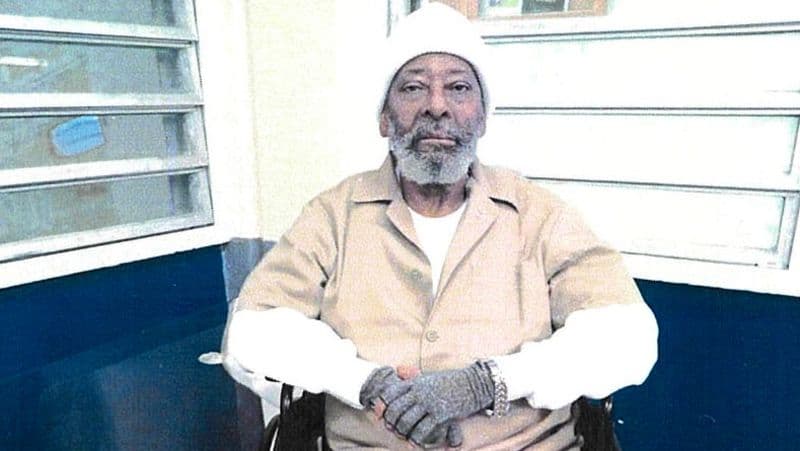
In a rare move, Alabama Governor Kay Ivey has granted clemency to Charles Burton, sparing him from execution due to unfairness compared to the actual shooter.
Governor Kay Ivey has made a decisive move to spare Charles ‘Sonny’ Burton from execution this week. This decision marks a rare instance of clemency, sparing a man who sat on death row for three decades. The primary reason for the commutation lies in the disparity between Burton’s sentence and that of the actual shooter. Ivey stated she could not proceed with the execution because Burton was not the one who pulled the trigger. Consequently, his sentence will be changed to life in prison without parole, aligning his punishment with that of the man who committed the lethal act.
The case highlights a significant imbalance in how accomplices are punished under capital felony murder statutes. Derrick DeBruce was the individual who shot and killed Douglas Battle during an 1991 AutoZone robbery in Talladega. Inside, Burton purchased some items and went to the bathroom while DeBruce pulled out his gun. Although Burton was convicted as the ringleader of the group, he was outside the store when the shooting occurred. DeBruce originally received a death sentence but had it reduced to life without parole in 2014 following an appeal regarding ineffective trial lawyers. He died in prison in 2020. Ivey emphasized that executing one participant while the triggerman receives a lesser punishment is unjust. She noted that ensuring the death penalty remains viable requires fair and proportionate administration of government actions.
The decision brought relief to Burton’s loved ones and received support from the victim's side as well. Lois Harris, Burton’s daughter, expressed that a weight had been lifted off her shoulders, calling the governor's choice the right one. Even the victim’s daughter, Tori Battle, advocated for commutation in a letter to Ivey. She noted that her father valued peace over revenge and found the execution of an elderly man disturbing. Additionally, several jurors involved in the 1992 trial reached out to the governor. Six of the eight living jurors indicated they would not have voted for the death penalty had they known the shooter received a different sentence. Juror Priscilla Townsend admitted that sentencing a non-shooter to death did not sit right with her after gaining perspective over the years.
Beyond the legal arguments, Burton’s physical condition played a role in the clemency petition. The 75-year-old inmate suffers from rheumatoid arthritis limiting him to a wheelchair and has recently suffered a stroke. His son, Charles Burton Jr., pleaded for compassion, asking the governor to consider his health and family, specifically his grandchildren. The defense argued that for a capital offense, there must be proof of intent to kill someone.

This case underscores the complexity of capital punishment in Alabama. With less than half of one percent of death row inmates receiving clemency, this ruling stands out as a significant deviation from the norm. By prioritizing proportionality over strict adherence to jury recommendations, Governor Ivey has acknowledged the moral weight of executing a non-shooter when his accomplice was already resentenced. The outcome leaves Burton with life imprisonment, offering him a chance to spend his remaining years in prison.

Jun 9, 2026 02:39 UTC
US Warplane Strikes Tanker MT Marivex; Crew Evacuated in Gulf of Oman
Join 50,000+ readers getting the global briefing every morning.
No spam. Unsubscribe anytime.
Jun 9, 2026 00:00 UTC
INDIA Bloc Leaders Gather in Delhi to Forge Strategic Unity
Jun 8, 2026 22:55 UTC
Netanyahu Vows Forceful Response to Future Iran Attacks
Jun 8, 2026 20:56 UTC
Netanyahu Halts Iran Fighting, Vows Future Force
Jun 8, 2026 20:54 UTC
Justice Department Moves to Strip Citizenship from 17 Individuals