
Section
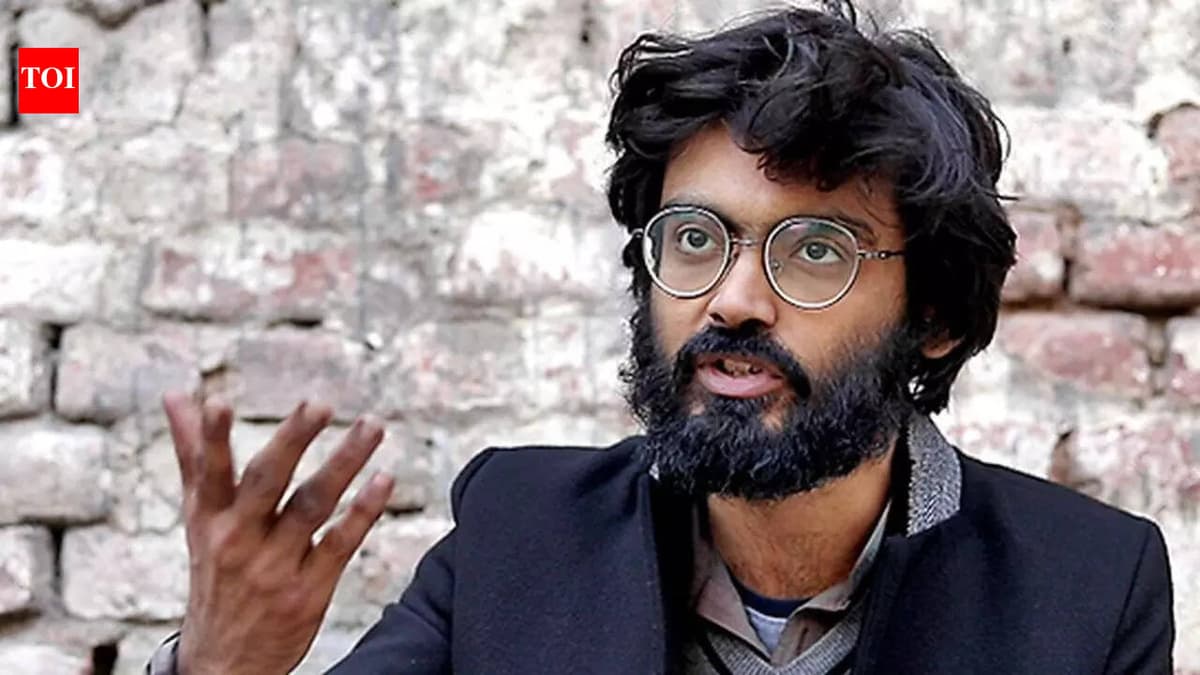
The judiciary has temporarily released Sharjeel Imam from custody to attend a family function while legal proceedings regarding the 2020 Delhi riots continue.
In a significant development within the Indian judicial system, a local court in New Delhi has issued an order granting temporary relief to Sharjeel Imam. This decision pertains to a legal case connected to the violent disturbances that occurred in the capital region during early 2020. The ruling allows the accused individual to leave custody for a specific duration to participate in a family event, marking a temporary pause in their detention status while the broader conspiracy trial remains active.
The proceedings regarding this request were heard by Additional Sessions Judge Sameer Bajpai. The judicial authority decided to grant interim bail for a period spanning ten days. This specific timeframe is set from March 20 to March 30 of the current year. The motivation behind this application was the desire to attend the marriage ceremony of Imam’s brother, which was scheduled to take place within the current month.
Although the accused had originally sought relief for a duration of six weeks to accommodate the event, the court determined that a ten-day window was sufficient. This decision comes shortly after the initial request for bail was filed by the activist. The interim order allows for his temporary release from incarceration specifically for this purpose, ensuring he can fulfill family obligations before returning to face the ongoing legal processes associated with the case.
This recent judicial decision follows a major ruling made earlier in the year by the Supreme Court of India. In January 2026, the apex court rejected a regular bail plea filed by Sharjeel Imam. At that time, the top court also refused to grant relief to Umar Khalid, a fellow student activist who was involved in similar legal matters concerning the same incident. The bench responsible for this decision included Justices Aravind Kumar and N V Anjaria.
The Supreme Court provided specific reasoning regarding the conditions under which bail is granted in such instances. They explicitly stated that the delay in conducting trials or the length of time an individual has already spent in jail cannot be used as a definitive argument to secure freedom. In legal terms, these factors cannot serve as a "trump card" for obtaining bail when the charges are registered under the Unlawful Activities (Prevention) Act. The court emphasized that while personal liberty is a fundamental right, it cannot be the only consideration when allegations involve serious offences that impact public order and national security.
A critical aspect of the Supreme Court's previous judgment was the differentiation between various accused persons involved in the case. The top court observed that Sharjeel Imam and Umar Khalid stood on a different footing compared with the other individuals named as co-accused. This distinction was based on what the court described as a "hierarchy of culpability" regarding their alleged involvement in the conspiracy.
While both activists had spent more than five years in jail in connection with the case, they were treated differently from five others who received relief. The five individuals granted bail during the January hearing included Gulfisha Fatima, Meeran Haider, Shifa-ur-Rehman, Mohd Saleem Khan, and Shadab Ahmad. The Supreme Court clarified that the two activists in question could apply for bail again after one year has passed or once all protected witnesses in the trial have been examined, whichever of these two conditions occurs earlier.
The judicial reasoning highlighted the tension between constitutional protections and statutory requirements. The top court stressed that courts must balance constitutional protections under Article 21 with Parliament’s intent behind stricter bail conditions in laws dealing with national security related offences. It was noted that the mere passage of time cannot automatically justify bail in cases involving offences under special statutes such as the Unlawful Activities (Prevention) Act.
This indicates a strict legal approach where the nature of the offence plays a larger role than the duration of detention alone. The court acknowledged the importance of personal liberty but maintained that it cannot be the sole factor when allegations involve serious offences affecting public order. This framework suggests that in cases involving stringent acts, the burden of proof and the severity of the alleged actions weigh heavily against automatic release based on incarceration length.
The legal proceedings stem from communal clashes that erupted in February 2020 during protests against the Citizenship (Amendment) Act, 2019. These events led to violent confrontations in parts of northeast Delhi. The violence occurred during the visit of then US President Donald Trump to India, adding an international dimension to the domestic unrest at the time.
The impact of these riots was severe, resulting in significant loss of life and injury. Official records indicate that the February 2020 riots left 53 people dead and more than 700 individuals injured. Sharjeel Imam is listed as an accused in the case pertaining to these specific events. The gravity of the casualties and the nature of the violence underscore why the courts have applied stringent bail conditions under special statutes, prioritizing public order considerations over immediate release for high-profile defendants.
The recent judicial order granting interim bail to Sharjeel Imam highlights the complex legal landscape surrounding the 2020 Delhi riots cases. While the court provided temporary relief for a family occasion, the overarching legal framework established by the Supreme Court maintains strict conditions for release in matters involving national security and public order. The distinction made between different accused individuals and the emphasis on the stringent nature of the Unlawful Activities (Prevention) Act demonstrate that personal liberty is balanced against the severity of the alleged offences. As the trial continues, future bail applications remain subject to specific conditions regarding witness examination and waiting periods defined by the higher court.
Jun 13, 2026 07:25 UTC
Trump Blames Iran for Attacks on Indian Ships
Jun 13, 2026 04:59 UTC
Abbas Araghchi Details Draft U.S. Deal Amidst Donald Trump's Drone Accusations
Jun 13, 2026 03:39 UTC
Jaishankar Lodges Strong Protest Over US Navy Attacks on Indian Crew
Jun 13, 2026 02:22 UTC
Border Guard Bangladesh Challenges BSF Over Immigrant Pushbacks
Jun 13, 2026 08:08 UTC
Police Raid Abhishek Banerjee’s Kalighat Residence on June 13


