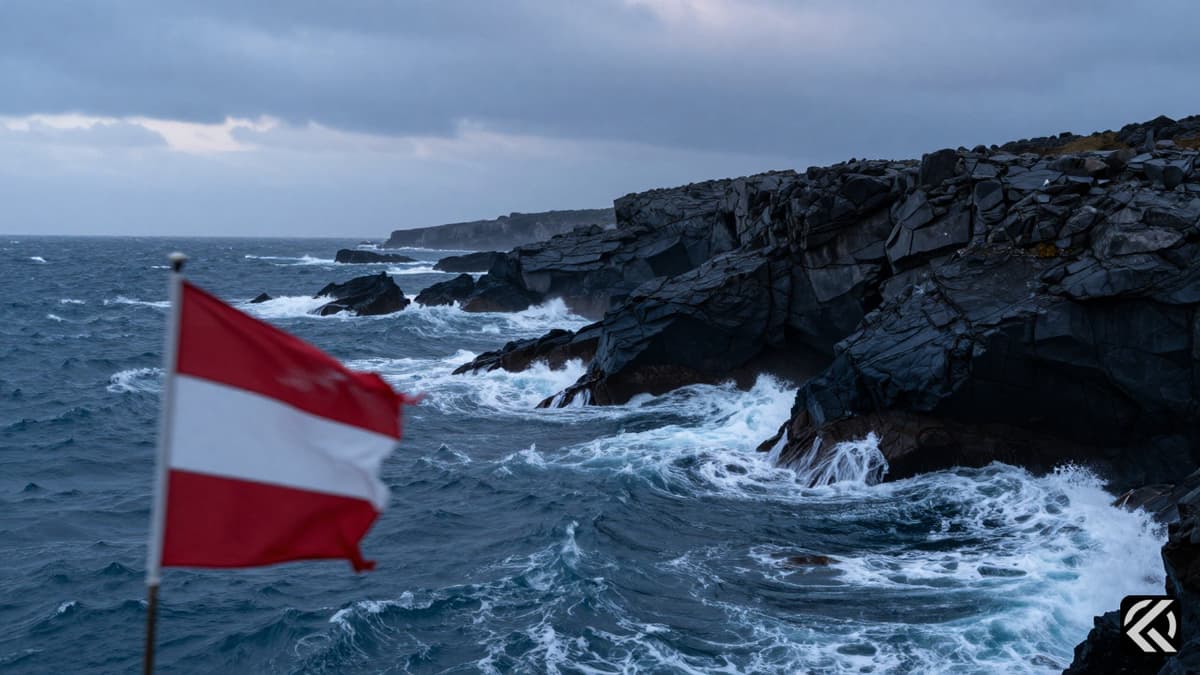
A sudden 7.7 magnitude earthquake struck off Japan's northeast coast, prompting immediate evacuations and tsunami warnings. Authorities fear a larger seismic event could follow within days.
Officials in Japan have issued a stark warning regarding an increased risk of a massive earthquake in the coming week following a 7.7 magnitude earthquake Japan experienced off its north-east coast. The powerful tremor, recorded at a depth of 10km in waters off Iwate prefecture, triggered a tsunami warning and a mandatory evacuation order. The tremor struck 530km north of Tokyo, causing the largest measured waves to reach 80cm. However, the Meteorological Agency cautions that even stronger shaking could occur within the next seven days, potentially generating significantly larger waves.
The agency subsequently updated its assessment, stating that the risk of a magnitude 8.0 or higher quake is now "relatively higher than during normal times." This heightened alertness comes as the nation is still scarred by the memories of the devastating 2011 disaster, which claimed over 18,000 lives and caused a meltdown at the Fukushima nuclear plant. In the immediate aftermath of Monday's undersea quake, recorded at 16:52 local time, warnings of possible bigger waves were issued to residents in Japan's main island, Honshu, and the northern region of Hokkaido.
In Hokkaido, tsunami alerts remained in place for at least two hours after the initial tremor. Chaw Su Thwe, a Myanmar national residing in the region, recounted the immediate response of the community. "As soon as we heard the earthquake alert, everyone ran downstairs," Thwe told the BBC. Despite the fear, Thwe noted that the shaking was "relatively mild" compared to historical precedents. Local authorities quickly deployed loudspeakers to warn neighbors about a possible tsunami and urged residents to stay alert. Office workers were permitted to leave work early as a precautionary measure.
Japan's Cabinet Secretary, Minoru Kihara, provided an update on the infrastructure impact to reporters. He confirmed that a number of bullet trains were affected by the quake and that 100 homes were left without power. Despite the scale of the event, Kihara stated there were no immediate reports of major damage or injuries. A tsunami warning was initially issued across a significant portion of Japan's east coast. This alert represents the second-highest of three levels, commanding people to evacuate immediately from coastal regions and riverside areas to move to higher ground or designated evacuation buildings.
Japan's Meteorological Agency (JMA) issued a critical advisory in the hours following the quake, stating, "Tsunami waves are expected to hit repeatedly. Do not leave safe ground until the warning is lifted." This plea was echoed by Prime Minister Sanae Takaichi, who urged the populace to get to "higher, safer places." The warning status was later downgraded to a tsunami alert before being removed entirely shortly before midnight local time.
Japan's precarious location on the Ring of Fire means it experiences approximately 1,500 earthquakes annually. The archipelago accounts for 10% of quakes measuring 6.0 magnitude or higher worldwide. The latest seismic activity has drawn sharp comparisons to the March 2011 event, when the country was hit by a devastating 9.0-magnitude earthquake off the coast to the south of Iwate province. That event remains the most powerful earthquake ever recorded in Japan's history, serving as a grim benchmark for the nation's current seismic anxiety.
The recent 7.7 magnitude earthquake Japan experienced has reignited concerns across a nation accustomed to seismic instability. Given the historical precedent of the 2011 disaster, the current elevated risk of a magnitude 8.0 or higher quake within the next week suggests a potentially volatile period for the region. If the geological patterns observed since March 2011 continue to hold true, the next seven days could witness even more significant ground shaking and larger tsunami waves than currently anticipated. Authorities are likely to maintain a high state of alert, with continued evacuations and infrastructure checks expected until the risk subsides. The resilience of the population, as demonstrated by the swift evacuation responses, will be critical in mitigating potential losses in this earthquake-prone zone.
Jun 8, 2026 00:51 UTC
Trump Claims Iran Nuclear Deal Imminent Despite Diplomatic Fractures
Jun 8, 2026 00:47 UTC
Iran Fires Missiles at Israel After Beirut Strike
Jun 7, 2026 22:00 UTC
US, Iran Peace Hops Fade 100 Days Into War
Jun 7, 2026 20:57 UTC
Iran Strikes Israel: IRGC Promises Week of Continuous Offensive
Jun 8, 2026 02:28 UTC
Trump Walks Out of Meet the Press After Rejecting Evidence Demands


