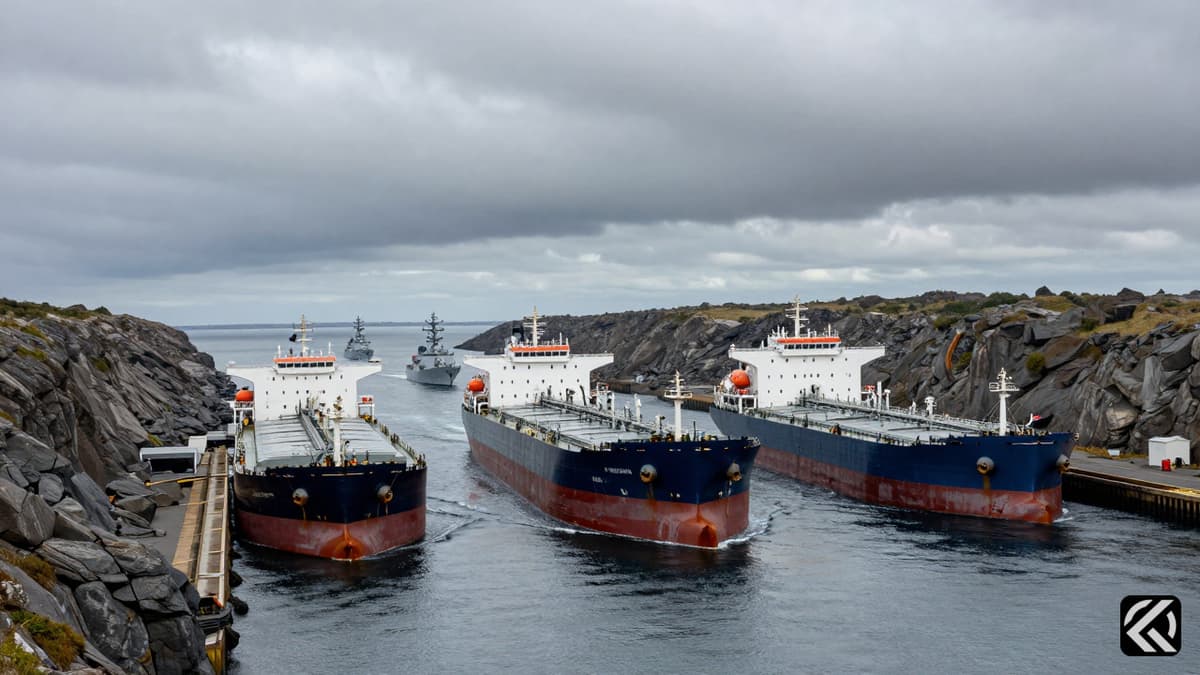
Field Marshal Munir warns Trump that port blockades block Iran talks as tensions surge in the Strait of Hormuz following a US naval seizure.
Pakistan Field Marshal Asim Munir has directly informed US President Donald Trump that the blockade of Iranian ports constitutes a primary hurdle to reviving negotiations with Tehran. A Pakistani security source conveyed this message to Reuters, highlighting the critical link between port access and diplomatic progress. This communication arrives as the United States and Iran appear deeply entangled in a diplomatic standoff, with talks currently in a state of limbo. The Pakistani security source noted that the Field Marshal's warning underscores the fragility of the upcoming negotiations scheduled for Islamabad.
The situation escalated rapidly following the US decision to seize an Iranian-flagged cargo vessel in the Gulf of Oman, an operation confirmed by President Trump to have been carried out by the USS Spruance. Tehran has condemned the naval seizure as an act of "piracy," a stark accusation that has intensified the regional atmosphere. In response to the blockade and the seizure, Iran has reimposed strict controls on shipping lanes, a move that has immediately sent energy markets into turmoil. The Strait of Hormuz, a critical artery through which roughly a fifth of the world's oil passes, has become the epicenter of this crisis.
Iranian officials have made their position on the negotiations clear, signaling a significant shift in diplomatic posture. Esmail Baghaei, a spokesperson for Iran's foreign ministry, stated that Tehran currently has "no plans" to attend the next round of negotiations, though he stopped short of completely ruling out future participation. This stance was reinforced by Iranian Foreign Minister Abbas Araghchi, who told Pakistani officials that the US actions against Iranian shipping were a "clear sign" of bad faith. Araghchi's comments suggest that without a reversal of these restrictive measures, any prospect for dialogue remains distant.
Market reactions to these developments have been immediate and severe. Oil prices surged on Monday following Tehran's reimposition of controls on shipping lanes, reversing a brief reopening that had been linked to a ceasefire between Israel and Hezbollah. The timing of the US seizure, which occurred early Monday, has compounded the anxiety regarding the Strait of Hormuz. The region is currently experiencing a volatile mix of military posturing and economic uncertainty, with fears of a broader confrontation rising as drone activity is reported near US naval assets.
In the midst of this volatility, President Trump has maintained a combative tone, warning that Washington retains the capability to target Iran's infrastructure if negotiations ultimately fail. Despite the US stance, Trump acknowledged the counsel provided by the Pakistani Field Marshal, stating that he would "consider" Munir's advice regarding the blockade. This response indicates a potential, albeit tentative, opening for diplomatic maneuvering, even as the physical blockade continues to obstruct progress. The Pakistani government had been preparing to host the talks in Islamabad this week, with US negotiators expected to arrive, but the latest escalation has cast significant doubt over those plans.
The diplomatic landscape surrounding the Pakistan-US-Iran talks remains precarious as Iran-US tensions reach a boiling point following the naval seizure and the subsequent reimposition of shipping controls. The core of the crisis revolves around the Strait of Hormuz, where the flow of global energy is currently under threat. While the US president has indicated a willingness to listen to the Pakistani Field Marshal's assessment, the actions on the ground suggest a deepening divide. The reimposition of controls by Tehran, coupled with the US seizure of the cargo vessel, has created a complex scenario where diplomatic language clashes with military reality.
Looking ahead, the future of the negotiations appears uncertain without a significant de-escalation of the maritime situation. If the blockade continues to be viewed by Tehran as an act of bad faith, the Pakistan-US-Iran talks may fail to materialize in Islamabad as originally planned. The threat of US targeting of Iranian infrastructure looms large, adding a layer of risk that could escalate the conflict beyond economic disruption. As energy markets react to the uncertainty, the window for diplomatic resolution narrows, leaving the international community watching a tense standoff unfold in the Persian Gulf. The path forward depends heavily on whether the US will lift the port blockade and whether Tehran will reconsider its "no plans" stance on attending future negotiations. Without a shift in these core conditions, the crisis is likely to deepen, with profound implications for global oil supplies and regional security.
Jun 8, 2026 02:17 UTC
Magnitude 7.8 Quake Shakes Philippines, Urging Immediate Evacuations
Join 50,000+ readers getting the global briefing every morning.
No spam. Unsubscribe anytime.
Jun 8, 2026 02:17 UTC
Magnitude 7.8 Quake Shakes Philippines, Urging Immediate Evacuations
Jun 8, 2026 00:51 UTC
Trump Claims Iran Nuclear Deal Imminent Despite Diplomatic Fractures
Jun 8, 2026 00:47 UTC
Iran Fires Missiles at Israel After Beirut Strike
Jun 7, 2026 22:38 UTC
Congress Party Claims Unity for INDIA Bloc Delhi Meeting


