South Korean President Lee Jae Myung emphasizes critical cooperation with India on energy security and defense production during his state visit.
South Korean President Lee Jae Myung has arrived in India for a state visit, declaring that the two nations must collaborate as emerging global leaders to navigate heightened geopolitical uncertainty. During his exclusive interview, the President emphasized that securing critical maritime routes is essential for the survival of both countries, directly linking energy security to national stability. The visit focuses on upgrading trade ties, deepening defense industrial collaboration, and establishing resilient supply chains for critical minerals to avoid over-reliance on any single entity.
This diplomatic mission aims to redefine the relationship beyond traditional sectors, targeting strategic areas like shipbuilding and artificial intelligence. President Lee stated that the current global landscape requires a new direction for multilateralism, with India and South Korea leading the charge. By leveraging India's economic scale and dynamism alongside Korea's technological prowess, the two nations plan to shape new global rules that benefit their mutual interests. The President highlighted that reducing dependence on China for critical minerals has become a matter of survival for both economies, necessitating a robust and diversified partnership strategy.
A central theme of the visit is the revitalization of the Special Strategic Partnership, particularly through the "Make in India, Together with Korea" vision. President Lee noted that while Korea has exemplified economic growth under the multilateral trading system, India is uniquely positioned to shape future global rules. This shared vision includes accelerating negotiations to upgrade the Comprehensive Economic Partnership Agreement (CEPA). The scope of cooperation will expand beyond electronics and automobiles to include finance, the defense industry, and the critical minerals sector.
In the realm of technology, the President identified artificial intelligence as a key area for synergy. With Korea's world-class AI infrastructure and India's vast pool of talent, the two nations aim to identify and execute projects that generate meaningful mutual benefits. This technological collaboration is seen as a natural extension of their shared commitment to innovation and market economies.
The defense sector remains a cornerstone of the new partnership. President Lee explicitly stated that Seoul will fully back India's "independent production" of defense equipment, directly supporting the Atmanirbhar Bharat initiative. He cited the co-production of K9 Vajra howitzers as an exemplary case, noting that over 60 percent of the manufacturing process for the second phase is taking place in India. The President expressed confidence that this model will continue, with discussions underway for joint technology development and co-production to ensure both nations' defense ecosystems advance together. He acknowledged that self-reliance is difficult to achieve in isolation and that Korea seeks to serve as a key partner in this journey, drawing from its own history of industrial development supported by foreign partners.
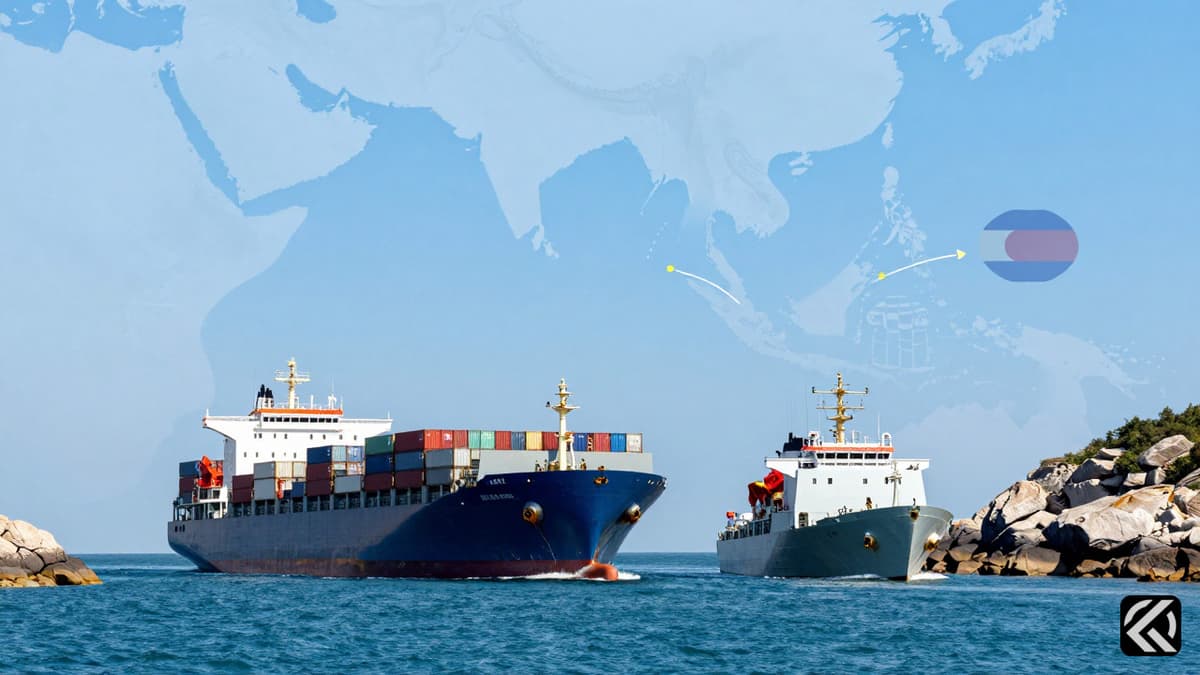
The security of the Strait of Hormuz was another critical point of discussion. President Lee drew a parallel between the energy needs of both nations, noting that heavy dependence on the Middle East for crude oil and natural gas makes the security of this waterway a matter of national survival. He committed to maintaining close communication with Indian counterparts to ensure safe and free navigation for all vessels. The President stressed that Korea and India will continue to work together in international forums to uphold this shared commitment and minimize the impact of the West Asia crisis on the global economy.
Furthermore, the dialogue addressed the urgent need to diversify energy supply chains. The President argued that reducing excessive dependence on any single country has become imperative for economic security. The partnership aims to move beyond the traditional model of raw material importation. By combining Korea's capabilities in manufacturing advanced products like electric vehicles and batteries with India's mining and refining industries, the two nations plan to establish stable supply chains for critical minerals. This approach is designed to bolster national competitiveness in the face of global reconfiguration efforts.
The maritime and shipbuilding sectors also present boundless potential. With South Korea being a global leader in shipbuilding and having extensive experience in overseas port projects, it is positioned as India's foremost partner. The President expressed hope for vessels jointly built by both countries to sail across the world's oceans, signaling a future where India emerges as a global logistics and manufacturing hub. This collaboration is viewed as essential for India's emergence as a key player in global trade and logistics.
President Lee Jae Myung's vision for the partnership is deeply rooted in the personal rapport built with Indian leadership, describing a meeting with Prime Minister Modi as reconnecting with an old friend. The visit marks a significant milestone in strengthening the friendship and trust between the two nations, driven by shared values of democracy and market economies. Looking ahead, the collaboration is expected to yield long-term impacts on global supply chain resilience and energy security. As both nations move to de-risk their economies and diversify away from over-reliance on single sources, the "Make in India, Together with Korea" framework stands to become a blueprint for other emerging markets. The deepening defense ties, particularly in technology sharing, will likely accelerate India's indigenous capabilities, while Korea gains a strategic partner in the Indo-Pacific. Ultimately, this enhanced cooperation promises to solidify the region's stability and ensure a more balanced global order in the coming years.
Jun 8, 2026 00:51 UTC
Trump Claims Iran Nuclear Deal Imminent Despite Diplomatic Fractures
Jun 8, 2026 00:47 UTC
Iran Fires Missiles at Israel After Beirut Strike
Jun 7, 2026 22:00 UTC
US, Iran Peace Hops Fade 100 Days Into War
Jun 7, 2026 20:57 UTC
Iran Strikes Israel: IRGC Promises Week of Continuous Offensive
Jun 8, 2026 02:28 UTC
Trump Walks Out of Meet the Press After Rejecting Evidence Demands


