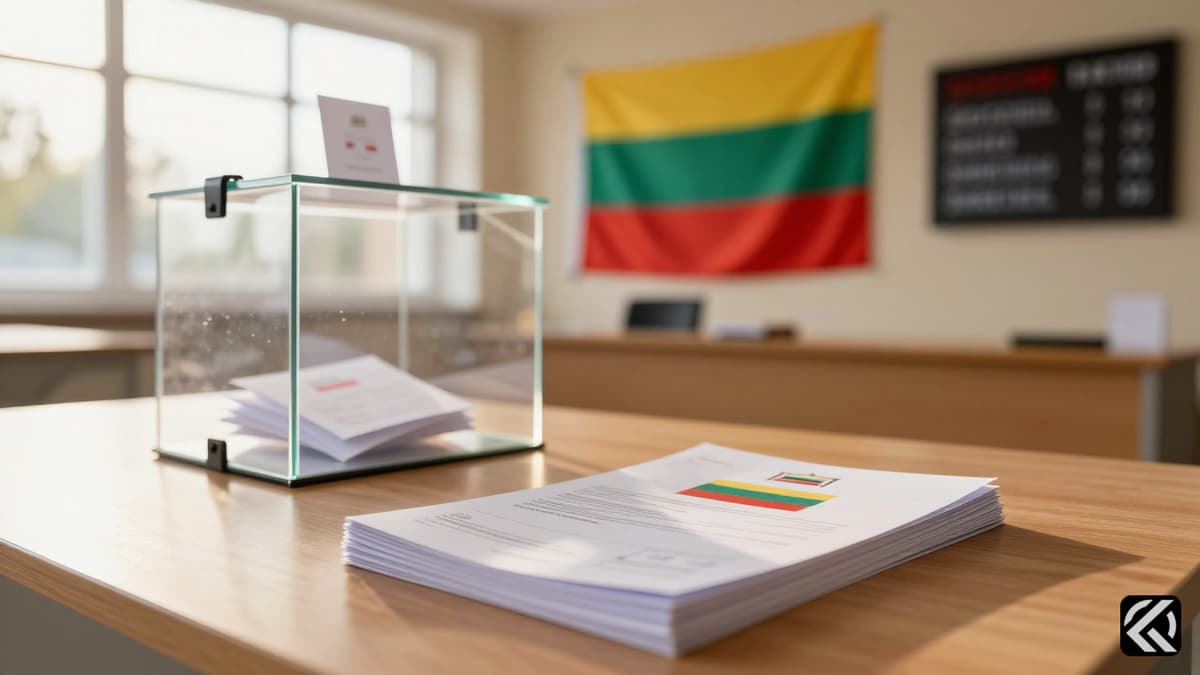
Former President Rumen Radev celebrates a decisive win in Bulgaria's latest parliamentary vote, promising to end years of political instability and oligarchic governance.
Former President Rumen Radev has hailed a "victory of hope" following early official results that place his coalition atop Bulgaria's parliamentary election. The announcement comes as more than 60 percent of ballots are counted, signaling a potential shift in the Balkan nation's long-tumultuous political trajectory.
Bulgarians cast their ballots on Sunday for the eighth time in five years, a stark reflection of the country's recurring instability. This latest vote follows mass protests that led to the removal of the previous conservative government in December, driving the need for a new mandate. With over 60 percent of ballots counted on Monday, the Central Election Commission confirmed that Radev's Progressive Bulgaria coalition had secured approximately 45 percent of the vote. This figure is sufficient for an outright majority of at least 132 seats in the 240-seat parliament, effectively granting the coalition the power to form a government without needing a coalition partner.
The result places Progressive Bulgaria significantly ahead of the liberal We Continue the Change-Democratic Bulgaria coalition, which trailed with 14.26 percent of the vote. Former Prime Minister Boyko Borissov's conservative GERB party came in third with 13.01 percent. Despite the clear lead, Borissov offered a cautious response, congratulating Radev but warning that "winning elections is one thing, governing is another."
Radev, a left-leaning eurosceptic, stepped down from the presidency in January after nine years to launch his bid to become prime minister. He had previously backed the anticorruption protests that saw hundreds of thousands of largely young people take to the streets in December, promising to get rid of the "oligarchic governance model." Speaking to reporters outside his party's headquarters in Sofia, Radev declared that "PB has won unequivocally - a victory of hope over distrust, a victory of freedom over fear."
Following the exit poll release, Radev emphasized the urgency of stability for the nation. "We will do everything possible not to allow us to go [to elections] again. It is ruinous for Bulgaria," he told reporters. He added that the coalition is ready to consider different options to ensure Bulgaria can have a regular and stable government. The context for this election is the Balkan country's history of fragmented parliaments in recent years, where coalitions have frequently failed to last more than a year since 2021.
Polling agency Market Links reported that turnout exceeded 50 percent, marking the highest participation rate since April 2021. This high engagement occurred despite authorities urging voters to cast ballots amid concerns over vote buying. In recent weeks, police reported seizing more than 1 million euros ($1.1m) in raids linked to vote buying and detained hundreds of people, including local councillors and mayors, indicating serious efforts to maintain electoral integrity.
Radev's political stance includes calls for renewing ties with Moscow and criticism of supplying Ukraine with weapons to fend off Russia's invasion. He has also opposed the 10-year defence agreement signed between Bulgaria and Ukraine in March, leading to accusations from critics that he is too pro-Russian. The timing of this Bulgarian parliamentary election coincides with the region's shifting political winds, coming just a week after Viktor Orban's defeat in Hungary, where the right-wing prime minister lost to Peter Magyar's centre-leaning opposition Tisza party.
The victory for Rumen Radev comes at a critical juncture for Bulgaria, a nation that joined the European Union in 2007 and adopted the euro as its currency in January this year. The immediate challenge for the new leader will be translating this electoral mandate into a functioning administration that can withstand the country's history of frequent collapses. The Central Election Commission's early data suggests a clear winner, but the political landscape remains complex given the diverse regional tensions and the recent crackdown on electoral corruption.
As the country moves toward the formation of a new government, the pressure on Radev to deliver on his promises to end the cycle of elections is paramount. The high turnout and the specific focus on ending "oligarchic governance" suggest a populace desperate for a break from the status quo. However, the warning from Boyko Borissov regarding the difficulty of governance over the act of winning serves as a reminder that the path from election victory to legislative action is fraught with challenges.
Raden's declaration of a "victory of hope" signals a potential turning point for Bulgaria's domestic politics, though the road to a stable government remains uncertain. If the coalition can maintain its momentum and deliver on the promise to end repeated elections, it may successfully break the cycle of instability that has plagued the Balkan country since 2021. However, the lingering geopolitical tensions regarding Russia and Ukraine, combined with the need to combat corruption, mean that the new government must navigate a complex array of domestic and international pressures to ensure lasting success.
Jun 8, 2026 02:17 UTC
Magnitude 7.8 Quake Shakes Philippines, Urging Immediate Evacuations
Jun 8, 2026 00:51 UTC
Trump Claims Iran Nuclear Deal Imminent Despite Diplomatic Fractures
Jun 8, 2026 00:47 UTC
Iran Fires Missiles at Israel After Beirut Strike
Jun 7, 2026 22:00 UTC
US, Iran Peace Hops Fade 100 Days Into War
Jun 8, 2026 04:15 UTC
Trump Urges Netanyahu to Halt Iran Strike for Peace


