As a fragile ceasefire nears expiration, Iran halts planned negotiations with the US, citing naval aggression and threatening retaliation against future US moves.
The collapse of a potential breakthrough in the Iran-US ceasefire talks has been confirmed by Tehran, casting a shadow over Pakistan's efforts to broker peace just days before a fragile truce expires. Iran's Ministry of Foreign Affairs declared it has no plans to send negotiators to Islamabad for a new round of talks, a move that threatens the scheduled multiday negotiations less than 48 hours before the ceasefire deadline.
This decision follows a rapid escalation of hostilities over the past 24 hours. Iranian spokesman Esmaeil Baghaei accused Washington of violating the ceasefire from the moment of its implementation. He specifically pointed to the US naval blockade of the Strait of Hormuz, established on April 13, and the overnight capture of an Iranian container ship by the US military as definitive breaches of both the truce and international law. Baghaei warned that if the US and Israel launch further aggression, Iranian forces "will respond accordingly," while reiterating that Tehran's 10-point proposal remains the only basis for any future negotiations.
Pakistan, acting as the principal mediator, had been gearing up to host the second round of talks aimed at ending the war now in its eighth week. Islamabad was preparing to host a session at the Serena Hotel and Marriott, areas that have been heavily fortified with barricades and sealed roads. However, officials acknowledged that rising tensions have cast a heavy cloud over these prospects. Unlike the first round held on April 11, the goal was to secure multiple days of discussions to sign a temporary memorandum of understanding (MoU). Such a deal would extend the ceasefire window by up to 60 days, allowing more time for a comprehensive peace agreement. Yet, all of this hinges on Iran's participation, which has now been explicitly denied.
US President Donald Trump had announced on Sunday that his representatives were heading to Pakistan for a second round of negotiations. However, he accompanied this announcement with renewed threats to bomb Iran's energy and power facilities if they did not agree to a deal. Trump wrote on Truth Social that he was offering a "very fair and reasonable DEAL" but warned, "if they don't, the United States is going to knock out every single Power Plant, and every single Bridge, in Iran." He further accused Iran of a "Total Violation of our Ceasefire Agreement" following reports that Iranian gunboats fired on vessels in the Strait, including a French vessel and a British freighter.
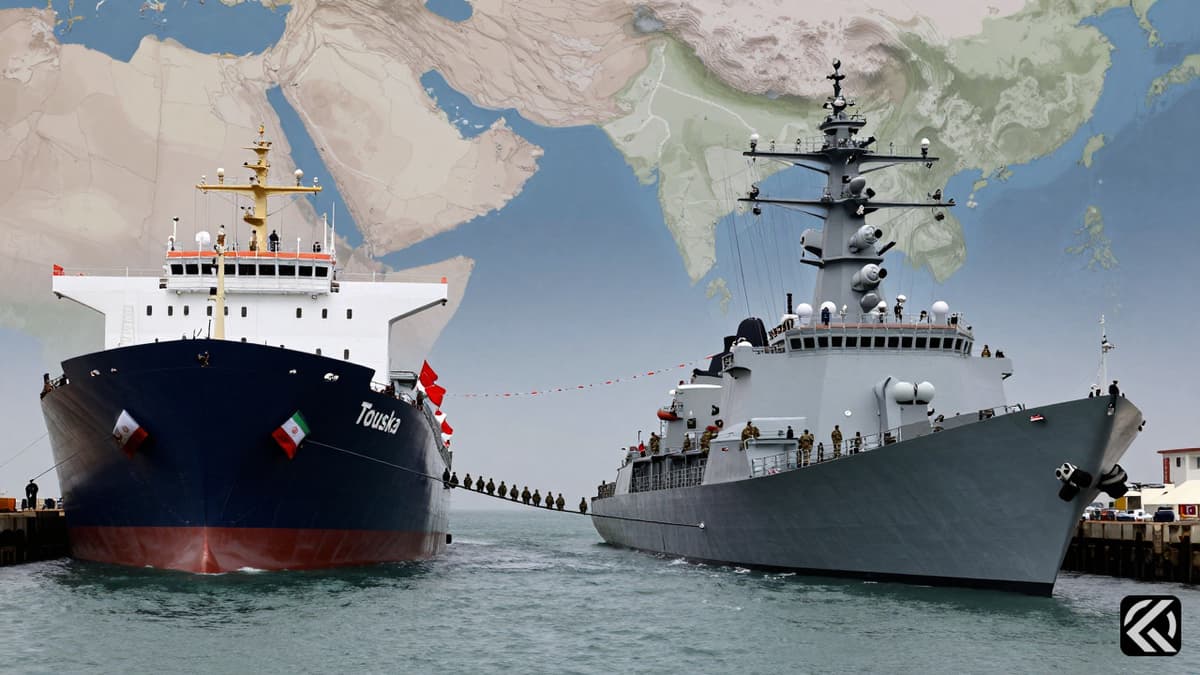
The situation did not de-escalate overnight. In the early hours of Monday, Trump announced that the US Navy guided missile destroyer USS Spruance had intercepted the Iranian-flagged cargo ship Touska in the Gulf of Oman. Trump claimed the ship was blown up with a hole in the engine room after its crew refused warnings. US Marines have since taken charge of the vessel, which Trump alleged was under sanctions. Iran has described this seizure as "piracy," further hardening its stance against the United States.
Amidst this turmoil, the Pakistan mediation efforts have faced their steepest challenge. Prime Minister Shehbaz Sharif spoke with Iranian President Masoud Pezeshkian for 45 minutes on Sunday, briefing him on recent diplomatic visits to Saudi Arabia, Qatar, and Turkiye. Sharif described these engagements as helpful for building consensus, but the subsequent social media exchanges and military actions have left the prospects of talks on edge.
Iran's state news agency IRNA dismissed reports of a second round of talks as "not correct," blaming US "greed" and shifting positions for the lack of progress. IRNA argued that the naval blockade imposed by Trump has prevented any negotiation success. Iranian spokesman Baghaei went further on social media, labeling the blockade "unlawful and criminal" and a "war crime." Despite these public denials, sources indicated a delegation might still travel on Tuesday, potentially including parliamentary speaker Mohammad Bagher Ghalibaf and Foreign Minister Abbas Araghchi.
Trump's team dynamics have also shifted. Initially, Vice President JD Vance was excluded from the Pakistan trip due to security concerns. However, White House press secretary Karoline Leavitt later confirmed Vance would join Special Envoy Steve Witkoff and Jared Kushner, the same team that led the first round. Yet, by late Monday, uncertainty returned. Sources close to mediators suggested Vance might not travel at all, with Witkoff and Kushner potentially going first to gauge Iran's willingness to engage.
The diplomatic landscape in Islamabad is increasingly volatile, with the Strait of Hormuz blockade serving as the primary catalyst for the breakdown in negotiations. The capital has been transformed into a secure zone, with the Red Zone sealed off and thousands of police and paramilitary personnel deployed. The Serena and Marriott hotels, previously prepared to host delegates, have stopped reservations, signaling the potential cancellation of the talks.
Analysts suggest that Iran's public hardline stance coupled with private signals of a possible delegation reflects a dual-track strategy. Seyed Mojtaba Jalalzadeh, an international relations analyst in Tehran, noted that Iran maintains a hard public position to preserve domestic legitimacy while potentially engaging privately to test the waters. However, with the US continuing to enforce the blockade and seize vessels, the gap between the two sides remains vast.
The future of the Iran-US ceasefire hangs in the balance. If no agreement is reached on the MoU, the current truce will expire on Wednesday, likely leading to an immediate resumption of full-scale conflict. The US threat to destroy power plants and bridges, combined with Iran's vow of response, suggests that the next 48 hours will be critical in determining the trajectory of the war. Without a breakthrough, the diplomatic channel through Pakistan may close, leaving military confrontation as the only remaining option for both nations. The success of future peace efforts will depend entirely on whether the US lifts the naval blockade and addresses Iran's demands for the removal of sanctions and an end to threats against its energy infrastructure.
Jun 8, 2026 00:51 UTC
Trump Claims Iran Nuclear Deal Imminent Despite Diplomatic Fractures
Jun 8, 2026 00:47 UTC
Iran Fires Missiles at Israel After Beirut Strike
Jun 7, 2026 22:00 UTC
US, Iran Peace Hops Fade 100 Days Into War
Jun 7, 2026 20:57 UTC
Iran Strikes Israel: IRGC Promises Week of Continuous Offensive
Jun 8, 2026 02:28 UTC
Trump Walks Out of Meet the Press After Rejecting Evidence Demands


