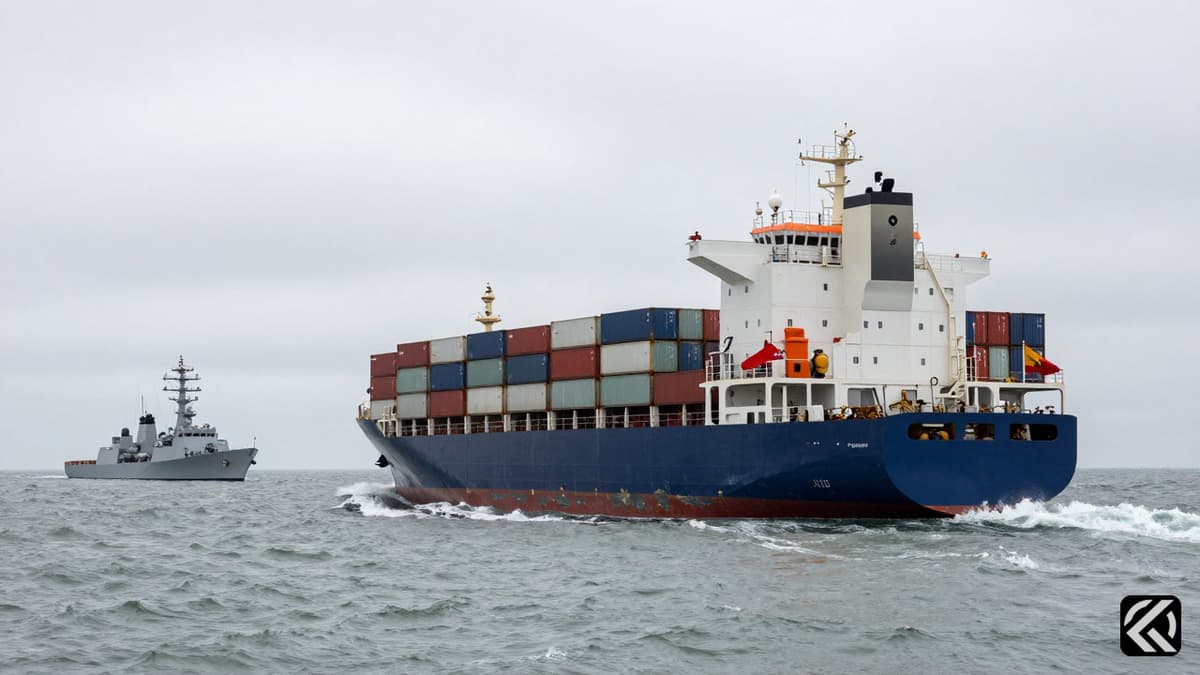
Tensions surge as US forces board an Iranian vessel in the Gulf of Oman, just as a new diplomatic push led by JD Vance attempts to resolve the standoff.
The US Navy has seized an Iranian-flagged container ship in the Gulf of Oman after the vessel failed to comply with repeated warnings over a six-hour period. Simultaneously, Vice-President JD Vance is traveling to Pakistan's capital, Islamabad, to lead a high-level delegation in fresh negotiations intended to extend a fragile two-week ceasefire. These developments occur as Iran threatens military retaliation and global oil markets react violently to the escalating maritime confrontation.
In a joint operation described by US Central Command (Centcom), marines departed the USS Tripoli by helicopter and rappelled onto the vessel, identified as the Touska. The USS Spruance subsequently disabled the ship's propulsion system after the cargo vessel ignored the demands of US forces. President Donald Trump initially characterized the incident on his Truth Social platform, stating the Navy had blown a hole in the ship's engine room. Iran's top military headquarters, Khatam al-Anbiya, immediately responded by calling the US naval operation an act of armed piracy and a violation of the ceasefire.
While the military confrontation intensifies in the Gulf of Oman, diplomatic efforts are attempting to pivot in Pakistan. Guests at the Serena Hotel in Islamabad, the site of failed talks on April 11, were instructed to vacate as police closed key roads for the arrival of foreign delegations. Donald Trump announced that representatives would arrive on Monday evening, with the delegation led by Vice-President JD Vance alongside advisers Steve Witkoff and Jared Kushner. However, uncertainty remains regarding Iran's participation; state media reports that officials will not attend as long as the US blockade of Iranian ports continues. The current two-week ceasefire is set to expire on Wednesday, with President Trump reiterating threats to destroy Iranian infrastructure if a new agreement is not reached.
The seizure of the ship has sent shockwaves through global energy markets. Global oil prices rose sharply in Monday morning trade in Asia following the announcement of the interception. Brent crude futures jumped 4.74% to $94.66 per barrel, while West Texas Intermediate surged 5.6% to $88.55. These fluctuations come after Iran announced on Saturday its intention to close the Strait of Hormuz to commercial vessels, a critical chokepoint through which approximately 20% of the world's oil and liquefied natural gas passes. The Strait had been reopened briefly by Iran's foreign minister before being closed again following Trump's declaration that the naval blockade would remain in place until a deal is reached.
Compounding the geopolitical tension is the ongoing Israel Hezbollah conflict in southern Lebanon. The Israeli military has issued warnings to residents in southern Lebanon not to move south of a specific line of villages or approach the Litani River. The IDF states it remains deployed due to ongoing terrorist activities by Hezbollah, which recently prompted an attack on a rocket launcher in the Kfarkela area overnight. This local conflict operates alongside the broader US-Iran hostilities, creating a multi-front instability where a ceasefire between Israel and Lebanon, announced on April 16, requires "meaningful steps" to prevent attacks on Israeli targets.
Further scrutiny has fallen on the financial markets surrounding the Trump presidency. The BBC has identified a pattern of spikes in trades on financial assets ahead of public announcements by President Trump, specifically during the ongoing war. Market data analysis revealed two instances where oil prices dropped significantly following Trump's declaration of a resolution to hostilities, yet trading spiked minutes before the information became public. Analysts suggest that millions of dollars were made by predicting the dip, fueling suspicion of insider trading. This scrutiny looms over Trump's second term, raising questions about the transparency of market movements during times of crisis, even as the administration prepares for high-stakes negotiations.
As the US delegation travels to Islamabad and the diplomatic window narrows before the Wednesday deadline, the situation on the water remains volatile. Iran has maintained that it will not cease its threats to target shipping in the Strait of Hormuz if the US blockade persists. Senior Iranian politicians have told the BBC that the country will never cede control of the strait, signaling that diplomatic pressure may be met with continued military posturing. With the two-week ceasefire due to end imminently and Trump threatening the destruction of Iranian energy sites, the gap between Washington and Tehran appears unbridged. The recent seizure of the Touska serves as a stark warning that the US is prepared to escalate physical confrontations if the Iranian government does not engage in good faith. The convergence of these military actions, market reactions, and the looming failure of talks suggests a prolonged period of uncertainty for global security and energy supply chains in the coming days.
Jun 8, 2026 00:51 UTC
Trump Claims Iran Nuclear Deal Imminent Despite Diplomatic Fractures
Jun 8, 2026 00:47 UTC
Iran Fires Missiles at Israel After Beirut Strike
Jun 7, 2026 22:00 UTC
US, Iran Peace Hops Fade 100 Days Into War
Jun 7, 2026 20:57 UTC
Iran Strikes Israel: IRGC Promises Week of Continuous Offensive
Jun 8, 2026 02:28 UTC
Trump Walks Out of Meet the Press After Rejecting Evidence Demands


