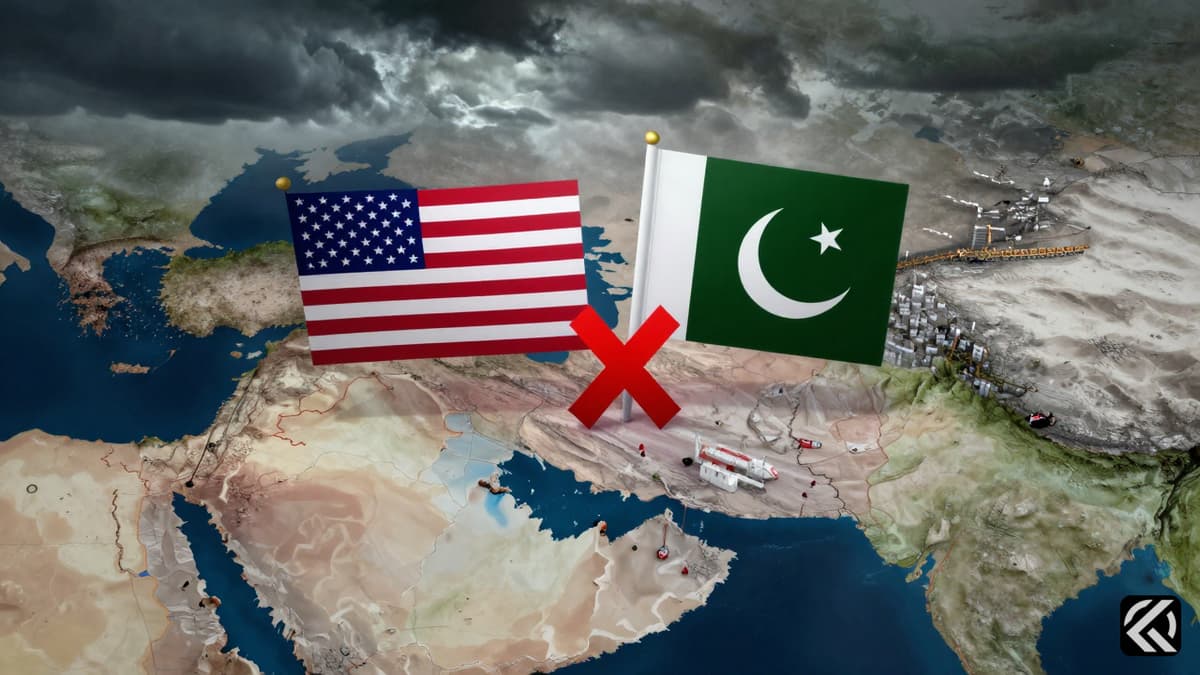
In a dramatic shift, President Trump has paused the planned attack on Iran following direct requests from Pakistani leadership, though Tehran dismisses the move as a tactical delay.
US President Donald Trump announced on Wednesday that he is extending the current ceasefire against Iran, a decision driven by a specific request from Pakistan. The move comes just hours before the previous deadline was set to expire, effectively pausing a planned military attack. This delay allows for further diplomatic maneuvering, as Trump indicated he will not lift the US blockade at Iranian ports until he receives a unified proposal from Tehran's leaders.
The decision to delay the offensive was explicitly framed as a response to diplomatic overtures. In a statement posted on his social media platform, Truth Social, Trump highlighted the fractured nature of the Iranian government. He noted that, based on this internal division and Trump extends Iran ceasefire upon the request of Field Marshal Asim Munir and Prime Minister Shehbaz Sharif, the United States has been asked to hold off on attacking the country. Consequently, Trump directed the military to maintain the blockade while remaining ready to strike should discussions fail.
Iran reacted with immediate hostility to the extension. Mahdi Mohammadi, an adviser to the Speaker of Iran's parliament, dismissed the US announcement entirely. He argued that a "losing side cannot dictate terms," asserting that the extension signifies nothing of value to Tehran. Mohammadi further claimed that maintaining a siege is equivalent to bombing and must be met with military action. He urged his country to take the initiative rather than waiting, suggesting the extension is merely a tactic for the US to buy time for a surprise strike.
Conversely, Pakistan has embraced its role as a crucial diplomatic bridge in this escalating crisis. Prime Minister Shehbaz Sharif publicly thanked President Trump for accepting the request to extend the ceasefire, framing it as an opportunity for ongoing diplomatic efforts to proceed. On behalf of himself and Field Marshal Syed Asim Munir, Sharif expressed gratitude for the US decision to allow negotiations to take their course. He reaffirmed Pakistan's commitment to the negotiation process, stating that with the trust reposed in them, they will continue their earnest efforts to secure a negotiated settlement.
Sharif explicitly voiced his hope that both the United States and Iran will continue to observe the ceasefire. He aims for a comprehensive peace deal to be concluded during the second round of talks scheduled to take place in Islamabad. These talks are intended to facilitate a permanent end to the conflict. This latest extension follows a previous effort where a diplomatic agreement collapsed after a 21-hour-long negotiation between the two parties in Islamabad, highlighting the difficulty of reaching a consensus.
The strategic implications of this pause are significant. While the US continues to enforce a blockade, the military remains in a state of high readiness. Trump stated that he will extend the ceasefire until a proposal is submitted and discussions are concluded one way or another. This creates a fragile window of time, dependent on the ability of Iranian leaders to formulate a unified stance.
The current situation underscores a critical divergence in perspectives between the belligerents and the mediator. While Pakistan mediates US-Iran conflict by positioning itself as the key intermediary seeking a "comprehensive peace deal," Tehran remains defiant. The Iranian adviser's statement that the siege must be responded to militarily suggests that the pause may not be viewed as a genuine opportunity for peace by all factions within the Iranian leadership, but rather as a temporary respite.
Looking ahead, the success of the ceasefire extension hinges entirely on the diplomatic capabilities of the US and Iran to bridge their differences. The US stance, as articulated by Trump, is conditional: the blockade remains until a unified proposal is received. This condition places the burden of action on Tehran to present a cohesive front, which the White House notes is currently "seriously fractured." If Iran fails to submit a proposal, the military options remain on the table, potentially escalating the conflict once the extension concludes.
Furthermore, the history of the 21-hour negotiation collapse serves as a stark warning. The failure of the previous round indicates that deep-seated mistrust and internal divisions within Iran could derail future talks as well. The scheduled round in Islamabad represents a high-stakes attempt to overcome these hurdles. If the second round fails to yield a unified proposal, the US has made it clear it will not lift the pressure, potentially leading to a more intense military phase. The international community will likely watch the developments in Islamabad closely, as the outcome there could determine whether a permanent end to the conflict is achieved or if the region faces renewed hostilities. The dynamic remains volatile, with the window for diplomacy narrowing by the hour.
Jun 8, 2026 00:51 UTC
Trump Claims Iran Nuclear Deal Imminent Despite Diplomatic Fractures
Jun 8, 2026 00:47 UTC
Iran Fires Missiles at Israel After Beirut Strike
Jun 7, 2026 22:00 UTC
US, Iran Peace Hops Fade 100 Days Into War
Jun 7, 2026 20:57 UTC
Iran Strikes Israel: IRGC Promises Week of Continuous Offensive
Jun 8, 2026 02:28 UTC
Trump Walks Out of Meet the Press After Rejecting Evidence Demands


