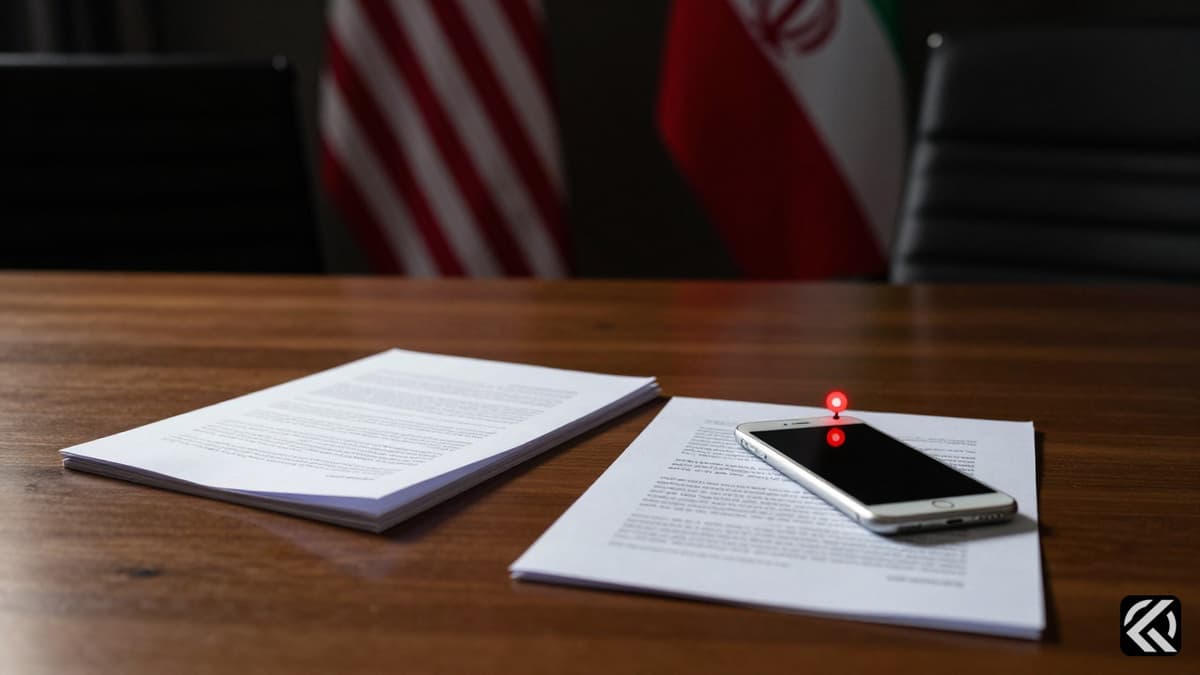
President Trump's erratic social media activity and conflicting claims have derailed near-final peace talks with Iran, creating uncertainty over the US Iran ceasefire and nuclear negotiations.
As the weekend approached, the US and Iran appeared poised to finalize a deal ending a seven-week conflict. However, President Donald Trump disrupted these efforts by engaging in Trump social media negotiations, posting unverified claims about finalized terms and speaking to reporters about ongoing discussions.
This intervention occurred despite warnings from staff that such public commentary would be detrimental. Trump asserted that Tehran had agreed to handing over enriched uranium and an "unlimited" suspension of its nuclear program, claims Iranian officials immediately rejected. These assertions, made while Pakistani intermediaries updated him on talks in Tehran, rapidly tanked the rising optimism for a resolution. The situation was further complicated by reports of a divide between Iran's negotiating team and its Revolutionary Guard Corps, leading to uncertainty about who holds the authority to sign a final agreement.
While some Trump officials privately acknowledged that the president's public commentary was damaging the negotiations, White House press secretary Karoline Leavitt defended the strategy. Leavitt stated that the US had never been closer to a good deal, attributing the progress to Trump's unique negotiating ability compared to the Obama-era agreement. She described any criticism of the president's tactics as either ignorance or stupidity, emphasizing a "long game" approach.
The core friction points remain unresolved. Trump has set red lines requiring Iran to freeze uranium enrichment and surrender near-bomb-grade material, insisting on an indefinite ban. In contrast, Iranian negotiators have proposed varying suspensions, including a five-year pause or a 10-year pause followed by a decade of low-level enrichment. The US rejected a 20-year pause proposal from American negotiators in favor of Trump's demand for no enrichment at all. Additionally, the administration is considering unfreezing $20 billion in assets in exchange for the return of the uranium stockpile.
A fragile ceasefire between Washington and Tehran was already tested on Sunday when a US destroyer seized an Iranian cargo ship attempting to bypass a naval blockade in the Gulf of Oman. This incident further angered Tehran just as the expiration of a two-week truce loomed. Trump initially announced the ceasefire on April 7, setting an expiration date for Tuesday evening. However, he later told Bloomberg the truce ends on Wednesday evening, providing an extra day for talks before he must decide whether to escalate.
The confusion extended beyond the terms of the deal to the leadership involved and the timing of events. On Sunday morning, Trump told callers that Vice President JD Vance would not participate in the talks due to security concerns. Simultaneously, UN Ambassador Mike Waltz and Energy Secretary Chris Wright appeared on television to confirm that Vance would lead the delegation in Islamabad as scheduled.
By Monday, the administration clarified the situation, stating that "things changed." Later, Trump offered a contradictory update, telling a reporter Vance was in the air for Pakistan, only for Vance to arrive at the West Wing moments later. Ultimately, sources indicated Vance planned to depart Washington on Tuesday for talks now scheduled to commence Wednesday morning in Islamabad.
Amidst this logistical chaos, the president insisted he was under no pressure to reach a deal despite rising public unpopularity and rising gas prices. Trump wrote on Truth Social that while he felt no pressure, a resolution would happen "relatively quickly." The Donald Trump Iran nuclear deal remains elusive as the gap between US demands for indefinite suspension and Iran's desire to maintain control over the Strait of Hormuz and lift sanctions remains wide.
The US Iran ceasefire is set to expire with the situation described as "fluid." While officials in Iran sounded less resistant to negotiations by Monday, the contours of a pending agreement remained unclear. A framework understanding is hoped for to allow for detailed talks on finer points, though critics warn this could be a stalling tactic for Iran to unearth missile systems.
With the deadline for the truce approaching, Trump faces a binary choice: accept a potentially imperfect deal or escalate a conflict he previously promised would end. The administration's flexibility on terms, particularly regarding the 20-year pause versus Trump's infinite ban, and the willingness to unfreeze assets, will dictate the outcome. As negotiations continue to fluctuate, the international community watches to see if the diplomatic channel can survive the volatility of public social media commentary and shifting strategic timelines.
Jun 8, 2026 00:51 UTC
Trump Claims Iran Nuclear Deal Imminent Despite Diplomatic Fractures
Jun 8, 2026 00:47 UTC
Iran Fires Missiles at Israel After Beirut Strike
Jun 7, 2026 22:00 UTC
US, Iran Peace Hops Fade 100 Days Into War
Jun 7, 2026 20:57 UTC
Iran Strikes Israel: IRGC Promises Week of Continuous Offensive
Jun 8, 2026 02:28 UTC
Trump Walks Out of Meet the Press After Rejecting Evidence Demands


