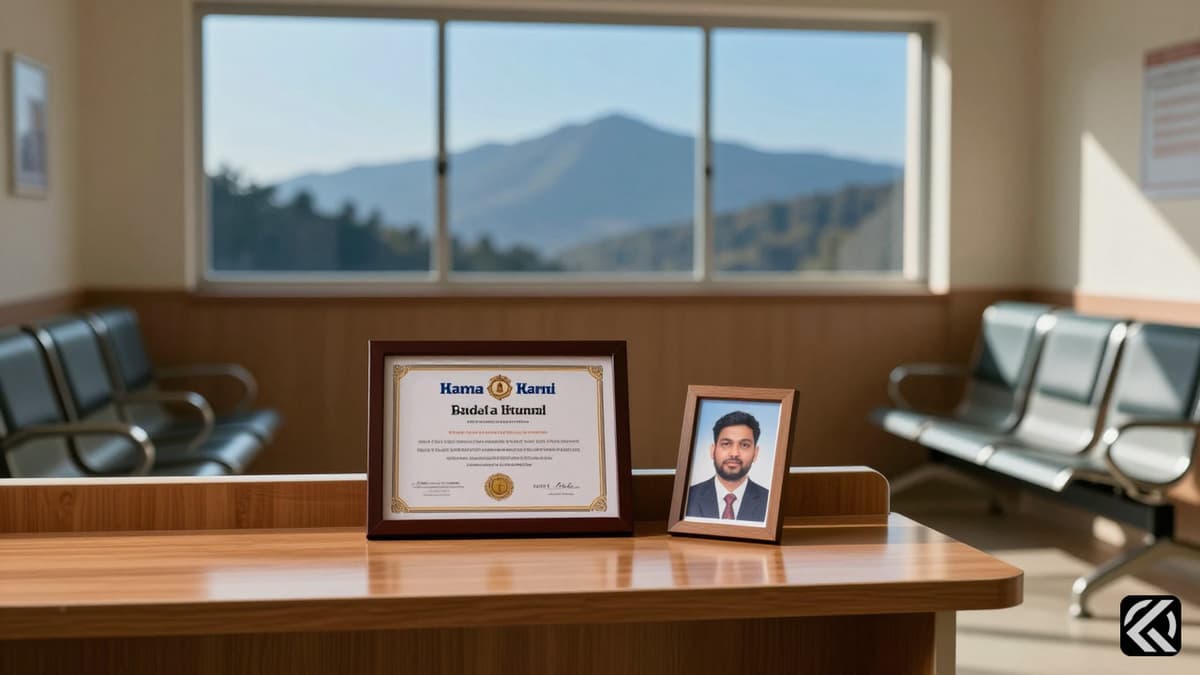
A year after the Pahalgam terror attack claimed her husband, Bengaluru doctor Dr. Sujatha fights daily to heal their son, confronting a lasting void and security failures.
Bengaluru-based physician Dr. Sujatha marks the passage of time not by the calendar, but by the stark division between "before" and "after" the Pahalgam terror attack. This tragic event, occurring a year ago, claimed the life of her husband, Bharath Bhushan, leaving her with a profound sense of loss. She describes the current state of her life as a void, where her emotional pillar has been severed. The impact of this trauma is visible in her daily routine; she keeps herself busy from morning till night to prevent her thoughts from drifting back to the horrific scene.
The attack left an indelible mark on Bharath Bhushan and Dr. Sujatha, as well as their four-and-a-half-year-old son. The child, who witnessed the violence, was splattered with blood alongside his mother. He reportedly told his mother, "Papa is hurt, there's so much blood." This memory is a heavy burden, outweighing the happiness they once shared. While Dr. Sujatha works long hours at hospitals and conducts freelance consultations, she reserves Sundays exclusively for her son. She consciously ensures he has her attention, noting that he needs her.
The psychological toll on the family is deep. The child has not once asked for his father since the incident. Dr. Sujatha observes that her son is very calm, resembling his father, and does not throw tantrums when she is away. However, he behaves differently only when she is home. She is thankful for his well-behaved nature but acknowledges that the month of April has transformed from a time of celebration into a period of grief. Just days before the attack, the family had celebrated Bharath Bhushan's birthday, and they had planned a family outing for April 14, a tradition involving a temple visit that can never happen again.
A critical failure in security is a major point of contention for Dr. Sujatha. Having heard from her parents about a heavy security presence in Kashmir, she was initially unalarmed by the noise on the day of the attack. She first mistook the sounds for crackers, expecting security personnel to handle the situation. However, she discovered there was no security in the area, not even a single armed guard. She asserts that the presence of even one guard could have prevented the tragedy. This lack of protection has left her and others feeling vulnerable.
Furthermore, Dr. Sujatha highlights the issue of radicalization as a root cause. She describes the attackers as being brainwashed to believe their actions are right. She insists that something must change to stop this cycle, though she admits she is unsure how to achieve this transformation. Since the attack, fear has become a constant companion. She is perpetually alert, scanning her surroundings even while driving, looking at trees and corners rather than the road ahead, constantly wondering if someone is targeting them.
The story of this family is one of survival amidst deep sorrow. Bharath Bhushan, an MBA graduate, was described by his wife as a man who "knew the world," perfectly complementing her life as a doctor who "knew her patients." His photograph now sits beside Dr. Sujatha in her clinic, serving as a silent presence that guides her decisions. Their marriage of six years ended abruptly with the attack, yet Dr. Sujatha has pushed herself to keep going. When asked about the memories she holds dear, she points to their wedding day, recalling her happiness and her question to him, "How could you choose me?"
While Dr. Sujatha continues to face the shadow of the attack, she finds solace in her son's resilience. She has gradually helped him understand his loss through engagement, play, and teaching. Supported by her family, she manages to balance her professional obligations with her role as a mother. Despite the pain, she remains a pillar of strength, embodying the resilience of a mother fighting for her child's future. The fear and grief are ever-present, but her determination to keep going, driven by the memory of her husband and the needs of her son, remains unshaken.
The tragedy in Pahalgam underscores a critical vulnerability in security protocols, as the absence of even a single guard proved fatal. As Dr. Sujatha and others navigate this new reality, the lack of immediate security in the region may lead to a sustained increase in fear and anxiety among residents and travelers alike. Without significant changes to address the radicalization of attackers, the cycle of violence and brainwashing may continue, leaving families like hers in a perpetual state of alert. The long-term impact suggests that unless structural and ideological shifts occur, the psychological toll on survivors will remain a defining feature of their lives, forcing them to measure their existence in terms of loss rather than time.
Jun 8, 2026 00:51 UTC
Trump Claims Iran Nuclear Deal Imminent Despite Diplomatic Fractures
Jun 8, 2026 00:47 UTC
Iran Fires Missiles at Israel After Beirut Strike
Jun 7, 2026 22:00 UTC
US, Iran Peace Hops Fade 100 Days Into War
Jun 7, 2026 20:57 UTC
Iran Strikes Israel: IRGC Promises Week of Continuous Offensive
Jun 8, 2026 02:28 UTC
Trump Walks Out of Meet the Press After Rejecting Evidence Demands


