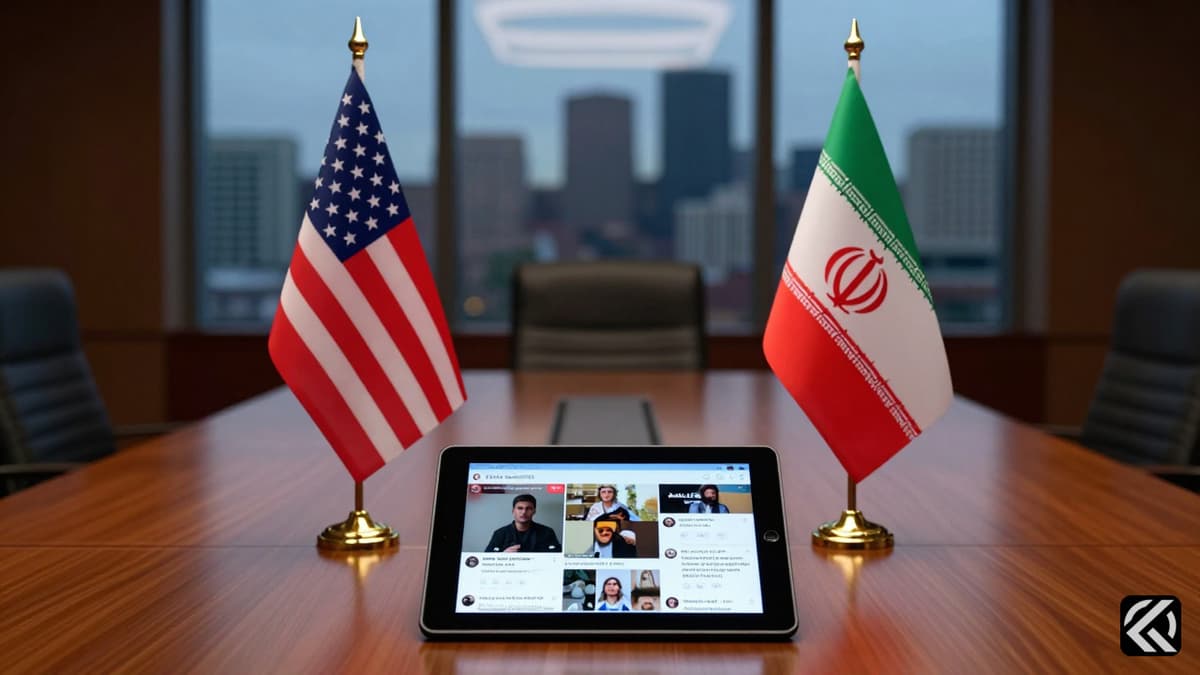
Optimism for a peace deal evaporates after President Trump publicly claimed Iran agreed to terms they denied, creating uncertainty for the US-Iran ceasefire.
As the weekend approached, the United States and Iran appeared to be closing in on a historic Trump-Iran deal to end a seven-week war. However, President Donald Trump disrupted these delicate efforts by attempting to negotiate via social media and press interviews. On Friday morning, while Pakistani intermediaries updated him on talks in Tehran, Trump claimed Iran had already agreed to contentious provisions, including handing over enriched uranium. These assertions were swiftly rejected by Iranian officials, who denied preparing for another round of talks and expressed deep frustration. Consequently, the rising optimism for a resolution vanished, leaving the future of the US-Iran ceasefire highly uncertain.
The situation deteriorated further as Trump made contradictory claims to various news outlets. He told Bloomberg that Iran had agreed to an "unlimited" suspension of its nuclear program and informed CBS News that Tehran had agreed to "everything," including the removal of enriched uranium. Additionally, he suggested a meeting would likely occur over the weekend. These declarations were made despite sources familiar with the negotiations confirming that the terms he cited had not yet been finalized. Iranian officials, led by Parliament Speaker Mohammad Bagher Ghalibaf and Foreign Minister Abbas Araghchi, outwardly rejected these claims, noting that the Iranians did not appreciate the President negotiating through social media or making it appear as if they had signed off on issues they hadn't. This public maneuvering exacerbated the Iranians' fear of appearing weak to their own population.
Compounding the diplomatic friction, American officials privately acknowledged that the President's commentary has been detrimental to the talks. The situation is further complicated by a suspected divide between Iran's negotiating team and the Islamic Revolutionary Guard Corps, raising questions about who ultimately holds the authority to sign off on any agreement. Meanwhile, the fragile stability between Washington and Tehran was tested on Sunday when a US guided-missile destroyer fired upon and seized an Iranian cargo ship attempting to breach the naval blockade in the Gulf of Oman. This incident further angered Iranian officials just as a two-week ceasefire was nearing its expiration date.
Despite the chaos, Iranian officials sounded less resistant to further negotiations by Monday, though the specific contours of a pending agreement remained unclear. White House Press Secretary Karoline Leavitt defended the President's approach, stating that the United States has never been closer to a good deal thanks to Trump's negotiating tactics, dismissing critics as "stupid or willfully ignorant." Conversely, the nuclear enrichment talks have hit significant roadblocks regarding red lines. Trump has set firm demands that Iran freeze uranium enrichment and surrender its stockpile of near-bomb-grade material, while Tehran insists on maintaining control over the Strait of Hormuz and demanding the lifting of sanctions.
During initial discussions, American negotiators proposed a 20-year pause on uranium enrichment, a term Iran rejected in favor of a five-year suspension. A more recent Iranian proposal suggests a 10-year pause followed by a decade of enrichment well below weapons-grade levels, but Trump remains opposed to any indefinite pause, wanting no enrichment at all. Additionally, the Trump administration is considering unfreezing $20 billion in Iranian assets in exchange for the turn-over of their highly enriched uranium stockpile. However, the President is determined to avoid a deal resembling the Obama-era Joint Comprehensive Plan of Action, which he withdrew from in 2018.
Further confusion arose regarding the logistics of the negotiations. Trump initially told callers that Vice President JD Vance would not participate in the talks due to security concerns, a claim contradicted within hours by UN Ambassador Mike Waltz and Energy Secretary Chris Wright, who stated Vance would lead the delegation. Later, Trump claimed Vance was in the air bound for Pakistan, only for Vance's motorcade to arrive at the West Wing minutes later. Ultimately, Vance is planning to depart Washington on Tuesday for talks now scheduled to commence Wednesday morning in Islamabad, a significant shift from the Monday evening deadline Trump had previously announced.
The expiration of the two-week US-Iran ceasefire remains a critical variable. Originally set to expire Tuesday evening following the April 7 announcement, Trump later told Bloomberg the truce ends Wednesday evening, providing an extra 24 hours for talks. Despite the rising unpopularity of the war and its impact on gas prices, Trump insisted he feels no pressure to reach a deal, asserting on Truth Social that it would happen "relatively quickly." Yet, his willingness to extend the ceasefire has fluctuated, ranging from a definitive "fighting resumes" to a conditional "if we need to, I would do that."
The current trajectory suggests that while a framework understanding is possible, the path to a final agreement remains fraught with obstacles. The conflicting public statements from the President and the physical confrontation over the cargo ship have severely damaged trust, making the Iranians' deep mistrust of the US a persistent hurdle. If the President continues to bypass his own advisers and negotiate publicly, the divide between Iran's civilian negotiators and the Revolutionary Guard may widen, potentially leading to a total collapse of the talks. Without a clear, unified signal from the White House regarding the Trump-Iran deal terms, the war could escalate beyond the current seven-week duration, particularly if the deadline to resume hostilities passes without a signed agreement.
Jun 8, 2026 02:17 UTC
Magnitude 7.8 Quake Shakes Philippines, Urging Immediate Evacuations
Jun 8, 2026 00:51 UTC
Trump Claims Iran Nuclear Deal Imminent Despite Diplomatic Fractures
Jun 8, 2026 00:47 UTC
Iran Fires Missiles at Israel After Beirut Strike
Jun 7, 2026 22:00 UTC
US, Iran Peace Hops Fade 100 Days Into War
Jun 8, 2026 04:15 UTC
Trump Urges Netanyahu to Halt Iran Strike for Peace


