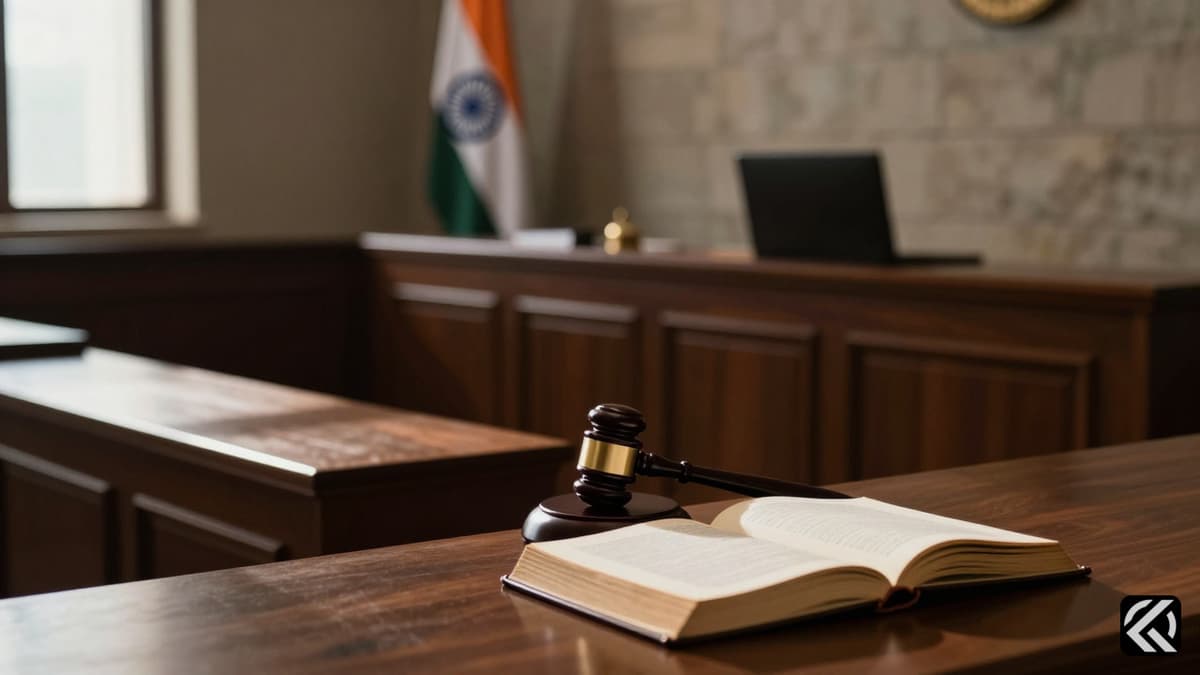
Former Delhi CM's plea to withdraw Justice Sharma was dismissed as baseless. The court emphasized that judicial impartiality is presumed and cannot be challenged by mere apprehension.
The Delhi High Court's Delhi High Court Justice Swarana Kanta Sharma on Monday refused to recuse herself from the liquor policy case involving former Chief Minister Arvind Kejriwal. This landmark decision underscores the court's stance that a litigant cannot simply plant seeds of distrust to disrupt proceedings.
Former CM Arvind Kejriwal had appeared in person before the court seeking the recusal of Justice Sharma, citing a "grave, bona fide, and reasonable apprehension" that her prior rulings in the matter would prevent impartiality. The former CM's application argued that the judge had previously heard multiple cases arising from the same CBI FIR, including his own petition against arrest, and had never granted relief to any accused. However, Justice Sharma firmly rejected these arguments, observing that impartiality is a presumption in favor of a judge and that it is an ethical requirement rather than a strict legal one. She stated that a politician cannot be permitted to cross the boundary to judge judicial competence.
The judge emphasized that the "floodgates of court cannot be opened by allowing a litigant to plant seeds of distrust solely on this basis." She clarified that when a person seeks recusal, the presumption of impartiality must be rebutted by the litigant with concrete evidence, noting that "mere apprehension or personal perception of litigant is not enough." The court's stance was that the competence of a judge is decided by higher courts, not by the litigant.
Addressing specific allegations levied against her character and potential conflicts of interest, Justice Sharma categorically denied that her children's roles in the Centre's panel constituted a conflict. She remarked, "Sirf Kejriwal ji ne ye allegation lagaya hain," noting that such charges, if accepted, would paralyze the court whenever the Union of India is a party. She questioned the fairness of allowing the family of a politician to engage in the profession while questioning the same for judges, stating, "if children of politicians can enter politics, how will it be fair to question when children or family of judge enter legal profession and struggle and prove themselves like others."
Regarding the claim that she attended an RSS-affiliated event, the judge dismissed the insinuation of political bias. She clarified that her attendance at Adhivakta Parishad events was for speaking on legal issues, a practice common among judges. "Merely because i was invited to deliver lecture, cannot be basis to insinuate political bias," she said, asking how anyone could suggest that attending a lawyer's organization event closes one's mind or affects fairness. She added that lawyers may be affiliated with political parties, but cases are adjudicated on merits, not ideology.
On the argument that her orders were overturned by the Supreme Court, Justice Sharma explained that the Supreme Court's granting of bail to Sanjay Singh, who was not even an accused, was based on the Enforcement Directorate's concession, with no comment on the merits of the case. Similarly, when interim bail was granted to Kejriwal, the matter was referred to a larger bench without setting aside the High Court's original order. "Judge's competence is decided by the higher court, not the litigant," she asserted, rejecting the attempt to attach a media-driven narrative to the proceedings. She concluded that the recusal plea arrived with "aspersions and doubts casted on my fairness and impartiality" rather than evidence.
Opposing the plea, the CBI described Kejriwal's petition as "frivolous, vexatious and baseless," calling it a bid to undermine the dignity of the court. The agency pointed out that different judges of the High Court and Supreme Court had rendered adverse findings in the liquor policy case, arguing that if Kejriwal's contention were accepted, all these judges would have to recuse themselves. Besides Kejriwal, applications for recusal were also filed by AAP colleagues Manish Sisodia and Durgesh Pathak, with other respondents joining the plea. The court dismissed all such applications, upholding the integrity of the judicial process against what it deemed unfounded political maneuvering.
The Delhi High Court Justice Swarana Kanta Sharma has firmly established a precedent that judicial impartiality cannot be challenged by political litigants based on unfounded apprehensions. By dismissing the recusal plea, the court reinforced the principle that a judge's neutrality is presumed and that only a higher court can determine competence. This ruling suggests a continued resilience in the judiciary against attempts to influence proceedings through recusal petitions based on past rulings or perceived affiliations. As the liquor policy case continues, the decision may discourage similar tactical delays by defendants seeking to disrupt the judicial timeline, ensuring that the focus remains on the merits of the case rather than procedural maneuvers.
Jun 8, 2026 02:17 UTC
Magnitude 7.8 Quake Shakes Philippines, Urging Immediate Evacuations
Jun 8, 2026 00:51 UTC
Trump Claims Iran Nuclear Deal Imminent Despite Diplomatic Fractures
Jun 8, 2026 00:47 UTC
Iran Fires Missiles at Israel After Beirut Strike
Jun 7, 2026 22:00 UTC
US, Iran Peace Hops Fade 100 Days Into War
Jun 8, 2026 04:15 UTC
Trump Urges Netanyahu to Halt Iran Strike for Peace


