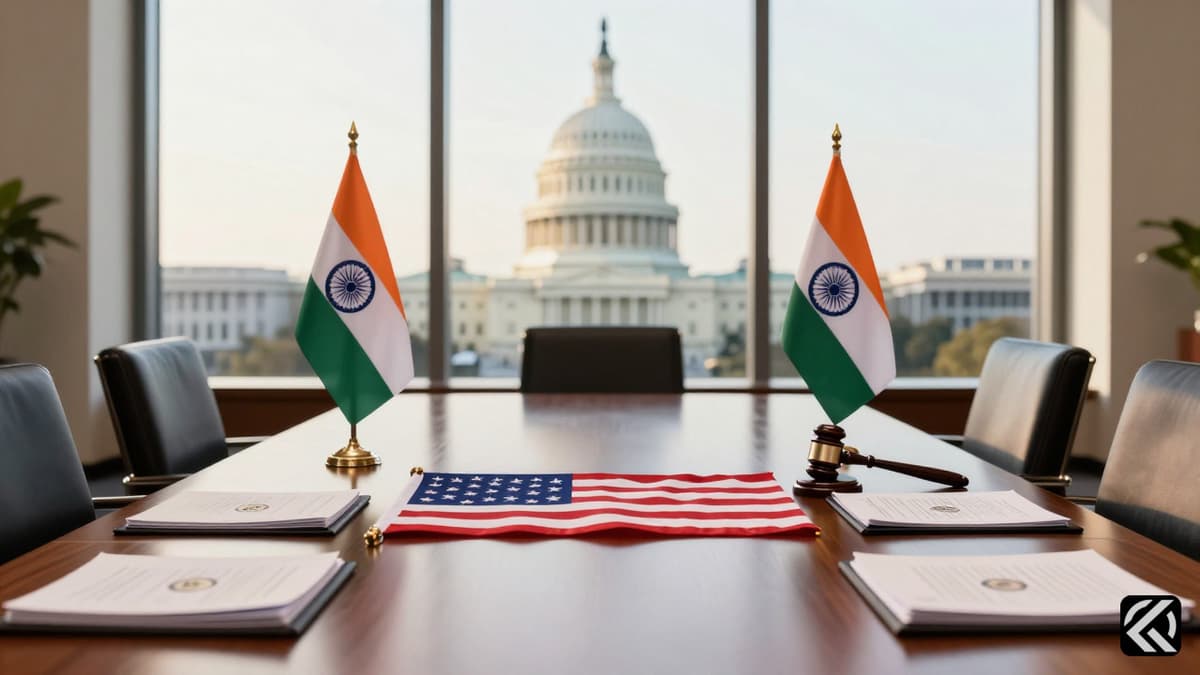
A high-level Indian delegation travels to Washington this week to finalize the first phase of a bilateral trade deal, navigating newly imposed US tariffs and ongoing investigations.
The India-US trade talks are set to begin this week, marking a pivotal moment in diplomatic efforts to finalize a proposed agreement. A delegation of approximately a dozen officials will travel from New Delhi to Washington from April 20 to 22. Led by chief negotiator Darpan Jain, the team includes representatives from the customs department and the Ministry of External Affairs. Their primary objective is to conclude the first phase of the proposed bilateral trade agreement. This visit follows the recent arrival of the delegation, which US Ambassador to India Sergio Gor described on social media as a "great step to finalize our bilateral trade deal."
The momentum for these negotiations was sparked by recent shifts in the US tariff landscape, which necessitated a review of terms agreed upon earlier in the year. The talks were originally scheduled for February but were postponed following a Supreme Court decision that struck down reciprocal tariffs imposed under the 1977 International Emergency Economic Powers Act. In the wake of this ruling, the US administration introduced a temporary flat 10% tariff on all countries for 150 days, effective from February 24. Consequently, the rescheduled talks in Washington will proceed under this revised tariff framework rather than the previously discussed terms. Union Minister Piyush Goyal stated that the first tranche of the deal is "almost finalized," with the team now focusing on the mechanism for granting India preferential access in the US market compared to competitors.
Beyond tariff adjustments, the upcoming discussions will address two specific investigations initiated by the US Trade Representative under Section 301 of US trade law. India has formally refuted the allegations associated with these probes, arguing that the initiation notices lack adequate justification. The delegation in Washington will actively seek the withdrawal of these investigations as part of their broader negotiation strategy. The inclusion of officials from the customs department and external affairs indicates a comprehensive approach to resolving these complex trade frictions. Ambassador Gor emphasized on platform X that the visit represents a "win-win for both nations," highlighting the mutual economic stakes involved in the outcome.
The timing of these talks is critical given the recent legal and regulatory changes in the United States. The shift from specific reciprocal tariffs to a temporary flat rate has altered the negotiating landscape significantly. While the core objective remains the finalization of the trade deal, the mechanism for preferential access remains a point of detailed discussion. The team aims to work out a specific framework that ensures India maintains a competitive edge in the US market despite the new flat tariff environment. This strategic adjustment is essential for the deal to be viable under current US laws and regulations.
The negotiations also serve as a test of resilience in the face of legal challenges and policy shifts. The Indian team's focus on withdrawing the Section 301 investigations demonstrates a firm stance against what they perceive as unjustified probes. The presence of high-ranking officials suggests that both nations are prioritizing the resolution of these issues to ensure economic stability. As the delegation engages with their US counterparts, the focus remains on bridging the gap between the new tariff framework and India's desire for preferential treatment.
The resumption of India-US trade talks signals a decisive move toward closing the gap on the first phase of the bilateral agreement. With the US Supreme Court's recent ruling reshaping the tariff environment, the negotiations are now operating under a temporary flat 10% tariff system that impacts all trading partners. The Indian delegation's dual focus on securing preferential market access and contesting the Section 301 investigations suggests that the final deal will likely involve complex clauses addressing both market access and legal disputes. If successful, the agreement could establish a robust framework for future trade relations, potentially mitigating the impact of the new temporary tariffs and setting a precedent for how bilateral deals are structured in the aftermath of significant legal rulings. The successful completion of this first tranche could pave the way for further phases, solidifying economic ties between the two nations despite the evolving regulatory landscape.
Jun 8, 2026 00:51 UTC
Trump Claims Iran Nuclear Deal Imminent Despite Diplomatic Fractures
Jun 8, 2026 00:47 UTC
Iran Fires Missiles at Israel After Beirut Strike
Jun 7, 2026 22:00 UTC
US, Iran Peace Hops Fade 100 Days Into War
Jun 7, 2026 20:57 UTC
Iran Strikes Israel: IRGC Promises Week of Continuous Offensive
Jun 8, 2026 02:28 UTC
Trump Walks Out of Meet the Press After Rejecting Evidence Demands


