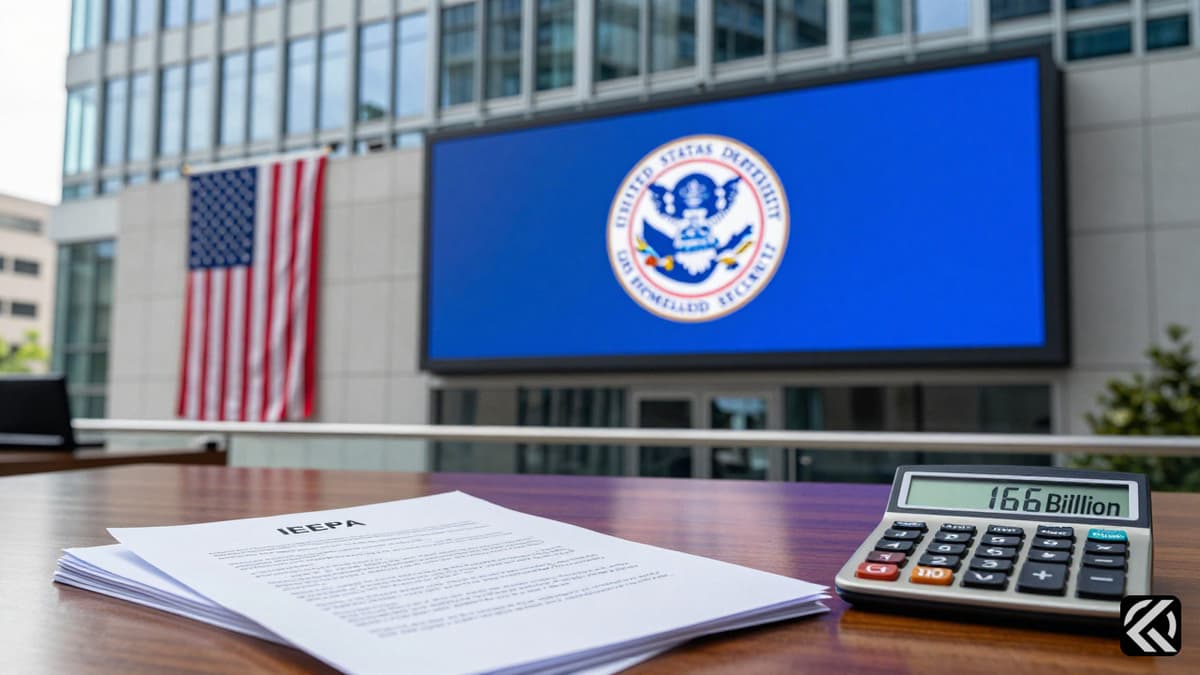
Two months after a landmark ruling, the long-awaited process for recovering billions in duties finally begins. Importers can now access the new portal to claim their reimbursements.
Two months after the Supreme Court overturned President Donald Trump's most sweeping trade duties, American importers who are owed $166 billion in refunds plus interest can finally begin applying for reimbursement. This milestone occurs on Monday with the activation of a new portal managed by the US Customs and Border Protection. The agency has confirmed that the process is moving forward, though the scope is limited to specific entry points and entities in this initial phase.
The timing marks a significant shift in trade administration following the judicial intervention. Exactly two months after the Supreme Court struck down the Supreme Court tariffs enacted under the International Emergency Economic Powers Act, the administrative machinery is starting to function. The agency estimates that approved refunds will be issued within 60 to 90 days, though this timeline is subject to change depending on the necessity of additional reviews of specific entries.
The new initiative is formally named the Consolidated Administration and Processing of Entries, or CAPE. In a prior notice, US Customs and Border Protection explained that this program is designed to consolidate refunds of IEEPA duties, including accrued interest, rather than processing refunds on an entry-by-entry basis. This shift aims to streamline the handling of claims that have accumulated since the enactment of the now-extinct tariffs. However, the eligibility criteria are strict; only parties known formally as importers of record who made the tariff payments, or customs brokers who act on their behalf, can file for these refunds.
Despite the launch, it is important to note that not all tariff payments will be eligible to apply for reimbursement on Monday, which marks the start of multiple phases for the rollout of the program. For the first phase, only entities who have made certain tariff payments will be able to make refund submissions. The exact timeline for when the system will open for all payments subject to refund remains unclear, creating a period of uncertainty for businesses waiting for the full process to activate.
Adding a layer of complexity to the refund landscape is the potential for administrative action by the Trump administration. The process could drag out even longer if the administration takes further actions to delay or reduce the size of refunds. During a recent Fox News interview, White House National Economic Council Director Kevin Hassett hinted at these possibilities. There are "alternative authorities that perhaps could reduce that number quite a bit," Hassett stated, referring specifically to the size of refunds distributed. This suggests that while the application window is open, the final financial outcome for many importers may be subject to further executive adjustments.
The distinction between the initial phase and the full rollout is critical for businesses planning their financial recovery. The current structure allows for immediate action by those who fall under the specific criteria of the first phase, while others must wait. This phased approach was likely chosen to manage the immense volume of data and claims, given the $166 billion figure involved. However, the ambiguity regarding when all payments will become eligible creates a fragmented timeline for the tariff refunds process.
The reliance on the Consolidated Administration and Processing of Entries (CAPE) signals a move toward a more centralized system for handling these massive financial adjustments. By avoiding the entry-by-entry processing model, the agency hopes to accelerate the issuance of funds. Yet, the potential for additional reviews remains a wildcard. If the system identifies discrepancies or requires further verification on specific entries, the 60 to 90-day window could expand significantly, delaying financial relief for businesses that have been awaiting this outcome for months.
The current landscape of the refund initiative presents a dual reality of operational progress and political uncertainty. While the US Customs and Border Protection has successfully launched the portal and defined the CAPE framework, the potential for the Trump administration to utilize alternative authorities introduces a variable that could alter the final distribution of funds. The explicit statement by Kevin Hassett regarding the potential reduction of refund sizes indicates that the $166 billion figure may not be the final payout total. Consequently, businesses should prepare for a scenario where the application process begins now, but the ultimate financial resolution could be shaped by further administrative actions or policy reviews. This suggests a protracted period where the initial phase of eligibility will unfold, followed by a period of potential adjustment before the full scope of the refunds is realized.
Jun 8, 2026 00:51 UTC
Trump Claims Iran Nuclear Deal Imminent Despite Diplomatic Fractures
Jun 8, 2026 00:47 UTC
Iran Fires Missiles at Israel After Beirut Strike
Jun 7, 2026 22:00 UTC
US, Iran Peace Hops Fade 100 Days Into War
Jun 7, 2026 20:57 UTC
Iran Strikes Israel: IRGC Promises Week of Continuous Offensive
Jun 8, 2026 02:28 UTC
Trump Walks Out of Meet the Press After Rejecting Evidence Demands


