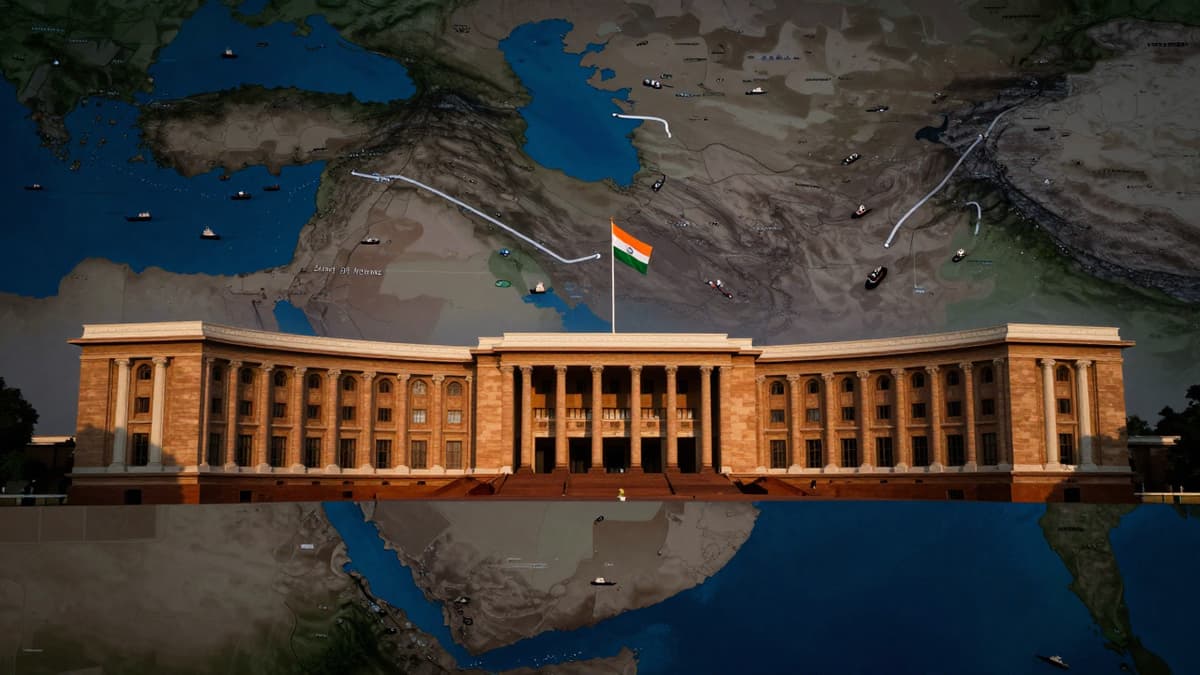
External Affairs Minister S Jaishankar explicitly denied India's role as a go-between in the ongoing Middle East tensions, distinguishing New Delhi's diplomatic path from Pakistan's during a crucial all-party meeting.
The External Affairs Minister S Jaishankar addressed a gathering of political leaders on Wednesday, clarifying India's diplomatic stance regarding the escalating tensions in the Middle East. During this significant all-party meeting, Jaishankar explicitly stated that India is not acting as a "go-between country" like Pakistan in the ongoing crisis. The remarks were made in response to reports suggesting India might play a mediation role similar to Islamabad's, which Jaishankar dismissed by noting Pakistan has historically been "used" by the US since 1981 for such purposes.
The meeting was convened at the Prime Minister's request to address growing concerns among opposition parties regarding the government's handling of the West Asia situation. Leaders from across the political spectrum questioned the government's silence and lack of active intervention. In response, the government asserted that it is actively commenting and responding to the evolving crisis rather than remaining silent. Specific details were shared regarding the opening of the Iran embassy and the immediate visit by the foreign secretary to sign a condolence book, countering claims of moral weakness regarding the death of the Iranian Supreme Leader.
The government emphasized that its primary concerns remain the security of the Indian diaspora in the Gulf region and the fulfillment of domestic energy needs. Officials assured the assembly that these objectives have been met successfully so far. The opposition, however, remained critical, with Congress leader Tariq Anwar describing the government's responses as unsatisfactory. Anwar highlighted that while Pakistan is actively acting as a mediator despite being smaller and weaker, India remains a "mute spectator." He called for an immediate debate on the issue in both the Lok Sabha and the Rajya Sabha under specific rules to ensure public satisfaction.
During the session, comprehensive responses were provided by the Cabinet Committee on Security. Key ministers including Defence Minister Rajnath Singh, Home Minister Amit Shah, External Affairs Minister S Jaishankar, and Finance Minister Nirmala Sitharaman were present. Foreign Secretary Vikram Misri also delivered a detailed presentation. The government informed the attendees that there is no cause for panic, citing sufficient crude oil and gas stockpiles. They noted that advance orders have been placed and diversification of energy sources is complete, with procurement now coming from 41 countries.
On the matter of maritime security, the government reported a diplomatic success: four India-bound ships carrying petroleum products have already crossed the Strait of Hormuz, with five more expected shortly. However, they also acknowledged the distressing reality that 18 India-bound ships remain stranded in the area. Addressing the US attack and sinking of an Iranian ship, the government explained that the vessel was near Sri Lankan waters, where intervention was not possible, unlike if it had been in Indian waters. Officials expressed a sense of gratitude from Iran regarding the protection provided to other ships and sailors.
In closing the session, the government reiterated its balanced diplomatic approach, describing India as a good friend to the US, Israel, and Iran. The US was identified as the largest trading partner, Israel as the largest technological partner, while relations with Iran remain strong. Despite the Opposition's dissatisfaction and demands for a formal debate, Union Parliamentary Affairs Minister Kiren Rijiju expressed satisfaction, stating that all queries regarding the conflict's impact on India and the safety of citizens were fully addressed. Rijiju noted that while the Opposition members stated they would support the government's decisions during the crisis, the debate on the West Asia situation remains a point of contention. The absence of certain opposition leaders like Rahul Gandhi drew sharp criticism from Union Minister Pralhad Joshi, who questioned their dedication to India's interests. As the situation in the Middle East remains volatile, the government's strategy of maintaining trade ties while prioritizing energy security appears set to continue, relying on the established diversification of sources to mitigate risks, though political pressure to engage more visibly in mediation efforts is likely to persist.
May 9, 2026 19:32 UTC
Hardliners Sabotage Iran-US Negotiations Amidst Fractured Regime
May 9, 2026 17:43 UTC
Moscow's Stripped-Down Victory Day: A Shift in Military Display
May 8, 2026 19:28 UTC
Iran Transforms Destroyed B1 Bridge Into Symbol of Resistance
May 8, 2026 15:53 UTC
China Confirms Technical Aid for J-10CE Fighter Jets in Regional Conflict
May 10, 2026 05:52 UTC
Celebrate Mother's Day 2026 With These Essential Wishes


