
Section
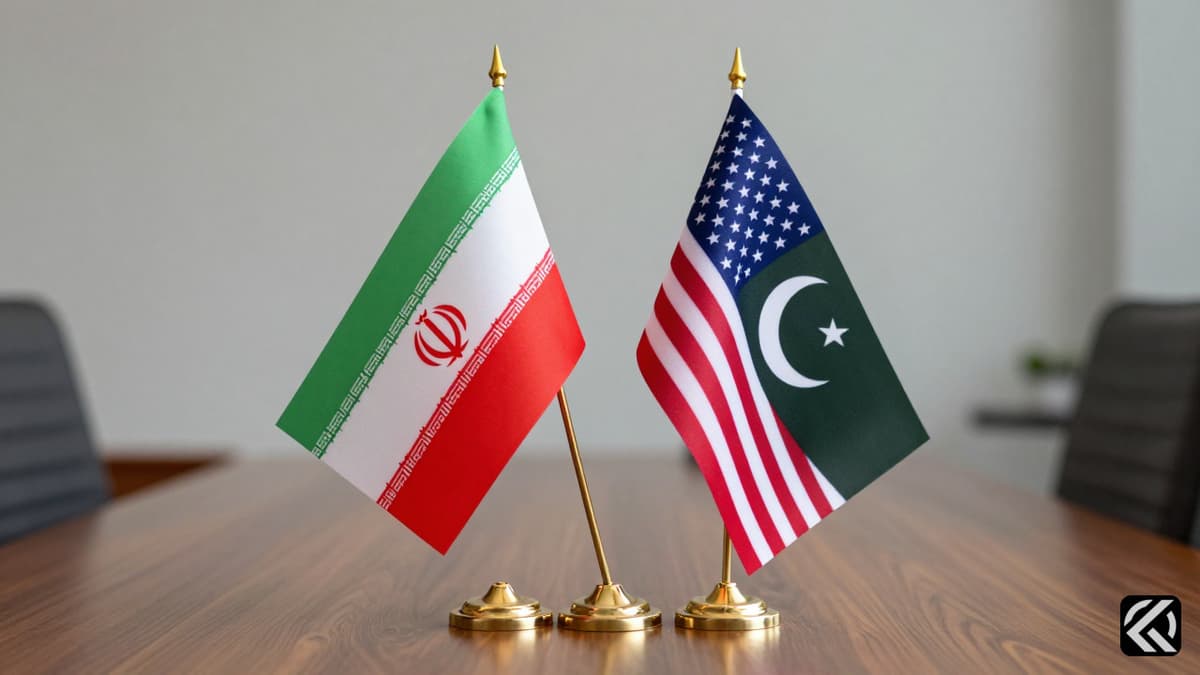
Iranian Foreign Minister Abbas Araghchi arrives in Islamabad for pivotal talks, signaling a potential breakthrough in strained relations with the United States.
Iranian Foreign Minister Abbas Araghchi is preparing to fly into Islamabad on Friday night, leading a small delegation in what government officials describe as a crucial step toward resuming direct negotiations with the United States. This diplomatic move aims to de-escalate a recent military standoff and restart stalled peace efforts.
Senior officials in Islamabad confirmed the development following a series of phone calls between Araghchi and Pakistani leadership on Friday. While Iran’s state news agency IRNA described the visit as purely bilateral for now, Pakistani sources suggest a "high likelihood of a breakthrough" between the two nations. This optimism follows days of intense brinkmanship in the Strait of Hormuz, where tensions had nearly spiraled into full-scale conflict.
The timing of Araghchi’s visit comes at a delicate juncture. Earlier in the week, uncertainty loomed over whether a second round of negotiations would occur. The US, led by Vice President JD Vance, had planned to send a delegation to Islamabad at the start of the week. However, Iran initially refused to return to the negotiating table, citing an active naval blockade of its ports enforced by former President Donald Trump on April 13.
That blockade was implemented just two days after the first round of US-Iran negotiations in Islamabad ended inconclusively. Iran insisted that the US must lift the blockade before any further diplomatic engagement could take place. Trump refused, even after Araghchi indicated that Iran would reopen the strait to most ships, which it had effectively blocked since early March.
Despite the initial impasse, the dynamic shifted on Friday morning. Araghchi spoke by phone with Pakistan’s Deputy Prime Minister and Foreign Minister, Ishaq Dar, who underscored the importance of sustained dialogue. Araghchi appreciated Pakistan’s "consistent and constructive facilitation role." Reports also indicate a separate call between Araghchi and Pakistani army chief Field Marshal Asim Munir, though authorities did not confirm this.
The US remains prepared to attend the second round of talks. At least nine US aircraft have arrived in Islamabad this week, carrying communications equipment, vehicles, and security staff. This logistical buildup suggests that Washington is ready to engage, even if Iran’s willingness to re-engage stems from economic pressure due to the blockade or from successful back-channel negotiations.
The previous negotiation round featured a US delegation including Trump’s special envoy Steve Witkoff and son-in-law Jared Kushner. In contrast, Iran’s delegation was led by parliamentary speaker Mohammad Bagher Ghalibaf, who is viewed as closer to the Islamic Revolutionary Guards Corps than current President Masoud Pezeshkian’s political leadership. The key sticking points in these US-Iran talks include Iran’s nuclear program, US sanctions, and the future security of the Strait of Hormuz.
For the residents of Islamabad, the diplomatic maneuvering has translated into significant daily disruption. The city has experienced severe restrictions on movement, with authorities curtailing access to key areas. The Serena hotel, site of the previous talks in the high-security Red Zone, remains a focal point of security operations.
Maheen Saleem Farooqi, a consultant and mother of two, described the constant state of uncertainty. She begins each day checking her phone not for news, but for instructions on school schedules and road openings. "Your entire day is held upright by a carefully planned structure," she explained. "Recalibrating it due to any level of uncertainty is tantamount to chaos. These past few weeks have been non-stop recalibrating."
The economic and legal sectors have also suffered. Raja Talha Sarfraz, a lawyer at the Islamabad High Court, has not appeared in court in over a week. The court, located within the Red Zone, has been sealed since last Thursday. This closure has halted critical legal proceedings. One of his clients, sentenced to death, had an appeal scheduled after a ten-month wait, but it was canceled due to the closure. Another client, imprisoned since 2017, missed an appeal hearing scheduled for Wednesday for the first time since September 2025.
Sarfraz’s university lectures have moved online, an arrangement he finds inadequate, and his routine grocery runs have become unreliable due to road closures and choked supply chains that began on April 19. "Life is in a limbo," Sarfraz said. "It is like living in purgatory, not knowing when it will end."
The strain is visible across the city. In residential areas near Nur Khan Airbase, roads remain sealed. The Blue Area, typically a commercial hub, has seen subdued activity. While Islamabad is accustomed to disruptions from protests or state visits, the scale and repetition of these restrictions have worn down the population. The first wave of restrictions began in early April for the initial talks and has never fully lifted, overlapping with the current phase of uncertainty.
Pakistan’s role in hosting these talks enhances its global standing but imposes a heavy domestic cost. The country is already managing a $7 billion International Monetary Fund program, rising petrol prices, and rolling blackouts. The additional layer of diplomatic tension exacerbates these economic hardships.
For residents like Farooqi, the anxiety operates on multiple levels. There is the overarching fear of regional war that has unsettled the global economy since February, and the immediate, personal anxiety of daily logistics. "We literally had a moment where my daughter’s school announced it would be physical, and then 30 minutes later, promptly recanted and went online," Farooqi noted. "There is never any clarity on what is happening."
The arrival of Iranian Foreign Minister Abbas Araghchi marks a potential turning point in the stalemate between Washington and Tehran, yet the immediate impact on Islamabad remains one of profound disruption. If the US-Iran talks succeed in lifting the naval blockade and resolving nuclear disputes, the city may experience a gradual easing of security restrictions and economic relief. However, if negotiations fail or the blockade persists, the ongoing limbo could deepen Pakistan’s economic crisis, prolonging civil unrest and straining the government’s capacity to manage both diplomatic obligations and domestic instability. The residents remain caught in the crossfire of geopolitical maneuvering, hoping for a swift resolution to their "purgatory."
Jun 13, 2026 07:25 UTC
Trump Blames Iran for Attacks on Indian Ships
Jun 13, 2026 04:59 UTC
Abbas Araghchi Details Draft U.S. Deal Amidst Donald Trump's Drone Accusations
Jun 13, 2026 03:39 UTC
Jaishankar Lodges Strong Protest Over US Navy Attacks on Indian Crew
Jun 13, 2026 02:22 UTC
Border Guard Bangladesh Challenges BSF Over Immigrant Pushbacks
Jun 13, 2026 07:29 UTC
IAF An-32 Aircraft Meets Accident During Landing in Jorhat


