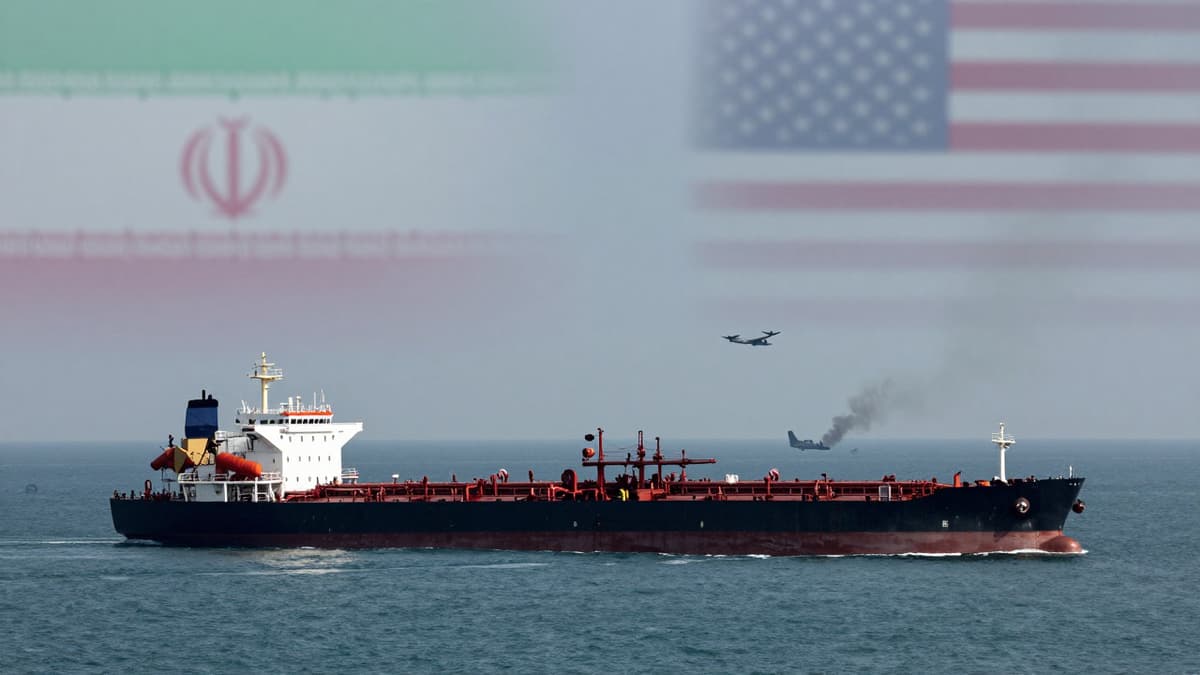
Iran's Foreign Minister Abbas Araghchi firmly states there are no ongoing talks with the US to end the conflict, directly contradicting White House claims of productive discussions.
Iran's Foreign Minister Abbas Araghchi has explicitly stated that his country is not currently negotiating with the United States to end the ongoing war, directly contradicting recent assertions from the White House. Araghchi emphasized that Tehran "does not intend" to engage in talks at this time, despite US President Donald Trump's press secretary claiming that discussions are "ongoing" and "productive." This stark divergence in narratives sets a tense tone for diplomatic efforts amidst a conflict that erupted on February 28 with US and Israeli air strikes.
The conflict began following attacks by the US and Israel, prompting Iran to escalate hostilities by targeting American allies in the Gulf region. While Trump's press secretary insisted that elements of a peace deal were circulating, Araghchi clarified that the US had been sending ideas through mediators, including a reported 15-point proposal. The foreign minister did not outright reject this specific plan but reiterated arguments made earlier by an unnamed Iranian official, outlining a five-point counter-proposal to end the fighting.
According to reports from Israel's Channel 12, the US proposal requires Iran to halt its nuclear ambitions and eliminate missile threats, which remain the stated rationale for the war. The plan reportedly demands that Tehran commit never to pursue nuclear weapons, dismantle its nuclear facilities, and hand over enriched uranium to the International Atomic Agency (IAEA). Furthermore, the US proposals request limits on Iran's missile program's range and quantity, a cessation of funding for regional proxies like Hezbollah, Hamas, and the Houthis, and the reopening of the Strait of Hormuz as a free maritime corridor.
A key component of the US strategy involves lifting all international sanctions on Iran, which were reimposed last November following suspended inspections of nuclear sites after bombings. However, when asked to confirm these specific details, Trump's press secretary offered a nuanced denial, stating that the White House never confirmed the full plan and that some media reports were not entirely factual. Araghchi acknowledged that "some ideas" had been proposed to senior leaders but noted that a definitive position would only be determined once a formal stance is required.
In response to these demands, an unnamed Iranian official cited by state-run Press TV outlined five conditions for ending the war, including a complete halt to "aggression and assassinations by the enemy." These demands follow a wave of killings of top Iranian officials, including Supreme Leader Ayatollah Ali Khamenei, who was killed in a massive Israeli air strike on the first day of the war. Iran also insists on concrete mechanisms to ensure the war does not resume, though the specifics of monitoring these guarantees remain unclear to observers.
On the economic front, Tehran is demanding the payment of war damages and reparations, alongside the right to remain solely in charge of the Strait of Hormuz, a critical waterway through which a fifth of the world's oil and gas supplies pass. The closure of the strait has already caused oil prices to spike and raised fears of a global economic recession, making its status a central point of contention. Additionally, Iran insists that Israel must end attacks on its regional allies, a demand that clashes with Israel's current military posture.
Israeli Prime Minister Benjamin Netanyahu and his officials have frequently stated their intent to "cut the head of the octopus," referring to Iranian influence. Israel has intensified its campaign against Hezbollah, announcing a widened buffer zone inside Lebanon that will remain in place until attacks on northern Israel cease. This stance suggests deep skepticism from Israeli leaders regarding a potential ceasefire, mirroring Netanyahu's previous reservations during Gaza negotiations.
Negotiations to end the war are expected to be led by Trump's peace envoys, Steve Witkoff and Jared Kushner, whose previous role in ending the Israel-Hamas conflict provides a potential model for the current situation. The US president has described Iran as "desperate" for talks, alleging that Iranian negotiators offered a "very significant prize" related to oil, gas, and the Strait of Hormuz. If the envoys replicate their previous procedure, a ceasefire would be a prerequisite for negotiations, yet Israel's Economy Minister, Nir Barkat, told the BBC that it is unlikely Iran would agree to the US terms.
The current Iranian leadership remains wary of any engagement with the US, a sentiment complicated by the fact that the war began in the midst of nuclear deal negotiations. With US troops now being sent to the region, with suggestions they may be used to open the Strait of Hormuz or seize territory, the likelihood of a peaceful resolution remains low. The reported US peace proposals, similar to the Gaza model, suggest that a ceasefire would be necessary to enable talks, but the deep mistrust and active military campaigns make such a pause difficult to achieve.
Iranian officials are holding firm on a counter-proposal that prioritizes sovereignty and financial restitution over immediate concessions. The demand for war damages and exclusive control over the Strait of Hormuz indicates that Tehran views the conflict as a defensive necessity rather than a crisis to be solved by external pressure. As US troops arrive and Israel maintains its offensive posture, the path to a resolution appears blocked by mutual distrust and the high stakes of regional security. The potential for a prolonged conflict looms large, with economic sanctions and military escalation serving as primary tools of pressure. Without a significant shift in military or diplomatic posture from either side, the war is likely to continue, leaving the Strait of Hormuz as a volatile flashpoint for the global economy.
May 9, 2026 21:40 UTC
Russia Cuts Heavy Armor From Victory Day Parade Amid War
Join 50,000+ readers getting the global briefing every morning.
No spam. Unsubscribe anytime.
May 10, 2026 05:02 UTC
MV Hondius Arrives in Tenerife Amid Hantavirus Outbreak
May 10, 2026 03:02 UTC
Vijay Takes Oath, Ending Dravidian Party Era in Tamil Nadu
May 10, 2026 01:28 UTC
Nine TVK Leaders Join C. Joseph Vijay as Tamil Nadu Ministers
May 9, 2026 23:27 UTC
India’s Strategic Leap: Agni-5 with MIRV Trial Success


