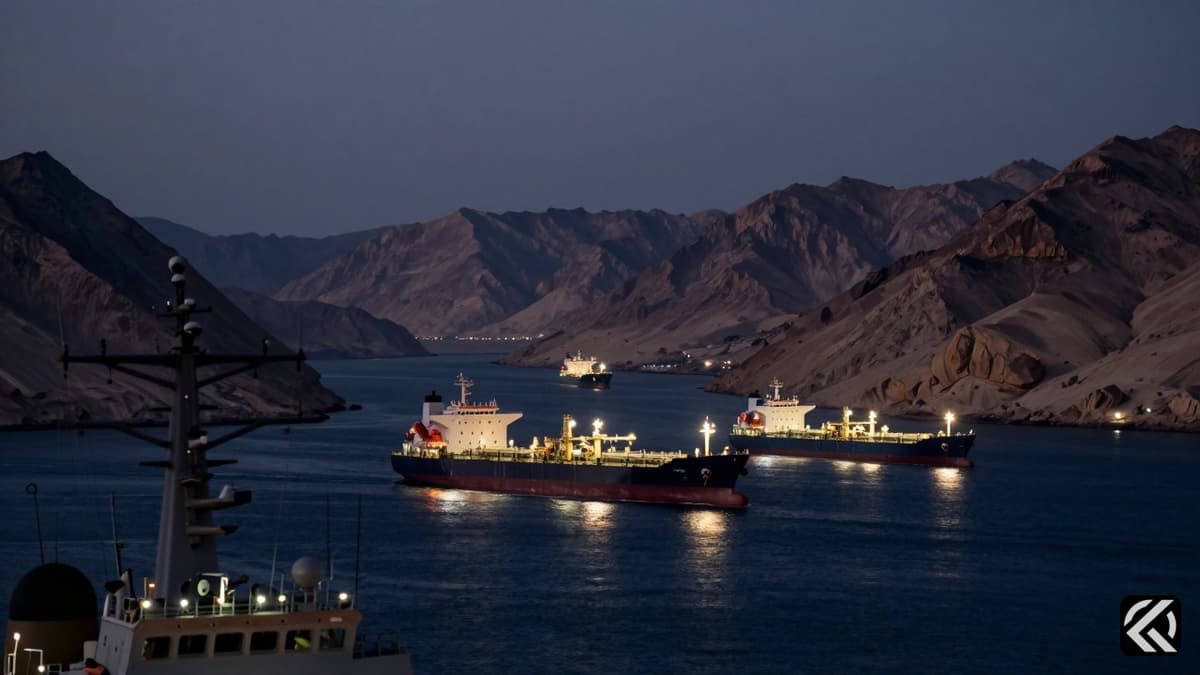
Tensions surge as Iran closes the strategic waterway again, citing US port blockades, while negotiations falter over uranium stockpiles and enrichment limits before a deadline.
Tensions between the United States and Iran have escalated sharply as a critical deadline for a US-Iran ceasefire approaches, following a sudden re-imposition of a blockade on a global trade lifeline. Iran has once again closed the strategic Strait of Hormuz, directly contradicting a previous announcement of its reopening just hours before. This escalation occurs while high-level Trump negotiations regarding nuclear concessions and sanctions relief remain at an impasse.
The situation deteriorated rapidly after Friday's brief optimism regarding the waterway. Iranian Foreign Minister Abbas Araghchi had previously suggested the strait would be fully open for shipping, a move that initially sent crude oil prices down by 10 percent. However, this optimism was short-lived. US President Donald Trump subsequently stated that the American blockade on Iranian ports would continue "in full force" until a final "transaction" is complete. In response, the Islamic Revolutionary Guard Corps (IRGC) announced that approaching the strait would be considered "cooperation with the enemy," and any offending vessel would be targeted.
The humanitarian cost of the ongoing conflict is mounting alongside the geopolitical friction. Footage released by the Iranian Red Crescent Society (IRCS) shows destroyed buildings, debris-strewn streets, and piles of rubble in civilian areas of Tehran, which the agency says were previously targeted by airstrikes. Representatives from the International Federation of Red Cross and Red Crescent Societies (IFRC) have visited the site, expressing deep concern over attacks on civilians and emphasizing the urgent need to protect medical and relief centers. According to state media outlet Islamic Republic of Iran Broadcasting (IRIB), at least 3,375 people have been killed in Iran since the United States and Israel began their strikes.
On the Israeli front, the toll is also rising. The Israel Defense Forces (IDF) confirmed that two soldiers were killed in southern Lebanon over the past two days, bringing the total death toll for their troops to at least 15 since the latest conflict began. These fatalities include Sergeant First Class (Res.) Lidor Porat, 31, who was killed on Saturday, and Sergeant Major (Res.) Barak Kalfon, who died the day prior. In total, twelve other soldiers were injured in these incidents. The conflict in the north also claims Lebanese civilians, with the Lebanese Health Ministry reporting over 2,000 killed and 7,000 wounded over the past six weeks of Israeli bombardment.
The diplomatic path forward remains fraught with difficulty. Washington and Tehran are described as "far from a final agreement" by Iranian parliament speaker Mohammad Bagher Ghalibaf, who stated this in a state television interview. A core component of the Trump negotiations involves the fate of Iran's uranium stockpiles. President Trump claimed this week that Iran agreed to ship its stockpile of highly enriched uranium to the US. However, a senior Iranian official quickly rebuked this, labeling the demand a "non-starter." Iran currently holds about 400 kilograms of 60% enriched uranium. While one proposal involved unfreezing Iranian assets in exchange for turning over the stockpile, Iran has explicitly asked for major sanctions relief, including the unfreezing of assets north of $20 billion.
Another major hurdle remains the curbs on uranium enrichment. While American negotiators proposed a 20-year pause on Iran's enrichment program during talks last weekend, Iran countered with a proposal for a five-year suspension, which a US official has rejected. An Iranian official speaking to CNN rejected the notion that Tehran agreed to halt the program indefinitely, stating Iran "will never accept" being an "exception from international law."
The timing of the latest closure of the Strait of Hormuz appears calculated. The move came when there was no immediate market impact, suggesting a strategic maneuver rather than an economic escalation. Analysts suggest this could be Iran signaling anger that President Trump did not lift the naval blockade after Tehran lifted its own. Both sides were previously believing a deal was possible, with Trump viewing the looming end of the US-Iran ceasefire as leverage. However, the preemptive application of pressure by Tehran has threatened that momentum.
As the deadline for the US-Iran ceasefire approaches, the likelihood of an agreement diminishes while the risk of further escalation rises. The repeated closure of the Strait of Hormuz indicates that Iran is utilizing its strategic geographic control as a primary bargaining chip to force concessions on the port blockade and asset unfreezing. If President Trump maintains his stance that the blockade will continue until a "transaction" is complete, the cycle of tit-for-tat closures and reopenings is likely to intensify. The Wall Street Journal reports that the US Navy could start boarding Iranian vessels, a move that could trigger a violent confrontation in the waterway. Without a breakthrough in the nuclear discussions regarding uranium stockpiles and enrichment limits, the region faces a prolonged period of heightened military readiness and economic instability.
Jun 8, 2026 02:17 UTC
Magnitude 7.8 Quake Shakes Philippines, Urging Immediate Evacuations
Jun 8, 2026 00:51 UTC
Trump Claims Iran Nuclear Deal Imminent Despite Diplomatic Fractures
Jun 8, 2026 00:47 UTC
Iran Fires Missiles at Israel After Beirut Strike
Jun 7, 2026 22:00 UTC
US, Iran Peace Hops Fade 100 Days Into War
Jun 8, 2026 04:15 UTC
Trump Urges Netanyahu to Halt Iran Strike for Peace


