Tamil Nadu polls start with high stakes. Leaders urge voter turnout as security ramps up.
The Tamil Nadu Assembly elections 2026 officially commenced on Thursday, April 23, 2026, with polling stations opening at 7 a.m. across 234 constituencies in the state. Voters began lining up at various locations, including Government Higher Secondary Schools, to exercise their franchise.
Early morning scenes in Kanniyakumari showed voters gathering at polling booths in Thengamputhoor and Puthalam well before the official start time. To ensure transparency and security, jute bags were arranged at stations for mobile phone deposits, and tokens were distributed for the same purpose. Despite the early arrival of many, queues were initially short, with only five to seven electors present at some booths in Madurai North when polling began.
Prominent political figures were among the first to cast their ballots. AIADMK general secretary <b>Edappadi K. Palaniswami</b> voted alongside his family at a polling booth in Nedunkulam, Siluvampalayam. Addressing reporters afterward, he emphasized the importance of democratic participation, stating that all voters should go to their polling booths to perform their democratic duty. When questioned about allegations of cash distribution by the DMK, Palaniswami declined to comment, citing the enforcement of the model code of conduct.
National leaders also weighed in on the proceedings. Prime Minister <b>Narendra Modi</b> took to social media platform X, calling upon all voters, particularly the youth and women, to participate enthusiastically in this "sacred duty of democracy." He urged them to vote in record numbers to elect a government that works toward fulfilling their aspirations rather than serving familial ambitions. Similarly, Union Home Affairs Minister Amit Shah appealed for large-scale participation, emphasizing the need for a government focused on public welfare.
Congress Chief Mallikarjun Kharge also issued a strong appeal to Tamil Nadu voters. He framed the election as a struggle to secure federal rights, rationality, equality, justice, and freedom. Kharge urged first-time young voters to come out in large numbers to protect the ideals of social justice espoused by the state’s icons.
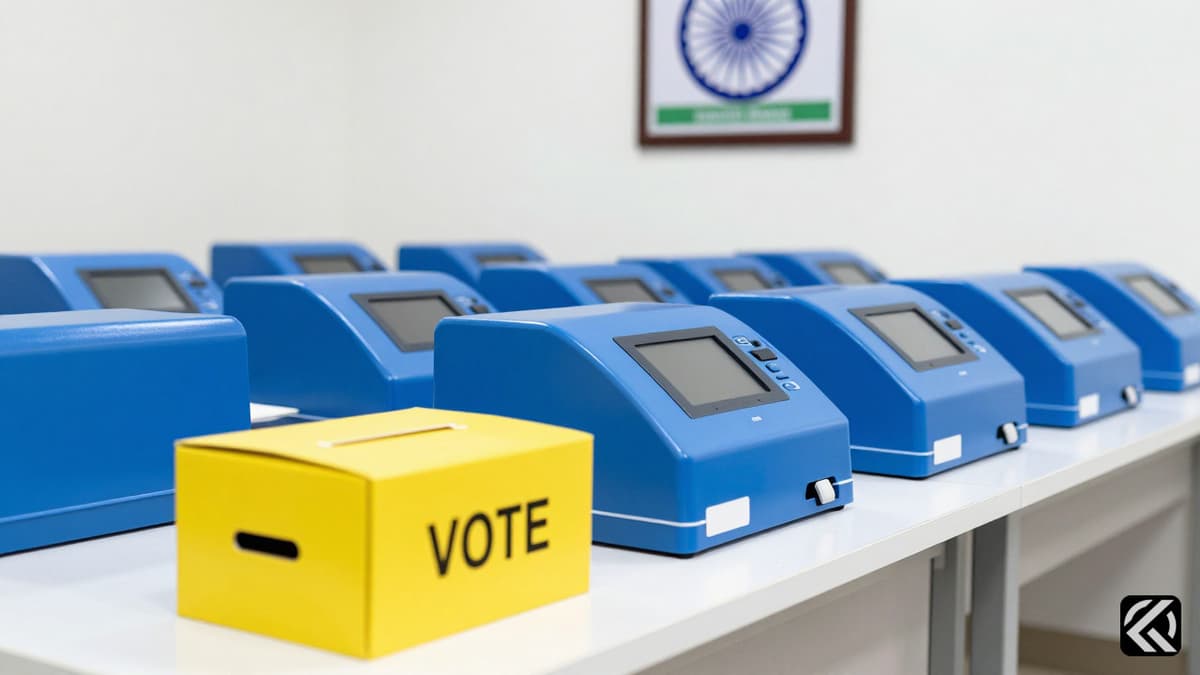
The electoral process was preceded by rigorous preparations. Mock polls were conducted at 5:30 a.m. in all booths in the presence of candidates’ agents. As many as 50 votes were cast in each booth during this test phase, and the votes recorded in Electronic Voting Machines (EVMs) were verified with Voter Verifiable Paper Audit Trail (VVPAT) units. Mock poll certificates were issued by presiding officers to confirm the functionality of the equipment.
Security and logistical arrangements were extensive across various districts. In Erode district, 17 polling stations with more than eight booths each were identified. A color-coding system was implemented to help voters locate their booths easily. Additionally, eight model polling stations and eight all-women-managed polling stations were established across the eight constituencies in Erode. Special accommodations included one polling station for persons with disabilities and another for youth voters. Three green polling booths were set up in tribal hamlets and hill areas to facilitate voters in remote regions.
In the Erode district alone, 118 candidates are contesting across eight constituencies: Erode (East), Erode (West), Modakkurichi, Perundurai, Bhavani, Anthiyur, Gobichettipalayam, and Bhavanisagar (R). The electorate comprises 17,59,157 voters, including 8,47,197 men, 9,11,778 women, and 182 third-gender persons. To ensure smooth polling, 11,420 polling personnel, 67 micro-observers, and 1,052 police personnel have been deployed at 2,379 booths. Furthermore, 2,900 police and Central Armed Police Forces (CAPF) personnel have been assigned for security, with additional forces at 73 vulnerable booths.
Chennai also saw significant activity, with polling beginning in 3,523 of 4,085 polling stations across 16 Assembly constituencies. District Election Officer and Collector S. Kandasamy confirmed that polling was underway in all eight constituencies in his district. He highlighted that web-streaming facilities have been provided at all polling stations for the first time, allowing real-time monitoring of activities inside and outside the booths from the District Election Office and the Chief Electoral Officer.
The Election Commission of India introduced a dedicated mobile application to track voter turnout every two hours, sharing updates promptly with the media and the public. Elaborate security arrangements have been put in place to ensure voters can exercise their franchise freely and fairly. In Thoothukudi and Palani, polling was delayed in specific booths due to technical issues, but officials worked to resolve the disruptions.
Across the state, the atmosphere was one of anticipation and civic duty. In Cuddalore, prominent candidates like former Minister M.C. Sampath cast their votes early. In Coimbatore, Central Reserve Police Force personnel stood guard at polling stations, ensuring a secure environment. The use of technology, such as the turnout tracking app and web-streaming, marked a shift toward greater transparency and efficiency in the electoral process.
As the day progressed, voters from diverse backgrounds continued to arrive at polling stations. In Madurai, Blood Liasion Officers (BLOs) assisted voters who had lost their polling slips by tracing their details using EPIC cards. In Erode, TVK chief coordinator K.A. Sengottaiyan and other prominent candidates like Minister S. Muthusamy and BJP’s S. Kirthika cast their votes. The presence of AIADMK leader Panneerselvam and Congress leader C.V. Ganesan highlighted the contest's significance.
The deployment of nearly 4,500 police personnel in Kanniyakumari alone underscores the emphasis on law and order. The combination of physical security measures, technological monitoring, and proactive civic engagement strategies aims to ensure a free and fair election. As voting continues until 6 p.m., the results of these 234 constituencies will determine the composition of the Tamil Nadu Legislative Assembly.
The commencement of the Tamil Nadu Assembly elections 2026 marks a critical juncture for the state's political landscape. With high-profile leaders casting their votes and national figures urging participation, the election reflects a strong demand for accountability and development. The extensive use of technology, including real-time web-streaming and app-based turnout tracking, suggests a trend toward greater transparency in Indian elections. The heavy security presence and organized logistical arrangements indicate the state's preparedness to handle the scale of the event. As voters head to the polls, the outcome will not only determine the next government but also set the tone for policy priorities in Tamil Nadu, particularly in areas of welfare, federal rights, and social justice, as emphasized by various party leaders.
Jun 8, 2026 02:17 UTC
Magnitude 7.8 Quake Shakes Philippines, Urging Immediate Evacuations
Join 50,000+ readers getting the global briefing every morning.
No spam. Unsubscribe anytime.
Jun 8, 2026 02:17 UTC
Magnitude 7.8 Quake Shakes Philippines, Urging Immediate Evacuations
Jun 8, 2026 00:51 UTC
Trump Claims Iran Nuclear Deal Imminent Despite Diplomatic Fractures
Jun 8, 2026 00:47 UTC
Iran Fires Missiles at Israel After Beirut Strike
Jun 7, 2026 22:38 UTC
Congress Party Claims Unity for INDIA Bloc Delhi Meeting