Section
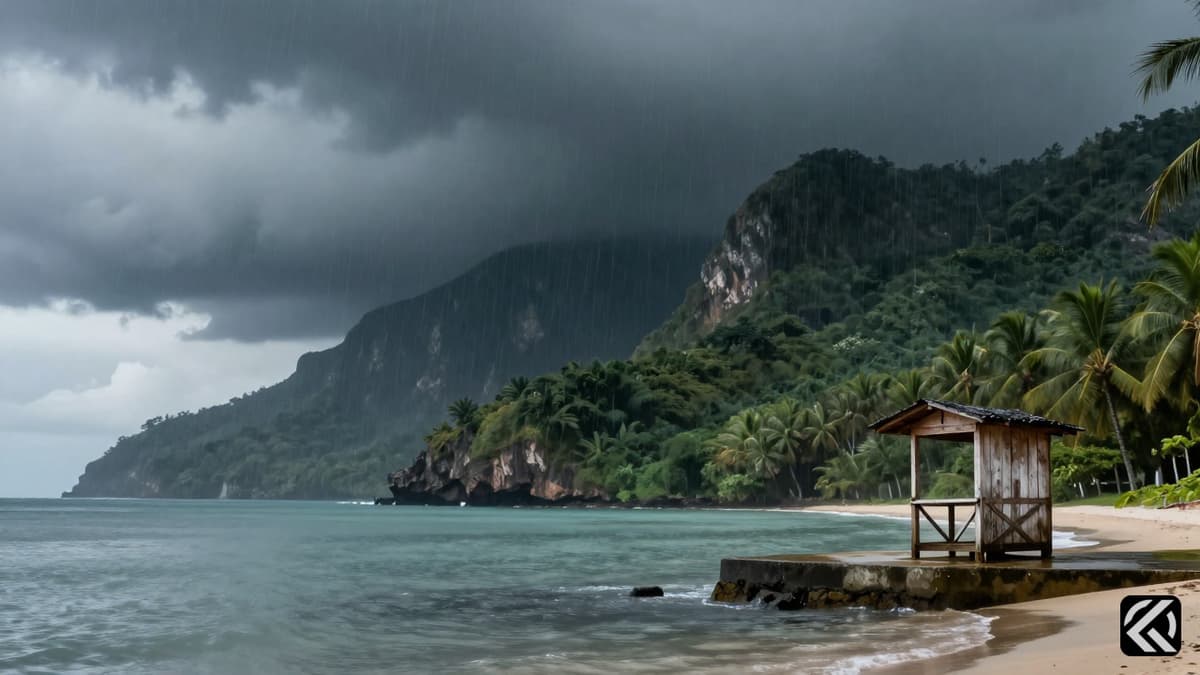
Hawaii prepares for a potentially historic weather event as Category 1 Hurricane Lala approaches the state, marking the first direct hurricane hit since 1992.
As the winds picked up across the Pacific, the state of Hawaii found itself bracing for a historic meteorological event that has not been seen in nearly four decades. On Saturday, Category 1 Hurricane Lala churned off the coast, gaining hurricane strength and forcing officials to issue urgent warnings for potential direct impacts.
The storm is expected to make landfall or pass close to the southern tip of the Big Island, creating a scenario where residents could face life-threatening conditions. While the worst-case scenario projects up to 25 inches of rain and a 3-foot storm surge, the immediate reality involves widespread wind damage and flash flooding.
The National Weather Service (NWS) has issued dire forecasts specifically for areas within the Big Island's southeast. Authorities warn that major rainfall flooding may prompt many evacuations and rescues, as rivers and tributaries rapidly overflow their banks in multiple places. A hurricane warning is currently in effect for the Big Island, while Maui County, Oahu, Kauai, and Niihau remain under tropical storm warnings.
Officials have urged residents to prepare for floods and mudslides, emphasizing the severity of the threat. Local message boards on Facebook have shown residents filling bags with sand to protect their homes and inquiring about store hours in the early hours of Saturday, indicating a grassroots response to the impending crisis. Hawaii County's Civil Defense Agency confirmed that public shelters are available in every county on the Big Island.
"At this time, you should have completed your storm-ready preparations and focusing on your Sheltering Plan," the agency stated on X, highlighting the urgency for those who have not yet secured their safety.
The impact on infrastructure is already being felt. At Ellison Onizuka Kona International Airport, the Big Island's largest airport, 40% of flights were grounded. At Hilo International, the island's other main airport, approximately 80% of flights were called off. This disruption underscores the scale of the storm and the preemptive measures taken to ensure passenger safety.
A post on X emphasized the broad scope of the threat: "Damaging winds, heavy rain, flash flooding and dangerous surf are possible across the state through the weekend."
The historical context of this event adds to the tension. The last time a hurricane made landfall on Hawaii's Big Island was 155 years ago, according to the Associated Press news agency. However, the last time a hurricane struck the state of Hawaii was in 1992, when Hurricane Iniki, a powerful Category 4 storm, made landfall on the southern coast of Kauai. Iniki caused six deaths and $3 billion in damage, serving as a grim benchmark for the potential impact of Lala.
As the storm continues moving westwards over the weekend, it may weaken into a tropical storm, with its center passing just below Hawaii's other islands. However, the initial impact on the Big Island remains the primary concern for meteorologists and emergency managers alike.
The preparation for Hurricane Lala highlights the ongoing vulnerability of the Hawaiian archipelago to extreme weather events, even as the broader US hurricane season remains relatively quiet. The National Oceanic and Atmospheric Administration has predicted a 55% chance of a below-normal hurricane season for 2026, suggesting that individual storms like Lala could have disproportionate impacts in their specific regions.
If Lala follows the more dire forecasts, the Big Island could face significant long-term recovery challenges. The potential for rapid river overflow and landslides could damage critical infrastructure, including roads and power grids, that are essential for daily life and tourism. The grounding of flights at major airports indicates a substantial economic pause, affecting both residents and visitors.
As residents complete their storm-ready preparations, the focus shifts to monitoring the storm's path and intensity. The comparison to Iniki serves as a reminder that even Category 1 storms can cause severe damage if they interact with vulnerable geography and saturated soils. The coming days will test the resilience of Hawaii's emergency response systems and the preparedness of its communities against the forces of nature.
Aug 17, 2026 14:29 UTC
USS Abraham Lincoln Crew Faces Mental Health Crisis During Extended Deployment
Aug 17, 2026 04:30 UTC
Trump Reduces Joint Military Exercises With South Korea
Aug 17, 2026 02:52 UTC
Kushner Meets Hamas in Egypt Over Rejected Gaza Ceasefire Plan
Aug 16, 2026 20:37 UTC
Kushner Mediates Gaza Ceasefire Amidst Escalating US-Iran Conflicts
Aug 14, 2026 02:44 UTC
Fatal Breach in Uttarakhand: 6 Dead, 14 Injured in THDC Incident