Section
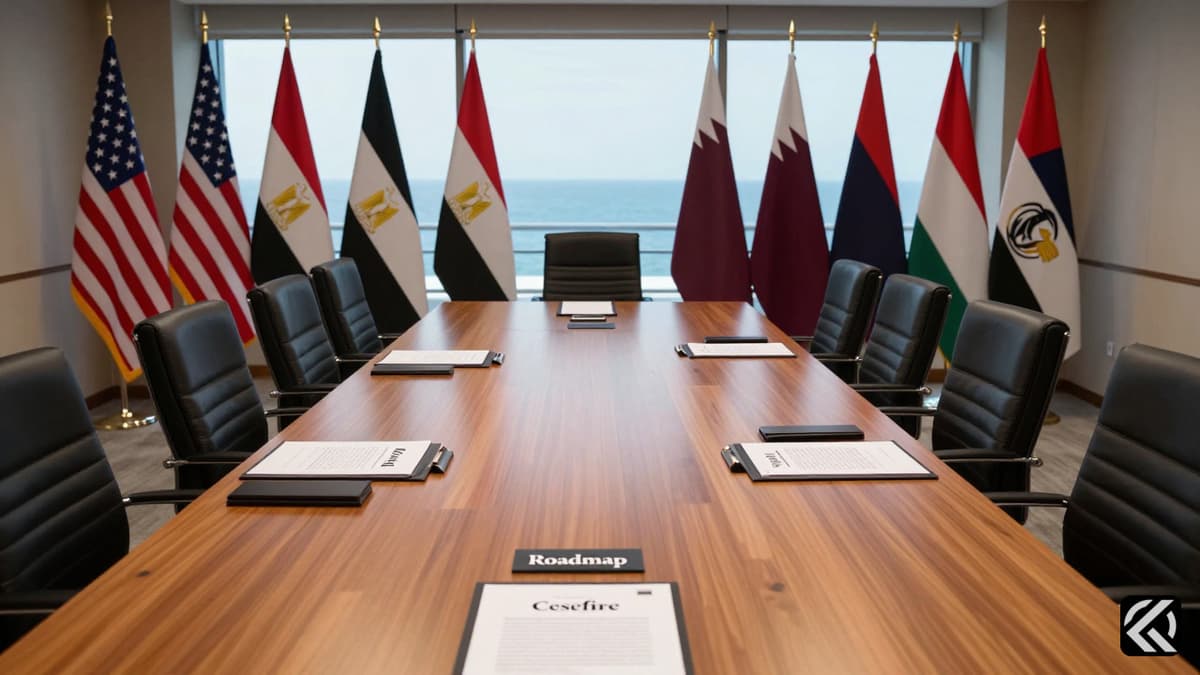
High-stakes diplomacy unfolds in Alamein as Jared Kushner seeks to bridge gaps between Hamas and Israel over a rejected peace roadmap.
In a significant diplomatic development, Hamas leaders have met in Egypt with Jared Kushner, the US President’s son-in-law and Middle East envoy, who is actively seeking to advance a peace plan for Gaza that has been firmly rejected by Israel.
A Palestinian source confirmed to Al Jazeera on Sunday that Hamas’s leadership briefed Kushner on Israel’s recent ceasefire violations within the Gaza Strip. During this briefing, Kushner explicitly stated that the United States rejects any proposals to displace the residents of Gaza, signaling a clear stance from Washington regarding the humanitarian and political complexities of the region.
Another official familiar with the negotiations told Al Jazeera that the meeting took place in the coastal town of Alamein, with the primary objective of translating the roadmap’s obligations into concrete, verifiable steps. The source described these actions as essential for maintaining the ceasefire, including transferring all governing responsibilities to the National Committee for the Administration of Gaza and ensuring that Hamas relinquishes its role in future administration.
The source emphasized there could be no ambiguity: Hamas must give up all governing authority, weapons, and military infrastructure, as Gaza can never again serve as a source of terror for Israel.
Hamas political leader Khalil al-Hayya attended the talks, which were attended by key regional figures. Egyptian intelligence chief Hassan Rashad, Qatari diplomat Ali Al Thawadi, and a senior Turkish official were present, according to reports from US outlet Axios. Additionally, Board of Peace envoy Nickolay Mladenov and former UK Prime Minister Tony Blair, also a board member, joined Kushner in the meeting.
These visits to Israel and Egypt are part of a concerted effort to narrow differences over Trump’s latest roadmap for Gaza, which Israeli Prime Minister Benjamin Netanyahu labeled “unacceptable” last week.
Hamas issued a statement on Sunday emphasizing its “acceptance” of the roadmap for the second phase of Trump’s plan. The group stated that it and the resistance fully adhered to the first phase of the ceasefire agreement. However, Hamas accused Israel of failing to implement this phase, escalating military operations, and deepening the humanitarian catastrophe. Hamas called upon mediating parties and the Board of Peace to compel the occupation to implement its obligations, end violations, and begin developing a timetable for the second phase.
For years, the US refused contact with Hamas, classifying it as a terrorist organization. However, the Trump administration has increasingly become comfortable with direct contact in hopes of ending what it has described as a genocidal war on Gaza.
Following the talks with Hamas, Khalil al-Hayya met separately with Egypt’s Rashad, according to Reuters. Meanwhile, Kushner met with Egyptian President Abdel Fattah el-Sisi. The Egyptian president’s office noted that the two discussed Egypt-US relations, with el-Sisi praising the strategic partnership and Kushner commending the close coordination and el-Sisi’s role in regional stability.
On Sunday, the foreign ministers of eight nations-Egypt, the United Arab Emirates, Qatar, Jordan, Indonesia, Pakistan, Turkiye, and Saudi Arabia-condemned Israel’s rejection of the roadmap. They branded the rejection a “direct assault” on US-led peace efforts and Palestinian statehood, warning that Israel bears full responsibility for derailing the plan. The ministers urged Washington to enforce compliance and insisted that only a two-state solution on 1967 borders can bring lasting stability.
A senior Israeli official stated that Kushner and Mladenov were scheduled to meet with Netanyahu on Monday. The official noted Israel’s concern regarding Washington’s demand to end targeted assassinations of Hamas fighters.
Trump announced the roadmap last month, calling it a breakthrough to end the war, which both sides had initially agreed to. The plan calls for an immediate cessation of military operations, Hamas disarming as Israeli troops withdraw, and Gaza’s rebuilding under a new civilian Palestinian administration. Hamas agreed to the plan to avoid war resumption but insisted implementation depends on Israel meeting its commitments first.
Despite scaling back attacks earlier this month, Israel has resumed air strikes on Gaza in recent days, violating the October 2025 ceasefire. At least five Palestinians were injured on Sunday after Israeli strikes hit a tent encampment in Khan Younis and an apartment in the Nuseirat refugee camp. Palestinian official sources report that Israeli fire has killed more than 1,250 Palestinians since the ceasefire took effect, with the total death toll since October 2023 exceeding 73,300.
The diplomatic push led by Jared Kushner highlights the deepening divide between US-mediated peace objectives and on-the-ground realities in Gaza. While international mediators and regional powers urge compliance with the roadmap, Israel’s continued military operations and rejection of the plan suggest that the ceasefire remains fragile. The ongoing violence, evidenced by recent injuries and deaths, undermines the trust necessary for the proposed transition of power and disarmament. Without a decisive shift in Israeli policy or a stronger enforcement mechanism from Washington, the roadmap risks further erosion, potentially leading to a prolonged humanitarian crisis and renewed cycles of conflict in the region.
Aug 17, 2026 14:29 UTC
USS Abraham Lincoln Crew Faces Mental Health Crisis During Extended Deployment
Aug 17, 2026 04:30 UTC
Trump Reduces Joint Military Exercises With South Korea
Aug 17, 2026 02:52 UTC
Kushner Meets Hamas in Egypt Over Rejected Gaza Ceasefire Plan
Aug 16, 2026 20:37 UTC
Kushner Mediates Gaza Ceasefire Amidst Escalating US-Iran Conflicts
Aug 18, 2026 00:00 UTC
Trump’s False Claims on South Korea Defense Payments Disputed