Section
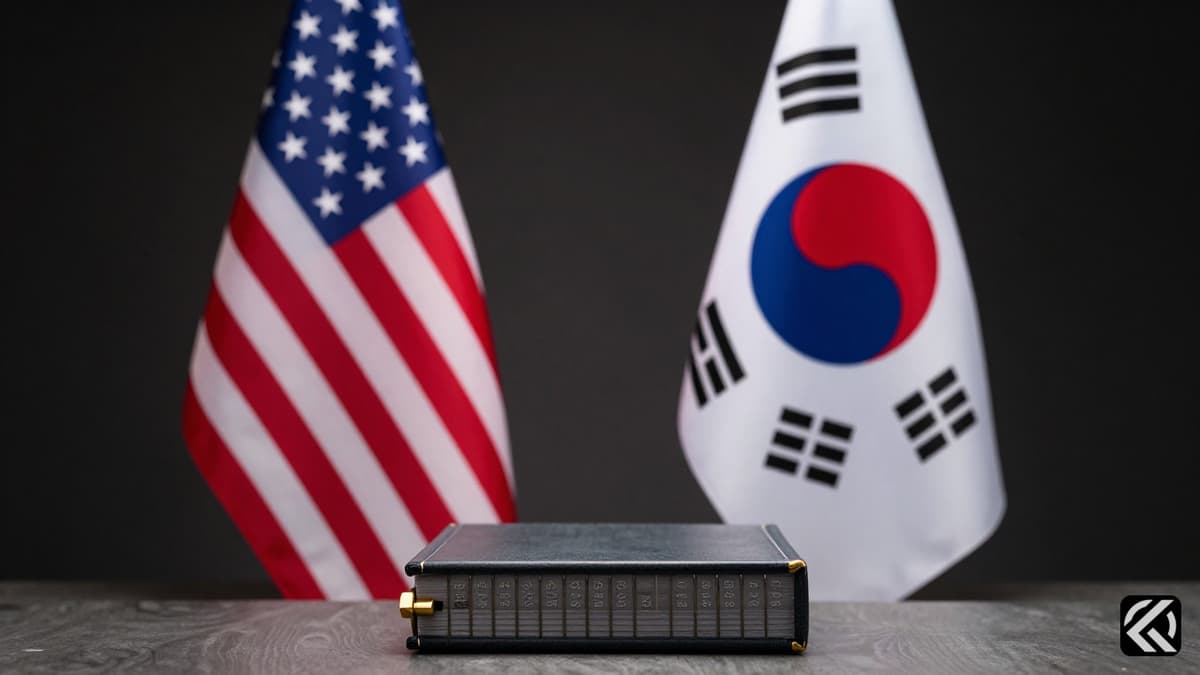
President Trump repeated false claims about defense payments to South Korea, ignoring decades of existing cost-sharing agreements and Biden’s new deals.
On Monday, President Donald Trump delivered a speech containing numerous false statements regarding South Korea’s financial contributions to the US Military Presence on its soil. The President’s remarks directly contradicted established historical records and recent diplomatic agreements, creating a cloud of misinformation around the bilateral relationship.
The comments were made shortly after Trump announced the reduction of joint military exercises, citing his relationship with North Korean leader Kim Jong Un. He asserted that South Korea essentially did not pay for US protection before his first presidency. He further claimed that he secured a $3 billion annual payment, which was allegedly rescinded by Joe Biden after the 2020 election. These assertions are factually incorrect on multiple fronts, including the timing of initial payments, the specific dollar amounts agreed upon, and the status of current treaties.
The claim that South Korea was not paying for the US Military Presence prior to Trump’s term is historically inaccurate. Cost-sharing through Special Measures Agreements began in 1991. Under the final five-year agreement signed before Trump took office in 2017, negotiated by the Obama administration, South Korea agreed to spend more than $800 million per year from 2014 through 2018. While Trump may argue these figures were insufficient, stating that South Korea was not paying at all is a falsehood.
Trump also incorrectly stated that he secured a $3 billion annual payment. Under the one-year Special Measures Agreement negotiated by the Trump administration in 2019, South Korea agreed to an 8.2% increase in spending. However, the new total remained less than $1 billion, not the $3 billion Trump claimed. Furthermore, Trump falsely asserted that this deal included two subsequent years of increases. In reality, negotiations for a post-2019 deal stalled due to Trump’s demands for a massive increase, leaving talks unresolved when Biden took office.
Trump’s narrative relied heavily on the discredited assertion that the 2020 election was rigged. He claimed that South Korea convinced Biden to rescind his order once he left office. This is false. The one-year 2019 deal negotiated by Trump expired at the end of 2019. A narrow deal in mid-2020 allowed South Korea to spend $200 million that year to pay local employees of US forces, but this was not a continuation of the alleged $3 billion hike.
The reality of the Biden administration’s actions directly contradicts Trump’s story. Biden did not rescind any cost-sharing agreement. Instead, his administration signed two new agreements. The 2021 agreement, which retroactively covered Trump-era 2020, included a 13.9% spending increase in 2021, bringing the level to around $1 billion, with further increases tied to South Korea’s defense budget through 2025. The 2024 agreement included an 8.3% increase in 2026, followed by inflation-linked increases through 2030.
These actual increases were smaller than the demands Trump left office with, but they represent a continued commitment to cost-sharing. South Korea had not agreed to the $3 billion figures Trump claimed. The President’s exaggeration of the US military presence size is also notable; he claimed 39,000 troops, while the Pentagon reported 26,589 as of the end of March.
President Trump’s repeated false claims regarding defense contributions to South Korea ignore the complex history of Special Measures Agreements. By misrepresenting the financial obligations and the actions of the Biden administration, these statements risk undermining trust in diplomatic processes. The existence of active agreements through 2030 suggests that cost-sharing will remain a structured, incremental process rather than a sudden shift to unpaid status or inflated demands. Future stability depends on acknowledging the factual record of continuous financial contributions since 1991.
Aug 17, 2026 14:29 UTC
USS Abraham Lincoln Crew Faces Mental Health Crisis During Extended Deployment
Aug 17, 2026 04:30 UTC
Trump Reduces Joint Military Exercises With South Korea
Aug 17, 2026 02:52 UTC
Kushner Meets Hamas in Egypt Over Rejected Gaza Ceasefire Plan
Aug 16, 2026 20:37 UTC
Kushner Mediates Gaza Ceasefire Amidst Escalating US-Iran Conflicts
Aug 18, 2026 00:16 UTC
Hemant Soren Cancels JSSC-CGL Amid Ongoing Agitation