Section
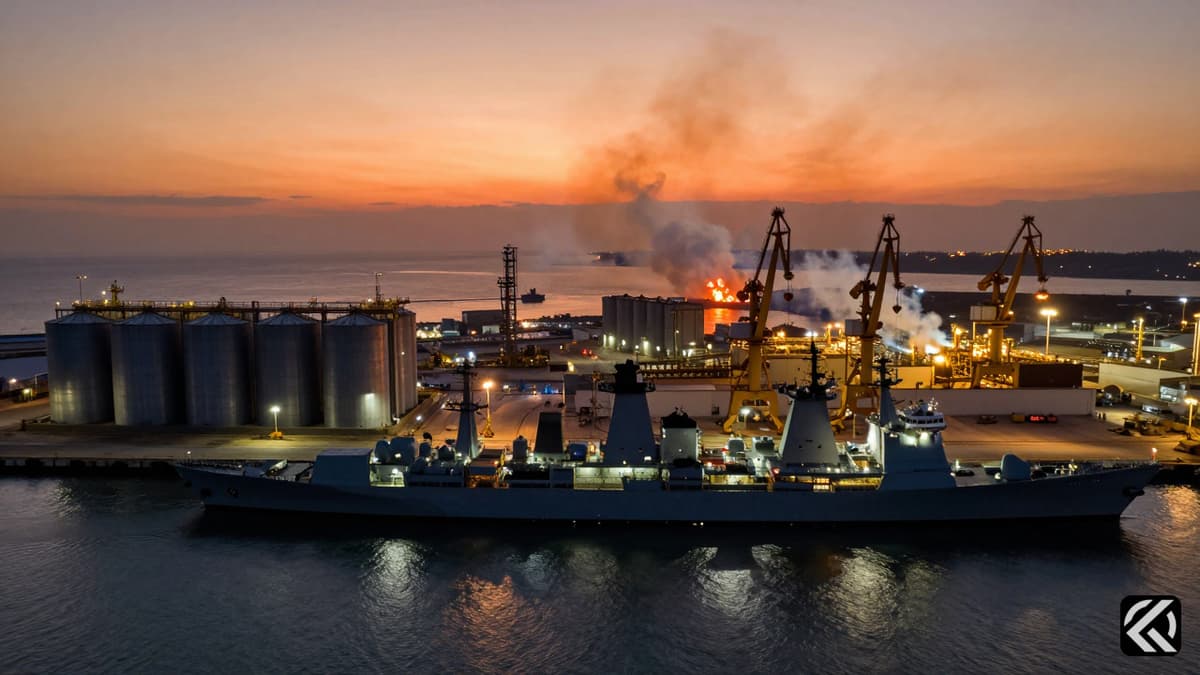
Ukraine’s unprecedented drone and missile attack on Novorossiysk crippled Russian grain exports and naval infrastructure, marking a pivotal escalation in the Black Sea conflict.
A "massive" Ukrainian drone and missile strike on the Russian port of Novorossiysk has severely damaged two major grain export terminals and hit the last large Russian naval base on the Black Sea, according to reports. The overnight attack resulted in the deaths of three people, including an eight-year-old child, and injured 24 others, as confirmed by local officials. The incident marks a significant escalation in the conflict, targeting critical infrastructure that supports Russia's military and agricultural export capabilities.
Ukraine's President Volodymyr Zelensky confirmed that Kyiv launched rockets, jet drones, and naval drones in what he described as a "unique operation" aimed at the Russian base. While Zelensky did not explicitly mention the grain terminals in his initial statement, military sources later reported that four Russian warships, including two frigates, were hit. This Novorossiysk drone strike follows a recent uptick in exchanges of strikes in the region, ending a period of relative calm. The attack underscores Ukraine's growing capability to conduct long-range strikes on Russian territory, particularly against strategic assets.
The port of Novorissiysk serves as a critical hub for the Black Sea fleet, having become the primary docking location for most of Russia's naval forces after they were forced to vacate their former home base in Sevastopol, Crimea. Sevastopol was deemed too exposed to Ukrainian attacks, prompting the fleet's relocation. Novorossiysk, one of Russia's largest ports, has since served as the last major bastion for Russian naval operations in the region. The recent damage to the port's infrastructure and warships represents a tangible blow to Moscow's ability to project power and maintain logistical support for its military operations in Ukraine.
Zelensky emphasized the strategic necessity of these strikes, stating on social media, "The occupying fleet and all the infrastructure that supports it will not be safe as long as Russian aggression continues." This declaration highlights Ukraine's intent to disrupt not only military movements but also the logistical networks that sustain them. The Ukrainian military's confirmation that multiple warships were hit suggests that the Russian naval presence in the area has been significantly degraded, potentially affecting their ability to conduct further operations against Ukrainian coastal targets.
Beyond the military implications, the attack has caused immediate grain export disruption that resonates across global markets. A major grain trading company confirmed to Russia's TASS news agency that its terminal was hit during the Wednesday attack, while another firm told Reuters and the Russian outlet RBK the same. These damages threaten Russia's position as the world's largest wheat exporter. According to a Moscow-based analytics company, Russian grain exports for August could fall by more than half compared to the same month over the last five years due to the ongoing disruptions in the Black and Azov seas.
In response to the logistical constraints, the Russian agriculture ministry announced on Wednesday that it is working to redirect cargo flows to ports in the Baltic and Caspian Seas, as well as utilizing land routes. However, the ministry did not explicitly reference Ukraine's attacks in its statement, instead citing "current logistical constraints." Despite these efforts, the infrastructure damage in Novorissiysk likely impedes Russia's ability to quickly reroute such a significant volume of agricultural exports. The disruption also impacts global food security, with Russian Foreign Ministry spokeswoman Maria Zakharova accusing Ukraine of hiking global food prices and causing growing grain shortages.
The immediate human cost of the strike was severe. An emergency situation was declared in Novorossiysk on Wednesday after the barrage of drones struck areas around the port and damaged pipelines, suspending the water supply for the city. Additionally, a man was killed by drone debris in the surrounding Krasnodar region, and dozens of buildings, including homes, were damaged by "several hundred drones" that struck overnight. These civilian casualties and infrastructure damages highlight the widening scope of the conflict, which now extends deep into Russian territory.
The escalation is mutual, with Moscow launching aerial overnight strikes that killed at least 11 civilians in Ukraine between Tuesday and Wednesday. The conflict has also impacted Ukraine's own export capabilities. The last remaining sea route out of Ukraine has been badly affected by deadly Russian strikes on cargo ships and the port of Odesa. In July, the Ukrainian Agribusiness Club (UCAB) reported a 23% decrease in Ukrainian exports, as Moscow seeks to deter foreign companies from trading with Ukraine.
Amidst these ground and sea battles, President Zelensky addressed the urgent need for defensive capabilities during an interview with CNN. He stated that Ukraine requires only a tenth of the current US stockpile of interceptor missiles to stop all Russian ballistic missile attacks, adding that just 5% of the stockpile would be sufficient to get Ukraine through the winter. Zelensky highlighted the disparity in resources, noting, "This year we have two and a half times less interceptors than we had in 2025," while pointing out that "Russia has two times more ballistic missiles per month than they had before." This plea underscores the critical nature of the current military balance and the reliance on international support to counter Russian offensive capabilities.
In the wake of the attacks, Russian Foreign Ministry spokeswoman Maria Zakharova accused Ukraine of targeting Russian grain and agricultural infrastructure. However, she also issued a warning that Russia would continue striking "facilities that [Ukraine's armed forces] use on the Black Sea to destabilise the navigation situation" until the "full elimination of threats to security projected to the Sea of Azov and the Black Sea." This statement indicates that Moscow does not view the Novorossiysk attacks as a deterrent but rather as a justification for further military escalation.
The long-term impact of these events suggests a deepening cycle of attrition. The damage to grain terminals may force Russia to rely on less efficient logistical routes, potentially increasing costs and reducing export volumes globally. Conversely, Ukraine's success in striking high-value targets in Novorissiysk demonstrates a shift in tactical effectiveness. As both nations face resource constraints-Ukraine with missiles and Russia with agricultural logistics-the conflict is likely to remain volatile, with continued impacts on global food supplies and regional security dynamics. The ability of Ukraine to sustain such long-range operations will depend heavily on the flow of international aid, particularly the interceptor missiles Zelensky has requested to protect Ukrainian cities from the retaliatory strikes that are almost certain to follow.
Aug 17, 2026 14:29 UTC
USS Abraham Lincoln Crew Faces Mental Health Crisis During Extended Deployment
Aug 17, 2026 04:30 UTC
Trump Reduces Joint Military Exercises With South Korea
Aug 17, 2026 02:52 UTC
Kushner Meets Hamas in Egypt Over Rejected Gaza Ceasefire Plan
Aug 16, 2026 20:37 UTC
Kushner Mediates Gaza Ceasefire Amidst Escalating US-Iran Conflicts
Aug 18, 2026 00:00 UTC
Trump’s False Claims on South Korea Defense Payments Disputed