Section
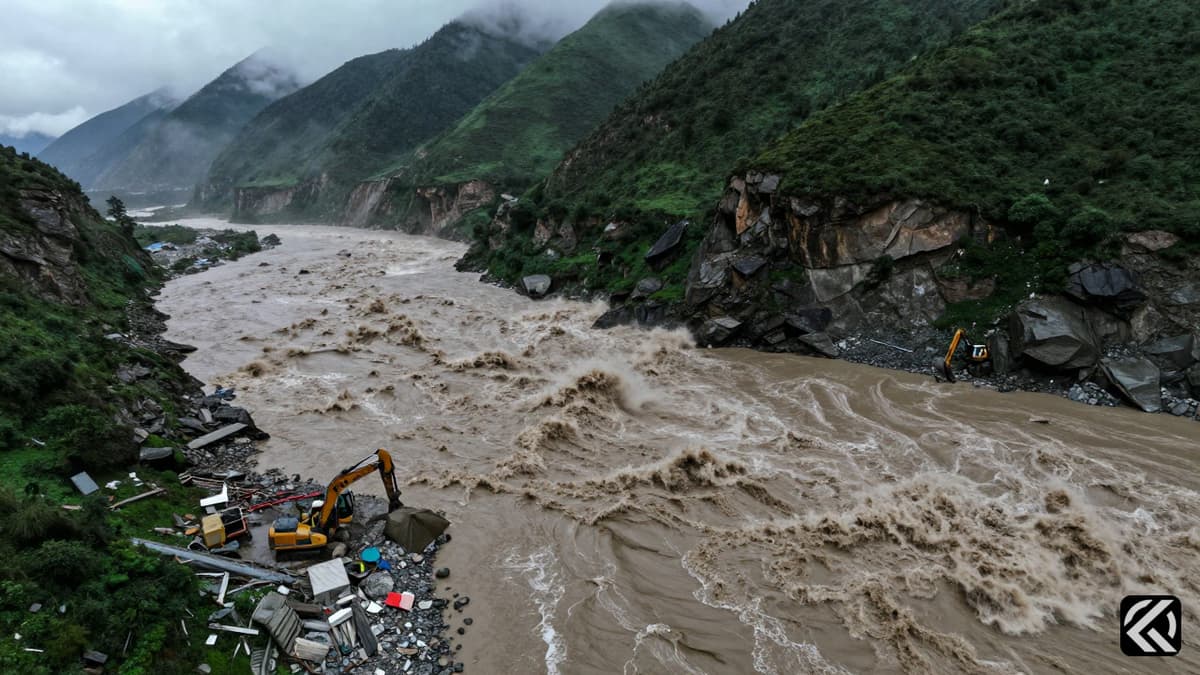
Six lives lost and dozens injured as torrential water and debris breached an under-construction tunnel in Uttarakhand’s Chamoli district, triggering a massive multi-agency rescue effort.
At least six individuals lost their lives and fourteen others sustained serious injuries on Thursday, August 13, 2026. This tragedy occurred after a surge of water and debris breached an under-construction tunnel at a hydroelectric site in the Chamoli district of Uttarakhand.
The incident, reported by the State Disaster Response Force (SDRF) at approximately 7:05 p.m., trapped 22 workers inside the tunnel. While rescue teams managed to pull 20 individuals to safety, the casualty count stands at six confirmed deaths. Fourteen of the rescued workers are currently receiving treatment at a nearby hospital. Information regarding the remaining two trapped workers remained unavailable as of the latest reports.
District officials initially reported that 16 workers had been rescued, but updated figures indicate a higher number of those evacuated. The tunnel was being developed for the Tehri Hydro Development Corporation Limited (THDC) project. In the wake of the breach, Chief Minister Pushkar Singh Dhami expressed deep concern and mandated that all rescue operations proceed on a war footing. The government’s stated priority is the safe evacuation of every remaining worker.
Multiple agencies responded to the emergency. Teams from the Indian Army, the Indo-Tibetan Border Police (ITBP), the National Disaster Response Force (NDRF), and the SDRF rushed to the Pipalkoti area of Chamoli. They were joined by district-level rescue teams, local police, and personnel from the Central Industrial Security Force (CISF). These forces raced against time to locate and extract the trapped laborers from the confined space.
The region has been experiencing heavy rainfall for several days leading up to the disaster. On Monday, August 10, 2026, rising water levels in the Niti Valley region triggered a strong current that swept away a bridge. Video footage from that incident showed muddy water surging downstream, crashing into the metal structure, uprooting it, and pushing it toward the riverbank. This pattern of extreme weather highlights the vulnerability of construction zones in the area.
The immediate cause of the tragedy was the sudden entry of water and debris into the tunnel where workers were present. Preliminary information from officials suggests that the volume of material was significant enough to trap 22 individuals inside the structure. The breach likely resulted from the saturated ground conditions due to the recent heavy rains. When the SDRF reported the incident at 7:05 p.m., the situation was already critical.
The response effort was massive and coordinated. The involvement of high-level agencies like the Indian Army and ITBP indicates the severity of the challenge. Navigating a tunnel filled with water and debris requires specialized equipment and expertise, which these organizations provided. The NDRF, known for handling complex disaster scenarios, played a crucial role in the evacuation.
The confusion in initial rescue numbers-starting with 16 and updating to 20-highlights the chaotic nature of such operations. As the situation evolved, the toll became clearer. Six workers were declared dead, and 14 were injured. The status of the remaining two workers remains unknown, leaving families in suspense and raising questions about the completeness of the rescue effort.
The location, Pipalkoti in Chamoli, is part of a region prone to geological instability. The ongoing Chamoli tunnel collapse has drawn national attention to the safety protocols of hydroelectric projects in such fragile ecosystems. The THDC incident underscores the risks associated with large-scale infrastructure development in the Himalayas.
The recent weather patterns in Uttarakhand have been a contributing factor to this and other recent incidents. The heavy rainfall over the past several days has saturated the soil, increasing the risk of landslides and flash floods. The incident on Monday involving the Niti Valley bridge serves as a precursor to this disaster. The bridge was not just damaged; it was swept away entirely, demonstrating the power of the rising water.
The video evidence from Monday shows muddy water surging with great force. This current uprooted the bridge and pushed it toward the riverbank. This suggests that the ground in the area is highly unstable. When construction sites are located near such volatile waterways, the margin for error is thin. The entry of water and debris into the tunnel was likely a result of similar hydrological pressures, but with more immediate and fatal consequences for those inside.
The government’s response, led by Chief Minister Dhami, focused on immediate rescue. However, the underlying issue of infrastructure safety in high-rainfall zones remains. The Uttarakhand hydroelectric project sites are critical for energy, but they must also be resilient to climate-induced disasters. The loss of six lives and the injury of fourteen others is a stark reminder of these risks.
The involvement of diverse agencies-Army, ITBP, NDRF, SDRF, CISF, and local police-shows a unified front in crisis management. Yet, the inability to account for two workers suggests that the rescue operation is still ongoing or that conditions remain too dangerous. The priority remains the safety of the workers, as directed by the CM.
The historical context of Chamoli district includes previous geological events. This incident adds to the region’s profile as a disaster-prone area. The structural integrity of tunnels and bridges in such environments must be regularly assessed, especially during monsoon seasons.
The THDC incident will likely trigger a comprehensive review of safety measures at all hydroelectric sites in Uttarakhand. The government may impose stricter regulations on construction during high-risk weather periods. The missing workers’ fate will determine the next phase of the operation. If they are found, the rescue will be deemed successful. If not, it will be a tragic failure.
The long-term impact on the region’s development projects could be significant. Delays in the hydroelectric project are possible as investigations begin. The public and political scrutiny will focus on whether proper warning systems were in place. The recent bridge collapse and this tunnel breach suggest a pattern of vulnerability.
Future projects must incorporate advanced geological monitoring and early warning systems. The heavy rainfall trend indicates that climate change is exacerbating these risks. The government’s commitment to a war footing must extend to post-disaster analysis and prevention. The lives lost in this disaster must not be in vain. Strengthening infrastructure resilience is the only way to prevent future tragedies in the Uttarakhand Himalayas.
This disaster highlights the urgent need for enhanced safety standards in mountainous construction zones. The combination of heavy rainfall and fragile geology poses a significant threat to workers. The government must prioritize the implementation of real-time weather monitoring and geological stability assessments. Future hydroelectric projects require robust contingency plans and stricter operational halts during extreme weather. Without these measures, the risk of further loss of life remains critically high. The region’s development cannot come at the cost of human safety.
Aug 17, 2026 14:29 UTC
USS Abraham Lincoln Crew Faces Mental Health Crisis During Extended Deployment
Aug 17, 2026 04:30 UTC
Trump Reduces Joint Military Exercises With South Korea
Aug 17, 2026 02:52 UTC
Kushner Meets Hamas in Egypt Over Rejected Gaza Ceasefire Plan
Aug 16, 2026 20:37 UTC
Kushner Mediates Gaza Ceasefire Amidst Escalating US-Iran Conflicts
Aug 15, 2026 22:24 UTC
Hawaii Braces for First Direct Hurricane Hit in 34 Years